Sambir
Connect With a Trek Expert(Simbir) +977 9709278526

Manaslu Circuit Trek

Mountain Icon

Max. Altitude

5,106 m/ 16,752ft

Duration Icon

Duration

12 Days

Grade Icon

Grade

Demanding
Activity Icon

Activity

Trekking

Season Icon

Best Season

Spring (March-May) & Autumn (September-November)

Destination Icon

Destination

Tours & Treks in Nepal

Meals Icon

Meals Included

B.L.D
Region Icon

Trek Region

Manaslu Region Trek Packages

Destination Icon

Group Size

1 - 20

Activity Icon

Activity Per Day

5-8 hours (10-12 hours on Larkya La Pass day)

Start End Icon

Start/End Point

Kathmandu / Kathmandu

Nature Icon

Nature Of Trek

Teahouse (Lodge-to-Lodge)

Manaslu Circuit Trek Overview

The Manaslu Circuit Trek is a quiet, less-traveled route in the Himalayas, perfect if you want to avoid the crowds in Everest or Annapurna. It encircles Mount Manaslu (8,163m/ 26,781ft), the world’s 8th-highest peak, located in Gorkha, Nepal. On this adventure, you can witness breathtaking views of Mt Manaslu North, Himlung Himal, and Cheo Himal. As a trek starter, you take a drive to Machha Khola. From there, you enter the restricted Manaslu region, and the trail follows the Budi Gandaki Valley, with scenery changing constantly.

First, you witness river valleys and terraced fields, but soon it changes into dense forests, alpine meadows, glaciers, and high-mountain deserts. Along the way, you’ll pass through traditional villages such as Jagat, Deng, Lho, Samagaon, Samdo, and Dharamsala. These are home to Gurung and Tibetan communities, where prayer flags, monasteries, and Buddhist influence are prevalent. You can experience local life, visit monasteries, and enjoy the culture and hospitality of the people who’ve lived in these remote areas for a long period of time.

The trek route reaches its highest point at Larkya La Pass (5,106m/ 16,752ft) and then descends to Dharapani, from where you connect with the Annapurna Circuit. This pass makes the Manaslu Circuit challenging, not suitable for absolute beginners. In addition, the rugged terrain and remote setting of the trek create more challenges. For that, hiring a licensed guide is not just mandatory but helpful for trail navigation and ensuring your safety.

Want more information about this trek? Here is everything about the Manaslu Circuit Trek, its itinerary, and other important information.

Complete Itinerary Breakdown for the Manaslu Circuit Trek

Day 1: Drive to Machhikhola from Kathmandu

Your 12-day Manaslu trek in Nepal begins with a scenic drive from Kathmandu to Machha Khola, following the Prithvi Highway alongside the Marsyangdi River and Trishuli River. As the city fades behind you, rolling hills, lush valleys, and distant mountain peaks set the tone for the journey ahead. After passing through Dhading Besi, the smooth highway gradually gives way to rougher mountain roads.

The drive continues along the Budhi Gandaki River, passing through Soti Khola and several traditional Gurung and Magar villages. These settlements offer your first glimpse of the local culture and lifestyle that define the Manaslu region. By late afternoon, you will arrive at Machha Khola, where you can relax and settle into your lodge before the trekking adventure begins.

Itinerary Details
Itinerary Fact Details
Meals Icon
Meals
Breakfast, Lunch, Dinner
Accommodation Icon
Accommodation
Lodge
Mountain Icon
Highest Altitude
930 m (3,050 ft)
Duration Icon
Drive Duration
160 km (99 miles)
Duration Icon
Drive Duration
7–8 hours

Day 2: Machhikhola to Jagat

You officially begin your trek today as you leave Machha Khola behind and follow a rugged trail deeper into the Manaslu region. The route winds through a dramatic river gorge with a mix of ascents and descents before reaching Tatopani, where you can enjoy a relaxing break at the natural hot springs. Continuing toward Yaru Bagar, you’ll cross suspension bridges and pass traditional Gurung and Magar villages surrounded by terraced fields and riverside farms.

One of today’s highlights is crossing the spectacular 195-meter cliffside cantilever bridge at Yaru Bagar, Nepal’s first bridge of its kind. A final steady climb leads to Jagat, a beautiful stone-paved village with strong Tibetan influences, where your trekking guide will register your restricted area permits before you settle in for the night.

Itinerary Details
Itinerary Fact Details
Meals Icon
Meals
Breakfast, Lunch, Dinner
Accommodation Icon
Accommodation
Lodge
Distance Icon
Trek Distance
22 km (13 miles)
Mountain Icon
Highest Altitude
1,340 m (4,396 ft)
Duration Icon
Trek Duration
6–7 hours

Day 3: Jagat to Deng

Expect a day filled with changing landscapes as the trekking trail climbs rocky ridges, crosses suspension bridges, and winds through forests and riverside villages. After leaving Jagat, you’ll ascend to Salleri before descending to Sirdibas, where sweeping views of the surrounding hills and river await. The trail then continues toward Philim, crossing a long suspension bridge and passing through maize fields on the way to Ekle Bhatti.

Beyond Ekle Bhatti, the valley narrows into a peaceful canyon where you’ll cross the Budhi Gandaki River several times before entering tranquil bamboo forests. Keep an eye out for birds and playful monkeys along the way. After crossing the Deng Khola River, you’ll arrive at the quiet village of Deng for an overnight stay.

Itinerary Details
Itinerary Fact Details
Meals Icon
Meals
Breakfast, Lunch, Dinner
Accommodation Icon
Accommodation
Lodge
Distance Icon
Trek Distance
19 km (12 miles)
Mountain Icon
Highest Altitude
1,860 m (6,102 ft)
Duration Icon
Trek Duration
6–7 hours

Day 4: Deng to Namrong

Today offers one of your first immersive experiences of the region’s rich Tibetan heritage. Leaving Deng, you’ll cross the Budhi Gandaki River before climbing through forests and alpine vegetation toward Bihi. As the trail gains elevation, traditional villages, prayer stones, and increasingly dramatic mountain scenery create one of the most rewarding days of the trek. In Prok village, you’ll enjoy stunning views of Shringi Himal before stopping for lunch at Ghap.

From Ghap, the trail continues past ancient gompas, long mani walls, and scenic suspension bridges suspended above the Budhi Gandaki River. A final climb up a stone staircase brings you to Namrong, a charming mountain village where breathtaking Himalayan views and Tibetan culture welcome you for the night.

Itinerary Details
Itinerary Fact Details
Meals Icon
Meals
Breakfast, Lunch, Dinner
Accommodation Icon
Accommodation
Lodge
Distance Icon
Trek Distance
18.9 km (11.9 miles)
Mountain Icon
Highest Altitude
2,660 m (8,727 ft)
Duration Icon
Trek Duration
6–7 hours

Day 5: Namrong to Samagaun

The Himalayas begin to reveal their full grandeur today as you leave Namrong and continue toward Samagaun. The trail gradually climbs above the dense forests, opening up to rugged alpine landscapes and spectacular mountain vistas. Upon reaching Lho, you’ll be greeted by breathtaking views of Mount Manaslu alongside the peaceful Rebung Gompa, where fluttering prayer flags, monks, and traditional stone houses reflect the valley’s deep Tibetan heritage.

After exploring the monastery, you’ll continue toward Shyala for lunch before crossing the drainage slopes of the Pungen Glacier. The trail then leads to the broad valley of Samagaun, a charming village surrounded by pastures and dramatic peaks. During the climbing season, this lively settlement serves as the gateway to Manaslu Base Camp, where yak caravans and expedition porters are a common sight.

Itinerary Details
Itinerary Fact Details
Meals Icon
Meals
Breakfast, Lunch, Dinner
Accommodation Icon
Accommodation
Lodge
Distance Icon
Trek Distance
17 km (10.9 miles)
Mountain Icon
Highest Altitude
3,530 m (11,581 ft)
Duration Icon
Trek Duration
6–7 hours

Day 6: Acclimatization Day at Samagaun

Today is all about slowing down so you can go higher safely. While there’s no need to rush, this acclimatization day is far from uneventful. Spend time exploring Samagaun, visiting the historic Ribung Gompa, and soaking in panoramic views of Mount Manaslu, nearby glaciers, and the village’s peaceful alpine surroundings.

If you’re feeling adventurous, choose from several rewarding side hikes. You can visit Birendra Tal, a stunning glacial lake just 3 km from the village. After that, you can continue the trek to Manaslu Base Camp for incredible views of the Manaslu Glacier and icefall, or hike to Pungen Gompa, renowned for its panoramic mountain scenery and thousands of carved mani stones. These optional hikes follow the “climb high, sleep low” principle, helping your body adjust to the altitude before crossing Larkya La Pass.

Alternatively, you can enjoy a relaxed day exploring the village and experiencing the traditional lifestyle of the local community.

Itinerary Details
Itinerary Fact Details
Meals Icon
Meals
Breakfast, Lunch, Dinner
Accommodation Icon
Accommodation
Lodge
Mountain Icon
Highest Altitude
3,530 m (11,581 ft)

Day 7: Samagaun to Samdo

With every step, you’ll venture deeper into the remote Himalayan journey through the Manaslu region. Leaving Samagaun, the trail follows the upper Budhi Gandaki River, gradually climbing toward Samdo. Along the way, you’ll pass the meeting point of the Larkya River and the river flowing from the Samdo Glacier, while the forests of Kermo Kharka give way to increasingly rugged high-altitude terrain.

After a scenic lunch stop, the trail continues uphill, crossing wooden bridges before the white Kani at the entrance to Samdo comes into view. Situated close to the Tibetan border, this remote settlement is home to families who continue the traditional way of life through yak herding and seasonal trade, offering a fascinating glimpse into Himalayan culture.

Itinerary Details
Itinerary Fact Details
Meals Icon
Meals
Breakfast, Lunch, Dinner
Accommodation Icon
Accommodation
Lodge
Distance Icon
Trek Distance
8 km (5 miles)
Mountain Icon
Highest Altitude
3,875 m (12,713 ft)
Duration Icon
Trek Duration
4-5 hours

Day 8: Samdo to Dharmasala

Today’s shorter trek is all about preparing for the adventure ahead. Leaving Samdo, you’ll follow a gradual ascent along the Athahra Saya River and Larkya River, passing Taka Choeling Gumba, where beautiful views of Naike Peak and Pangboche Peak unfold. The route also passes ancient mani walls, traditional stone houses, and a bridge leading to the historic settlement of Larkya Bazaar.

The trail eventually reaches Dharmasala (Larkya Phedi), the highest overnight stop before crossing Larkya La Pass. From here, you’ll enjoy views of the Syancha Glacier, alpine pastures, and rugged mountain scenery. The shorter day allows plenty of time to rest, hydrate, and prepare both physically and mentally for tomorrow’s demanding pass crossing.

Itinerary Details
Itinerary Fact Details
Meals Icon
Meals
Breakfast, Lunch, Dinner
Accommodation Icon
Accommodation
Lodge
Distance Icon
Trek Distance
18 km (5 miles)
Mountain Icon
Highest Altitude
4,460 m (14,632 ft)
Duration Icon
Trek Duration
4-5 hours

Day 9: Dharmasala to Bhimtang via Larkya Pass

The most challenging and rewarding day of the trek has finally arrived. Before sunrise, you’ll leave Dharmasala and begin the steady climb toward Larkya La Pass, following the northern side of the Larkya Glacier. As daylight breaks, breathtaking views of Cho Danda and Larkya Peak unfold, making every step toward the pass even more memorable.

Reaching the summit of Larkya La Pass (5,106 m) is a milestone of the Manaslu Circuit Trek. From the top, you’ll be rewarded with panoramic views of Mount Annapurna II, Cheo Himal, Kang Guru, and Himlung Himal, creating one of the most spectacular mountain panoramas in Nepal. After taking time to enjoy the scenery, you’ll begin the steep descent along the moraine ridge of the Salpudanda Glacier.

The trail gradually becomes easier as it passes Dangboche Kharka, wide alpine meadows, and a traditional mani wall before reaching the beautiful village of Bhimtang. Although this is the longest and most physically demanding day of the trek, the incredible scenery and sense of achievement make it one of the most unforgettable experiences of your journey.

Itinerary Details
Itinerary Fact Details
Meals Icon
Meals
Breakfast, Lunch, Dinner
Accommodation Icon
Accommodation
Lodge
Distance Icon
Trek Distance
24 km (15 miles)
Mountain Icon
Highest Altitude
5,106 m (16,752 ft)
Duration Icon
Trek Duration
10-12 hours

Day 10: Bhimtang to Tilche Village

After conquering the highest point of the trek, today’s journey offers a refreshing change of pace. Leaving Bhimtang, you’ll descend through lush forests, open meadows, and scenic mountain landscapes while enjoying beautiful morning views back toward Mount Manaslu and the surrounding peaks. The trail winds through peaceful villages, terraced fields, and several river crossings, gradually leaving the alpine environment behind.

As you continue downhill, you’ll pass traditional mani walls before arriving at Tilche Village. With its stone-paved lanes, traditional homes, and terraced farmland, the village provides a peaceful setting to relax after the previous day’s challenging adventure.

Itinerary Details
Itinerary Fact Details
Meals Icon
Meals
Breakfast, Lunch, Dinner
Accommodation Icon
Accommodation
Lodge
Distance Icon
Trek Distance
24 km (15 miles)
Mountain Icon
Highest Altitude
3,720 m (12,204 ft)
Duration Icon
Trek Duration
5-6 hours

Day 11: Tilche Village to Besisahar (By jeep)

On the 11th day of your Manaslu Trek, you finally trade your trekking boots for a scenic mountain drive as you leave Tilche Village behind and travel by jeep toward Besisahar. The rugged road follows the Marshyangdi River, passing through picturesque villages such as Chamje and Bhulbhule, where waterfalls, lush forests, and terraced fields create a beautiful backdrop throughout the journey.

As you descend, the quiet mountain trails gradually give way to the busier Annapurna Circuit corridor, with roadside teahouses and increasing traffic signaling your return to civilization. Upon reaching Besisahar, you’ll enjoy views of the surrounding valley and the impressive Annapurna Range.

Itinerary Details
Itinerary Fact Details
Meals Icon
Meals
Breakfast, Lunch, Dinner
Accommodation Icon
Accommodation
Lodge
Mountain Icon
Highest Altitude
2,300 m (7,546 ft)
Duration Icon
Drive Duration
45 km (34 miles)
Duration Icon
Drive Duration
3-4 hours

Day 12: Drive from Besisahar to Kathmandu

Your 12 days Manaslu trek package comes to a close today. After breakfast, you’ll leave Besisahar and enjoy a scenic drive back to Kathmandu along the Prithvi Highway. The route passes vibrant towns such as Dumre and Kurintar, offering picturesque views of winding rivers, fertile valleys, and the everyday rhythm of life in rural Nepal.

Upon arriving in Kathmandu, you’ll check into your hotel and have time to unwind after completing the Manaslu Circuit Trek. Spend the evening exploring the city’s lively streets, shopping for souvenirs, or celebrating your Himalayan adventure with a memorable farewell dinner.

Itinerary Details
Itinerary Fact Details
Meals Icon
Meals
Breakfast, Lunch, Dinner
Accommodation Icon
Accommodation
Hotel
Mountain Icon
Highest Altitude
1,400 m (4,593 ft)
Duration Icon
Drive Duration
175 km (108 miles)
Duration Icon
Drive Duration
6-7 hours

What Our Plan Includes and Excludes

Include

Exclude

  • Private vehicles drop off at the international airport.
  • A highly experienced government-licensed guide, with all his food, accommodation, salary, insurance, and transportation.
  • For two clients, one strong porter with all his food, accommodation, salary, insurance, and transportation.
  • Porter can carry a maximum weight of 20kg with 10 kg of luggage for each trekker.
  • Three meals a day (Breakfast, Lunch, and Dinner) during the trek.
  • For every two clients, one room with 2 separate beds.
  • All sharing transportation from Kathmandu to Machchikhola. Tilche to Besishahar to Kathmandu.
  • Fresh seasonal fruits every evening after dinner.
  • Light snacks such as Cookies every day.
  • For more than six clients, one assistant guide.
  • Water purification tablets.
  • Sleeping Bags, Down Jackets, and duffel bags during the trek (if you don’t have your own).
  • TIMS Card. (Trekking Information Management System)
  • Manaslu Special permit for the restricted area.
  • MCAP. Manaslu conservation area permit.
  • ACAP. Annapurna Conservation Area permit.
  • All entrance fees during the trek.
  • All government taxes.
  • First aid kit box for trek.
  • Assistance for emergency Rescue.
  • Successful trip certificate from Action Nepal Treks.
  • Farewell dinner after the trip.
  • International flight tickets.
  • Nepali entry visa fee.
  • All accommodation and meals in Kathmandu and extra accommodation in Kathmandu due to early return from the trek, early arrival, or late departure.
  • Personal expenses. (hot shower, wifi, battery charge, cold drinks, alcohol, extra porters, shopping snacks, personal clothing & gear)
  • Travel insurances.
  • Tips for guides and porters.

Manaslu Circuit Trek Route Map

Manaslu Circuit Trek Google Map

Trail
Return Trail

Why the Manaslu Circuit Trek Is Nepal’s Most Rewarding Remote Trek?

The Manaslu Circuit Trek offers one of Nepal’s most authentic and rewarding Himalayan adventures. As a restricted trekking area near the Tibetan border, visitor numbers are carefully controlled, allowing you to enjoy quieter trails, pristine mountain landscapes, and a more immersive trekking experience than many of Nepal’s busier routes. The journey takes you through lush forests, deep river gorges, traditional Tibetan Buddhist villages, and across the spectacular Larkya La Pass (5,106m/ 16,752ft).

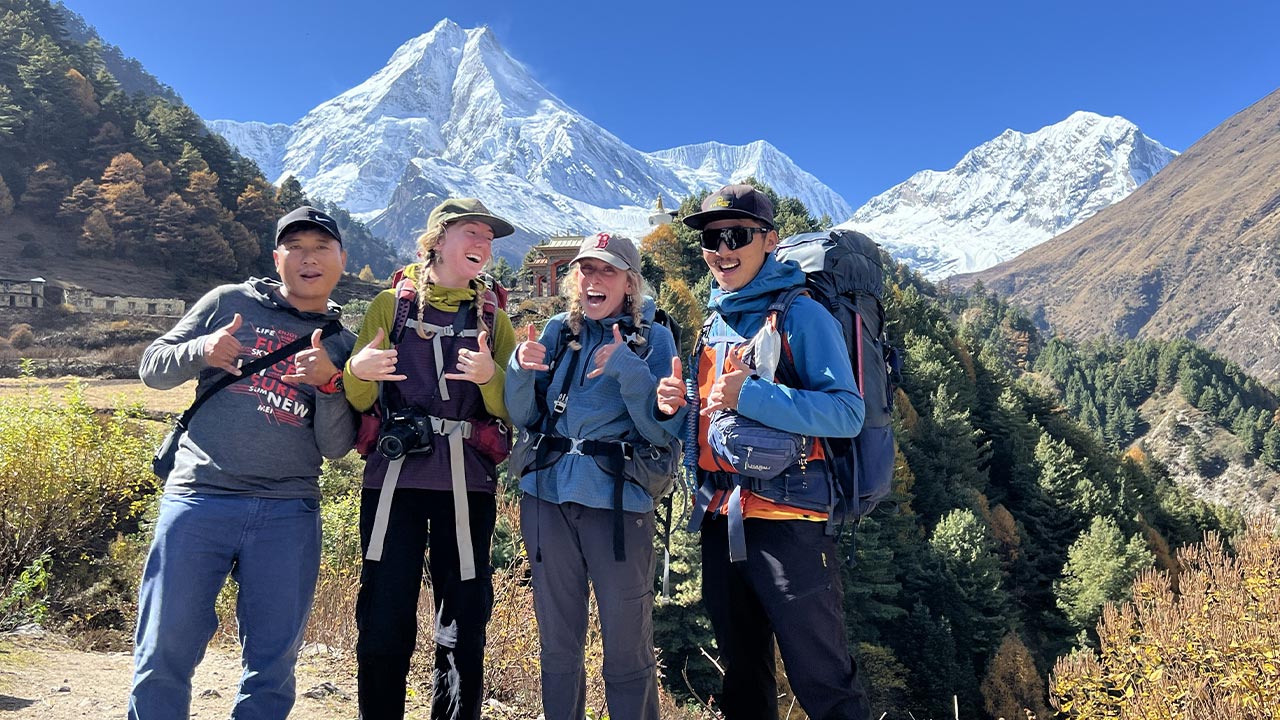
on the way to samagaun

Beyond its breathtaking scenery, Manaslu stands out for its rich cultural heritage and genuine sense of remoteness. Staying in family-run teahouses, visiting centuries-old monasteries, and experiencing the warm hospitality of local communities make the trek far more than a physical challenge. For those seeking adventure, solitude, and authentic Himalayan culture, the Manaslu Circuit is one of Nepal’s most rewarding remote treks.

Who Is This Trek Best Suited For?

The Manaslu Circuit Trek is ideal for:

  • Experienced trekkers looking for a more challenging and less crowded alternative to Everest Base Camp or the Annapurna Circuit.
  • Adventure seekers who enjoy remote trails, peaceful surroundings, and unspoiled Himalayan landscapes.
  • Culture enthusiasts interested in exploring Tibetan Buddhist villages, centuries-old monasteries, prayer wheels, and traditional mountain lifestyles.
  • Fit beginners with good physical fitness, determination, and enough time for dedicated acclimatization. While previous trekking experience is helpful, it’s not essential.
  • Responsible travelers who are happy to follow the region’s trekking regulations by traveling with a licensed guide and obtaining the required permits through a registered Nepalese agency.
  • Nature lovers who appreciate authentic experiences and don’t mind staying in simple, family-run teahouses with basic facilities in exchange for incredible scenery and genuine local hospitality.

What Makes the Manaslu Circuit Trek Special?

Few trekking routes in Nepal have preserved their wilderness and cultural heritage as successfully as the Manaslu Circuit Trek. Thanks to its restricted area status, the trail remains far less commercialized than Everest or Annapurna, offering a rare combination of remote Himalayan landscapes, authentic Tibetan Buddhist culture, and challenging high-altitude adventure.

Trek Around the World’s 8th Highest Mountain (8,163m/ 26,781ft)

The Manaslu Circuit is one of the few treks that completes a full loop around Manaslu (8,163m/ 26,781ft), the eighth-highest mountain in the world. The best views emerge as you enter the Nubri Valley around Days 4 and 5, where the landscape opens to reveal the mountain from different angles. Because the route forms a complete circuit, you’ll experience an ever-changing perspective of this Himalayan giant throughout the journey.

Ancient Tibetan Villages and Monasteries

Your trek to the Manaslu Circuit takes you to the upper region, which is home to traditional Tibetan Buddhist communities that have remained remarkably well-preserved due to the area’s isolation. Villages such as Samagaun and Samdo continue centuries-old customs, while historic monasteries like Pungyen Gompa, mani walls, chortens, and prayer wheels reflect the region’s deep spiritual heritage.

An acclimatization day in Samagaun gives trekkers the opportunity to explore these cultural landmarks and experience everyday life in the mountains.

Less Crowded Than Everest and Annapurna

One of Manaslu region’s greatest appeals is its peaceful atmosphere. Despite offering a well-established network of teahouses, the trail welcomes only a fraction of the trekkers found on Everest Base Camp or the Annapurna Circuit. You’ll spend less time navigating crowded paths and more time enjoying quiet forests, open mountain views, and evenings in family-run teahouses where genuine interactions with local hosts are still part of the experience.

Restricted Area Trekking Experience

The Manaslu Circuit passes through a restricted area near the Tibetan border. To protect the region’s culture, environment, and sensitive border zone, it’s mandatory to obtain a Restricted Area Permit and travel with a licensed guide through a registered Nepalese trekking agency. These regulations have helped limit visitor numbers, preserving the trail’s natural beauty and authentic character.

Rich Combination of Nature, Culture, and Adventure

The Manaslu Circuit combines diverse landscapes, rich cultural experiences, and rewarding high-altitude trekking in a single journey. Popular side trips, such as the hike to Manaslu Base Camp (4,800m/ 14,748ft) and the turquoise Birendra Tal, offer close-up views of glaciers and the surrounding peaks.

The adventure reaches its highlight at Larkya La Pass (5,106m/ 16,752ft), where an early morning ascent rewards trekkers with panoramic views of Manaslu, Himlung Himal, Cheo Himal, and the surrounding Himalayan range, making the challenge well worth the effort.

What a Typical Day on the Manaslu Circuit Trek Looks Like?

Life on the Manaslu Circuit quickly settles into a simple and rewarding rhythm shaped by daylight, weather, and altitude. Away from modern distractions, each day revolves around hearty meals, steady trekking, and meaningful cultural experiences. Most trekking days involve 4-7 hours of walking, while the crossing of Larkya La Pass is the longest and most demanding day. That day often takes 10-12 hours, depending on the trail and weather conditions.

Morning Routine

Most days begin around 6:00 AM, as the first light reaches the surrounding peaks. You’ll pack your duffel bag before breakfast so your porter can set off early. Breakfast is usually served around 7:00 AM and may include porridge, eggs, Tibetan bread, and hot tea or coffee. You’ll typically begin trekking between 7:30 AM and 8:00 AM to take advantage of the cool morning temperatures and stable weather.

On the Trail

The trail alternates between gentle sections, suspension bridge crossings, and long uphill climbs. You stop every few hours for a short break to rest and hydrate. These stops are often near a mani wall, or chorten, so you can enjoy the scenery while catching breath. You have lunch around midday at a village teahouse, with dal bhat being the most popular and filling option. The afternoon hike is generally shorter. Most trekkers arrive at the next village between 2:00 PM and 4:00 PM.

Evenings at the Teahouse

After arriving and checking into your twin-share room, you’ll have time to rest, freshen up, or explore the nearby village or monastery. In the late afternoon, everyone gathers in the communal dining hall, usually warmed by a central wood- or yak-dung-fired stove. Dinner is also a chance to review the next day’s route with your guide and chat with fellow trekkers. Most people head to bed between 8:30 PM and 9:00 PM to rest for another day on the trail.

Average Walking Time by Trekking Day

Trekking Day Walking Time Trail Highlights
Day 2: Machha Khola to Jagat 6-7 hours Rocky riverside trails
Day 3: Jagat to Deng 6-7 hours Several suspension bridge crossings
Day 4: Deng to Namrong 6-7 hours Steady uphill climb through forests
Day 5: Namrong to Samagaun 6-7 hours Gradual ascent with expanding mountain views
Day 7: Samagaun to Samdo 4-5 hours Shorter trek for acclimatization
Day 8: Samdo to Dharmasala 4-5 hours Alpine terrain before Larkya La Pass
Day 9: Dharmasala to Bhimtang (via Larkya La Pass) 10-12 hours Longest and most demanding trekking day
Day 10: Bhimtang to Tilche Village 5-6 hours Mostly downhill through forests and villages

How Difficult Is the Manaslu Circuit Trek?

The Manaslu Circuit Trek difficulty is generally rated as a demanding high-altitude trek, with some sections being strenuous. It is more physically demanding than routes like the Annapurna Base Camp Trek due to its longer duration, higher elevations, and rugged terrain. Expect to hike on unpaved trails, rocky paths, loose scree, and suspension bridges while gaining significant elevation over multiple days. The combination of long trekking hours, basic mountain infrastructure, and high altitude makes proper preparation essential.

Can Beginners Complete the Trek?

Yes, fit beginners can complete the Manaslu Circuit Trek with good preparation. However, “beginner-friendly” should not be mistaken for “easy.” Because there are no roads or convenient evacuation points along much of the upper trail, you’ll need strong physical fitness and the ability to hike for several consecutive days.

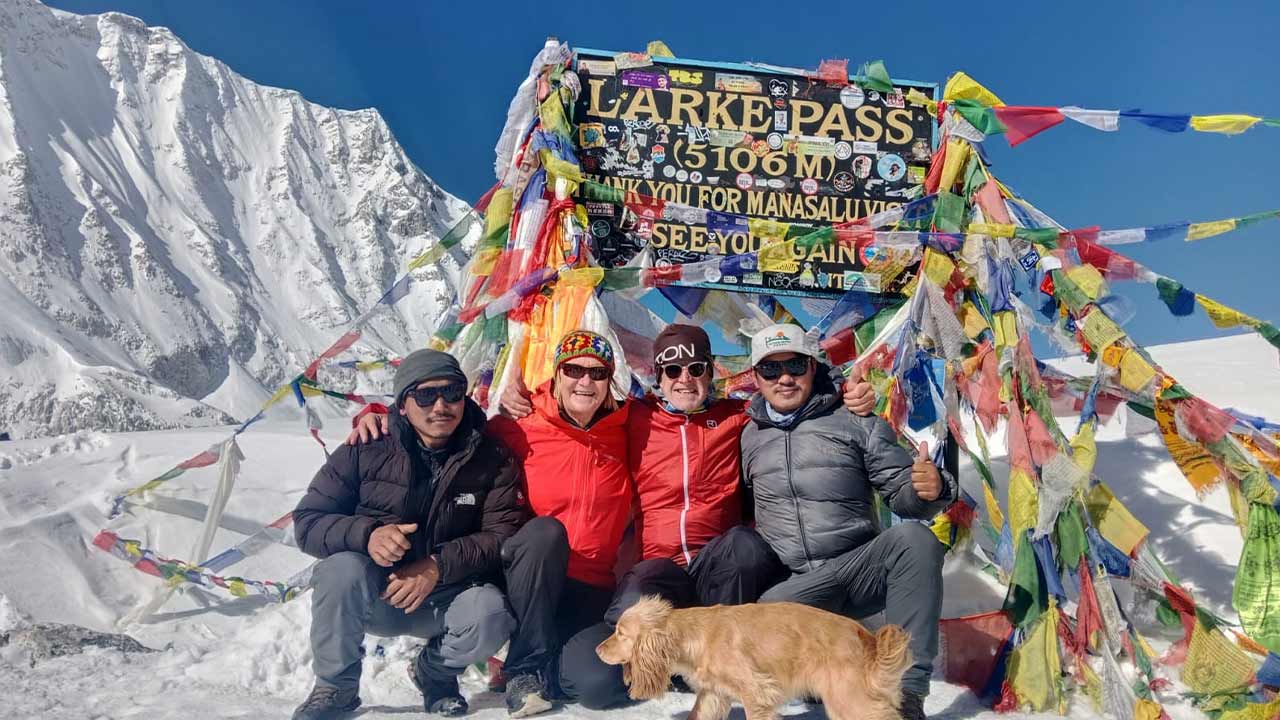
Yek at Larkya pass with group
Trekkers at Larkya Pass

If you’re new to high-altitude trekking, focus on building cardiovascular endurance and allow enough time for training. You’ll also be accompanied by a licensed guide, which is mandatory for the Manaslu Circuit and helps ensure both safety and proper pacing throughout the trek.

How Should I Train for Larkya La Pass?

Crossing Larkya La Pass (5,106m/ 16,752ft) is the most challenging part of the trek. The crossing usually takes 10-12 hours, and the high altitude means oxygen levels are significantly lower than at sea level. Starting a focused 8-12-week training plan months before the trek can make the experience much more manageable.

  • Build cardiovascular endurance: Run, cycle, swim, or use a stair climber 3-4 times a week for 45-60 minutes to improve stamina.
  • Practice hiking: Complete weekly 5-6-hour hikes on uneven terrain while wearing the same broken-in boots you’ll use on the trek.
  • Train with a backpack: Start with a 5 kg pack and gradually increase the weight to 10-12 kg over several weeks to strengthen your core, shoulders, and back.
  • Strengthen your legs: Focus on squats, lunges, and step-down exercises to build the leg strength needed for long ascents and the steep descent from Larkya La Pass to Bhimtang.

Risk of Acute Mountain Sickness (AMS) and Prevention

Above 3,500 meters, the air becomes thinner and drier, increasing the risk of Acute Mountain Sickness (AMS). It can happen to anyone, regardless of physical fitness. In fact, trekkers who climb too quickly are often more likely to develop symptoms.

To reduce your risk of AMS:

  • Walk slowly (“Bistari, bistari”): Maintain a slow, conversational pace throughout the trek.
  • Stay hydrated: Drink 4-5 liters of safe drinking water each day to help your body adapt to the altitude.
  • Follow a proper acclimatization schedule: Choose an itinerary that includes acclimatization days, especially at Samagaun (3,530m/ 11,106ft) and Samdo (3,875m/ 12,713), and follow the “climb high, sleep low” principle.
  • Avoid alcohol and sleeping pills: Both can slow breathing at high altitude and may mask or worsen the symptoms of altitude sickness (AMS).

Manaslu Circuit Trek Success Rate: How Many Trekkers Complete the Route?

The Manaslu Circuit Trek has a high completion rate, with an estimated 95%-98% of well-prepared trekkers successfully finishing the route. One reason for this strong success rate is that trekking with a licensed guide is mandatory. Guides help manage the pace, monitor trekkers for signs of altitude sickness, ensure proper acclimatization, and make informed decisions if conditions become unsafe. Most trekkers who do not complete the circuit turn back due to health concerns or are evacuated by helicopter before crossing Larkya La Pass.

Common Reasons Trekkers Turn Back

The most common reasons trekkers are unable to complete the Manaslu Circuit include:

  • Underestimating cumulative fatigue: Hiking 15-22 km each day on steep, uneven trails for nearly two weeks can lead to exhaustion if you’re not adequately prepared.
  • Rushed itineraries: Short itineraries that skip acclimatization days at places like Samagaun and Samdo significantly increase the risk of altitude sickness.
  • Gastrointestinal illness: Drinking untreated water or eating unwashed raw produce can cause stomach illnesses and dehydration, making acclimatization much more difficult.
  • Cold weather and inadequate gear: Overnight temperatures at Dharmasala (4,460m/ 14,632ft) can drop well below freezing. An unsuitable sleeping bag or insufficient layers can affect sleep, recovery, and energy levels before the pass crossing.

How to Improve Your Chances of Success

You can greatly improve your chances of completing the Manaslu Circuit by following a few proven best practices:

  • Choose a 12-day Manaslu Circuit Trek itinerary: Allow enough time for gradual acclimatization, including rest days at Samagaun (3,530m/ 11,106ft) and Samdo (3,875m/ 12,713ft). Use these days to hike higher during the day and sleep at a lower elevation.
  • Bring a four-season sleeping bag: Pack a sleeping bag rated to around -15°C (5°F), along with a sleeping bag liner for extra warmth in high-altitude teahouses.
  • Treat your drinking water: Purify all drinking water with chlorine dioxide tablets, drops, or a UV purifier. Avoid untreated water and ice whenever possible.
  • Carry high-energy snacks: Pack energy bars, nuts, or dried fruit to maintain energy levels on long stretches between villages, especially on demanding trekking days.

Permits Required for the Manaslu Circuit Trek

The Manaslu Circuit Trek requires three government-issued permits and one local municipality fee. These documents are mandatory because the trail passes through a restricted border region and two protected conservation areas. Your permits will be checked at several checkpoints along the route, so they must be obtained before your trek begins.

If you book this package with us, we’ll arrange all required permits before your trek. You simply need to provide the necessary documents in advance.

Manaslu Restricted Area Permit (MRAP)

The Manaslu Restricted Area Permit (MRAP) is the most important permit for the trek. Issued by the Department of Immigration, it regulates access to the restricted area near the Tibetan border. Your registered trekking agency must obtain this permit in Kathmandu before your departure.

Season MRAP Fee
Peak Season (September-November) USD 100 for the first 7 days + USD 15 per additional day
Off-Season (December-August) USD 75 for the first 7 days + USD 10 per additional day

Permit Checkpoints: Jagat (Day 2) and Sama Gaun (Day 6)

Manaslu Conservation Area Permit (MCAP)

The Manaslu Conservation Area Permit (MCAP) is required to enter the Manaslu Conservation Area. The permit helps fund environmental conservation, trail maintenance, and local community projects.

Category Fee
International Trekkers NPR 3,000 (approximately USD 23-25)
SAARC Nationals NPR 1,000
Nepali Citizens NPR 100

Permit Checkpoint: Philim (Day 3)

Annapurna Conservation Area Permit (ACAP)

Although you’re trekking in the Manaslu region, the Annapurna Conservation Area Permit (ACAP) is also required. After crossing Larkya La Pass, the trail enters the Annapurna Conservation Area near Dharapani.

Category Fee
International Trekkers NPR 3,000 (approximately USD 23-25)
SAARC Nationals NPR 1,000
Nepali Citizens NPR 100

Permit Checkpoint: Dharapani (towards the end of the trek)

Chumnubri Rural Municipality Fee

This local tourism fee supports infrastructure and community development within the Chumnubri Rural Municipality. Unlike the other permits, it is paid directly at the trail checkpoint in cash.

Category Fee
International Trekkers NPR 1,000 (approximately USD 7-8)
SAARC Nationals NPR 200
Nepali Citizens NPR 200

Payment Location: Jagat Checkpoint (cash payment in NPR)

Required Documents

To allow your registered trekking agency to process your permits before the trek, please provide the following at least 24-48 hours before departure:

  • A valid passport with at least 6 months of remaining validity
  • A digital passport-size photo
  • At least 2 physical passport-size photos
  • A copy of your valid Nepal tourist visa

Can You Trek the Manaslu Circuit Solo? (2026 Update)

Yes, As of March 2026, Nepal’s Department of Immigration removed the requirement that restricted-area permits, including the Manaslu RAP, could only be issued to groups of two or more trekkers. Solo travelers can now obtain the MRAP on their own.

This doesn’t change the guide requirement; a licensed guide from a registered Nepalese trekking agency is still mandatory for the Manaslu Circuit, regardless of group size. The change simply means solo trekkers no longer need to pair up with a stranger or pay for a second permit just to satisfy the old minimum-group rule.

When Is the Best Time to Do the Manaslu Circuit Trek?

The best time to trek the Manaslu Circuit is during autumn (September to November) and spring (March to May). The weather conditions are generally stable, and Larkya La Pass (5,106m/ 16,752ft) is most likely to be open during this time. In contrast, winter brings heavy snowfall that can close the pass. Similarly, the summer monsoon increases the risk of landslides, poor visibility, and transport disruptions.

Autumn (September to November)

Autumn is the best time to trek the Manaslu Circuit. Once the monsoon ends, the skies turn clear and the trails dry out. From Namrung onward, you’ll enjoy some of the best mountain views of the entire year. The stable weather also makes crossing Larkya La Pass much more reliable.

Days are pleasant for walking, but nights become cold after Samagaun. Dharmasala and Larkya La Pass often drop below freezing. This is also the busiest trekking season. Book your trek early if you want your preferred dates and comfortable teahouse accommodation.

Spring (March to May)

Spring is a favorite for trekkers who enjoy nature. The hills between Jagat and Namrung come alive with blooming rhododendrons, while fresh snow still covers the higher peaks. Larkya La Pass is usually open, but patches of snow often remain near the summit until late spring. Sturdy hiking boots are essential, and microspikes can be useful in early March or April.

The days are warmer than in autumn, and the extra daylight gives you more time on the trail. Spring is also slightly quieter, so it’s a good choice if you want fewer crowds without giving up good weather.

Winter (December to February)

Winter is the quietest season on the Manaslu Circuit. Snow covers the trail above Samdo, and the scenery is spectacular. At the same time, it is the most demanding time to trek. Heavy snowfall can close Larkya La Pass, and many teahouses in Dharmasala close for the season.

Night temperatures around Samdo, Dharmasala, and the pass can fall to -15°C to -20°C. You’ll need proper winter gear and previous high-altitude trekking experience. For most trekkers, autumn or spring is a much better choice.

Summer / Monsoon (June to August)

Summer is the least favorable season for the Manaslu Circuit. Heavy rain affects the trail between Machha Khola and Jagat, where landslides, falling rocks, and muddy paths are common. Leeches are active in the forests, and thick clouds often hide the mountain views.

The upper valleys around Samagaun and Samdo receive less rain because they lie in a rain shadow. Reaching them is the challenge. Roads to the trailhead can wash out, and transport delays are common. Wet trails also make the crossing of Larkya La Pass more difficult and less predictable.

How Much Does the Manaslu Circuit Trek Cost?

Our 12 days Manaslu Circuit Trek package cost starts from USD 890 per person for solo travelers, with discounted rates available for larger groups.

Group Size Price (Per Person)
1 Person USD 890
2-5 People USD 870
6-10 People USD 850
11-15 People USD 830
16+ People USD 799

The package includes the essential trekking logistics, including a licensed guide, porter, ground transportation, and all required permits.

Keep in mind that this is not your total trip cost. You should also budget separately for personal expenses such as hot showers, Wi-Fi, device charging, travel insurance with helicopter evacuation coverage, personal trekking gear or equipment rentals, and optional tips for your guide and porter. Most trekkers spend an additional USD 15-25 per day on personal expenses while on the trail, excluding insurance and gear rental costs.

What Are the Food and Accommodation Options on the Manaslu Circuit Trek?

The Manaslu Circuit is a traditional teahouse trek. Instead of hotels or luxury lodges, you’ll stay in simple family-run teahouses that provide a bed, freshly cooked meals, and a warm place to rest. Facilities become more basic as you gain altitude, especially beyond Samagaun.

What Kind of Food Can You Expect?

On the 12 days Manaslu trek, you can find simple, filling meals, which are prepared fresh each day. The menu is more varied in the lower villages, while higher settlements offer fewer choices, and they are also expensive as supplies are carried in by mules and porters.

Food What to Expect
Breakfast Porridge, eggs, Tibetan bread, pancakes, tea, or coffee
Main Meals Dal Bhat, fried rice, noodles, pasta, momos, soups, potatoes, and yak cheese dishes

Good to Know

  • Choose Dal Bhat whenever you can. It’s nutritious, energy-rich, and traditionally comes with unlimited rice and lentil refills.
  • Avoid eating meat above Namrung. Since fresh meat is difficult to transport and refrigerate, vegetarian meals are generally the safer choice.
  • Don’t drink untreated tap water. Carry a reusable bottle and purify water with tablets, drops, or a UV purifier instead of buying plastic bottles.

What Are the Teahouses Like?

Teahouses on the Manaslu Trek are simple but comfortable enough for trekking. Most rooms are twin-sharing with basic bedding. The dining hall is the warmest and most social part of the lodge.

Feature What to Expect
Rooms Twin-sharing rooms with beds, foam mattresses, pillows, and blankets
Heating No heating inside bedrooms. Dining halls are heated each evening with a wood- or yak-dung-fired stove.
Bathrooms Shared bathrooms are common. In higher villages, especially Dharmasala, basic outdoor toilets are standard.
Electricity Usually available for charging devices at an additional cost of NPR 200-500 per device, depending on the teahouse and altitude.
Wi-Fi Available in many teahouses for an additional NPR 300-800 per day, but connections become slower and less reliable at higher elevations.

Important Tips

  • Eat dinner and breakfast at the same teahouse where you stay. Room rates are kept low because teahouses rely on meal sales.
  • Bring a four-season sleeping bag. Blankets are provided, but they may not be warm enough once you reach Samdo, Dharmasala, and Larkya La Pass.
  • Expect fewer comforts as you gain altitude. Rooms become more basic, and facilities are limited in the upper villages.

Is Adding Tsum Valley to the Manaslu Circuit Trek Worth It?

If you have an extra week and want a deeper cultural experience, yes. The Tsum Valley Trek extension takes you into one of the most remote Himalayan valleys in Nepal, which remained closed to foreign visitors until 2008. Home to the indigenous Tsumba people, the valley is known for its ancient Buddhist monasteries, meditation caves, and centuries-old traditions that have changed very little over time.

High Elevation, Remote and Rugged Terrain Experince in Tsum Valley

Adding Tsum Valley extends the duration of the trek by about a week. It also requires more stamina, but the reward is a quieter, less-visited region with a stronger cultural focus. If your priority is reaching Larkya La Pass as efficiently as possible, the standard Manaslu Circuit is the better choice. If you have more time and want to explore beyond the main trail, then combining Manaslu Circuit with Tsum Valley Trek offers a richer Himalayan experience.

Manaslu Circuit vs. Manaslu Circuit + Tsum Valley

Feature Manaslu Circuit Manaslu Circuit + Tsum Valley
Duration 12-14 days 20-23 days
Best For Scenic trekking and crossing Larkya La Pass Trekkers seeking deeper cultural immersion
Culture Tibetan-influenced villages such as Samagaun and Samdo Remote Tsumba communities, Mu Gompa, Rachen Gompa, and ancient meditation caves
Landscape River gorges, forests, alpine valleys, glaciers, and high mountain passes Everything on the standard route, plus secluded valleys and views of the Ganesh Himal and Sringi Himal ranges
Trek Permits MRAP, MCAP, and ACAP MRAP, MCAP, ACAP, plus the Tsum Valley Restricted Area Permit (USD 40/week in peak season; USD 30/week in the off-season)
Difficulty Challenging high-altitude trek Longer trek requiring greater physical endurance

Dates & Prices

Our fixed departure dates and per-person pricing make it simple for both solo travelers and small groups to join the adventure. It’s a great chance to meet new people and share the experience with other trekkers. Just choose your preferred date, and we’ll take care of the rest.

Manaslu Circuit Trek Departure Date

Start Wednesday

2 Sep

Status

Booking Open

Days

12

Per Person

USD 890

Manaslu Circuit Trek

Start Friday

4 Sep

Status

Booking Open

Days

12

Per Person

USD 890

Manaslu Circuit Trek

Start Monday

7 Sep

Status

Booking Open

Days

12

Per Person

USD 890

Manaslu Circuit Trek

Start Wednesday

9 Sep

Status

Booking Open

Days

12

Per Person

USD 890

Manaslu Circuit Trek

Start Friday

11 Sep

Status

Booking Open

Days

12

Per Person

USD 890

Manaslu Circuit Trek

Start Monday

14 Sep

Status

Booking Open

Days

12

Per Person

USD 890

Manaslu Circuit Trek

Start Wednesday

16 Sep

Status

Booking Open

Days

12

Per Person

USD 890

Manaslu Circuit Trek

Start Friday

18 Sep

Status

Booking Open

Days

12

Per Person

USD 890

Manaslu Circuit Trek

Start Monday

21 Sep

Status

Booking Open

Days

12

Per Person

USD 890

Manaslu Circuit Trek

Start Wednesday

23 Sep

Status

Booking Open

Days

12

Per Person

USD 890

Manaslu Circuit Trek

Start Friday

25 Sep

Status

Booking Open

Days

12

Per Person

USD 890

Manaslu Circuit Trek

Start Monday

28 Sep

Status

Booking Open

Days

12

Per Person

USD 890

Manaslu Circuit Trek

Start Wednesday

30 Sep

Status

Booking Open

Days

12

Per Person

USD 890

Manaslu Circuit Trek

Packing Essentials for the Manaslu Circuit Trek

The Manaslu Trek takes you from warm river valleys to the freezing 5,106 m Larkya La Pass. Pack lightweight layers that you can easily add or remove throughout the day.

Clothing
boot
sleeping bag
trekking Gear
first-aid
bottle

Clothing

  • Moisture-wicking base layers (2-3 sets)
  • Fleece jacket or thermal mid-layer
  • Hooded down jacket
  • Waterproof jacket
  • Waterproof pants
  • Quick-dry trekking pants (2 pairs)
  • Moisture-wicking underwear
  • Merino wool trekking socks (3-4 pairs)
  • Warm beanie
  • Sun hat or cap
  • Buff or neck gaiter
  • Lightweight gloves
  • Insulated waterproof gloves

Footwear

  • Waterproof trekking boots (well broken in)
  • Camp shoes or sandals
  • Microspikes (recommended in snowy conditions)
  • Gaiters (optional but useful in snow or mud)

Backpack & Sleeping Gear

  • 30-40 L daypack
  • Waterproof duffel bag (if using a porter)
  • Four-season sleeping bag (rated to around -15°C)
  • Sleeping bag liner
  • Dry bags or waterproof stuff sacks

Trekking Gear & Electronics

  • Trekking poles
  • Headlamp with spare batteries or charging cable
  • Sunglasses with UV protection
  • 20,000 mAh power bank
  • Charging cables and adapters

Health & Toiletries

  • Personal medications
  • Diamox (if recommended by your doctor)
  • Blister treatment
  • Pain relievers
  • Oral rehydration salts
  • Bandages and antiseptic wipes
  • Sunscreen (SPF 50+)
  • Lip balm with SPF
  • Hand sanitizer
  • Biodegradable soap
  • Quick-dry towel
  • Toilet paper

Water, Snacks & Documents

  • Reusable water bottles or hydration bladder (2-3 L total)
  • Water purification tablets or a UV purifier
  • Energy bars, trail mix, and electrolyte powder
  • Passport
  • Permit copies
  • Nepalese Rupees (small denominations)

FAQs For Manaslu Circuit Trek

Manaslu Circuit Trek Reviews

Action Nepal Treks is a reliable trekking company run by a professional guide who has been active in Nepal’s tourism industry for 15 years.

Verified

Amazing Winter Manaslu Circuit Trek, All Women Group

I did the Manaslu Circuit Trek with Simbir and his team at Action Nepal Treks during the Winter season, and it was all around an amazing experience. Their team is super knowledgeable, connected, and a blast to trek and hang out with. They made the trip super easy to plan and execute, and their positive attitudes were contagious. There was...

Verified

Amazing Winter Manaslu Circuit Trek, All Women Group

I did the Manaslu Circuit Trek with Simbir and his team at Action Nepal Treks during the Winter season, and it was all around an amazing experience. Their team is super knowledgeable, connected, and a blast to trek and hang out with. They made the trip super easy to plan and execute, and their positive attitudes were contagious. There was never a point where I didn't know what was going on, and I always felt I was in safe hands. I also went with an all-women group of 5 and the team was super uplifting and respectful. Everyone on their team clearly loved the work they were doing, and it led to an amazing time for everyone involved. I recommend them for anyone and everyone looking to trek in Nepal.

Verified

Manaslu Winter Circuit

If I could give 10 stars I would! I’m a 20 yer old female who has never done backpacking, hiking over 13 miles, less alone traveled to Nepal. I was a total beginner going into this, I didn’t know what I was getting into. I was also traveling in a small group of 5 women, including myself. However, going on...

Verified

Manaslu Winter Circuit

If I could give 10 stars I would! I’m a 20 yer old female who has never done backpacking, hiking over 13 miles, less alone traveled to Nepal. I was a total beginner going into this, I didn’t know what I was getting into. I was also traveling in a small group of 5 women, including myself. However, going on the Manaslu trek with Simbir and Action Nepal Treks was the BEST decision ever. I felt so safe, taken care of with all my needs, Simbir and his team were SO supportive and took care all of us so well, before the trek, during the trek, and after the trek. You can tell Simbir takes extreme care of his clients. Him and his team made this trip so special for all of us! We laughed, danced, shared stories and connected so much aside from the trek itself. He is great at sharing the culture and history of Nepal as your trekking too! If I can do this all over, even as a solo female traveler, I 100% would!! Simbir is the best and I’m so grateful for the time we had together!

Verified

Manaslu Circuit!!!

Simbir and his team at Action Nepal Treks are amazing. I did the Manaslu Circuit in December with a small group of 5 women. I had never traveled to Nepal before and my expectations were blown away. Simbir made the entire trek seamless from the airport pick up to drop off. Simbir and our porters Umesh, Kanxa Dai, and Argun...

Verified

Manaslu Circuit!!!

Simbir and his team at Action Nepal Treks are amazing. I did the Manaslu Circuit in December with a small group of 5 women. I had never traveled to Nepal before and my expectations were blown away. Simbir made the entire trek seamless from the airport pick up to drop off. Simbir and our porters Umesh, Kanxa Dai, and Argun were the kindest most supportive crew. I felt extremely safe the entire time and genuinely enjoyed our time together. We played many rounds of cards together in the evenings, danced, and learned a lot of about Nepali culture. Simbir is so passionate about his company and what his does. It was inspiring to hear him talk about his company and how it fits in the future of tourism in Nepal. The Manaslu Circuit was life changing trip and cannot wait to go back. All my future adventures in Nepal will be with Simbir . I'd highly recommend Simbir and Action Nepal Treks if you are looking for a guiding company in Nepal.

Verified

Love Action Nepal Treks!

Simbir and Action Nepal Treks is the best! Simbir is energetic, professional, and always went above and beyond. Not only is he very experienced and knowledgeable about the trek but he seemed to genuinely enjoy our company and we enjoyed his. His team was very attentive and kind. Everything from airport rides to food to luggage and even an outing...

Verified

Love Action Nepal Treks!

Simbir and Action Nepal Treks is the best! Simbir is energetic, professional, and always went above and beyond. Not only is he very experienced and knowledgeable about the trek but he seemed to genuinely enjoy our company and we enjoyed his. His team was very attentive and kind. Everything from airport rides to food to luggage and even an outing to get momo and see a festival in Kathmandu was covered. I was a bit worried going on this trip as a small group of twenty-year-old girls, but we all felt very comfortable with Simbir and his team. They were so supportive and even made us a cute banner. We played lots of games and danced and trekked through the most beautiful mountains I've ever seen! Would absolutely recommend for anyone thinking about a trek in Nepal!!

Verified

5/5 – next time again!

Our trekking experience was absolutely fantastic – and a big part of that was thanks to the amazing people who guided us along the way. Rick led us through the first few days and immediately created a great atmosphere. With his positive, relaxed attitude and great sense of humor, he fit perfectly with the group and made the start of...

Verified

5/5 – next time again!

Our trekking experience was absolutely fantastic – and a big part of that was thanks to the amazing people who guided us along the way. Rick led us through the first few days and immediately created a great atmosphere. With his positive, relaxed attitude and great sense of humor, he fit perfectly with the group and made the start of the trek incredibly enjoyable. For the rest of the trek, Umesh took over seamlessly and continued in exactly the same spirit. He was always in a great mood, attentive, and ready with a joke. You could really tell that he genuinely cared about the group and our overall experience. He picked up the group dynamic effortlessly and carried it forward in the best way. A big thank you as well to Simbir for the excellent organization. Everything was smooth, professional, and at the same time very easygoing. The price was especially impressive – compared to other providers, it was unbeatable without compromising on quality. Overall, a highly recommended experience – especially thanks to such an incredible team!

Verified

Thank you very much

My three friends and I had the pleasure to go hiking with Umesh from Action Nepal Treks. We wanted to start with the Tsum Valley Trek as a couple and then the other two meetings to go with them the Manaslu circuit. The organization was perfectly planned and even our special planning had been implemented without any problems. Umesh is...

Verified

Thank you very much

My three friends and I had the pleasure to go hiking with Umesh from Action Nepal Treks. We wanted to start with the Tsum Valley Trek as a couple and then the other two meetings to go with them the Manaslu circuit. The organization was perfectly planned and even our special planning had been implemented without any problems. Umesh is professional, warm, well equipped, and very entertaining. If there was any point that would have been expandable, I would have loved to have been told a little more information about the places we visited and the culture that is lived there. Of course, you can also read this yourself or ask. Finally, Action Nepal Treks showed us transparency, honesty, kindness, trust, and patience. Thank you very much for this experience.

Verified

Manaslu circuit

Myself and Caroline had Simbir as a porter/guide several years ago when he worked for a family company. We had several weeks doing the Manaslu circuit + Tsum valley. It was a very enjoyable trip, and Simbir was professional and fun, he sorted out the transport, accomodation and carried some of our gear. We have kept in touch over the...

Verified

Manaslu circuit

Myself and Caroline had Simbir as a porter/guide several years ago when he worked for a family company. We had several weeks doing the Manaslu circuit + Tsum valley. It was a very enjoyable trip, and Simbir was professional and fun, he sorted out the transport, accomodation and carried some of our gear. We have kept in touch over the years, and seen him grow and now with his own company. We would certainly reccommend him and his company.
View Details
Why action nepal treks

Three High Passes Trek with Lobuche Peak Climbing

View Details
Rara Lake Trek

Rara Lake Trek

View Details
makalu-base-camp

Makalu Base Camp Trek

USD 890/ pp