Where Is Rara Lake and Why Is It Called Nepal’s Hidden Paradise?
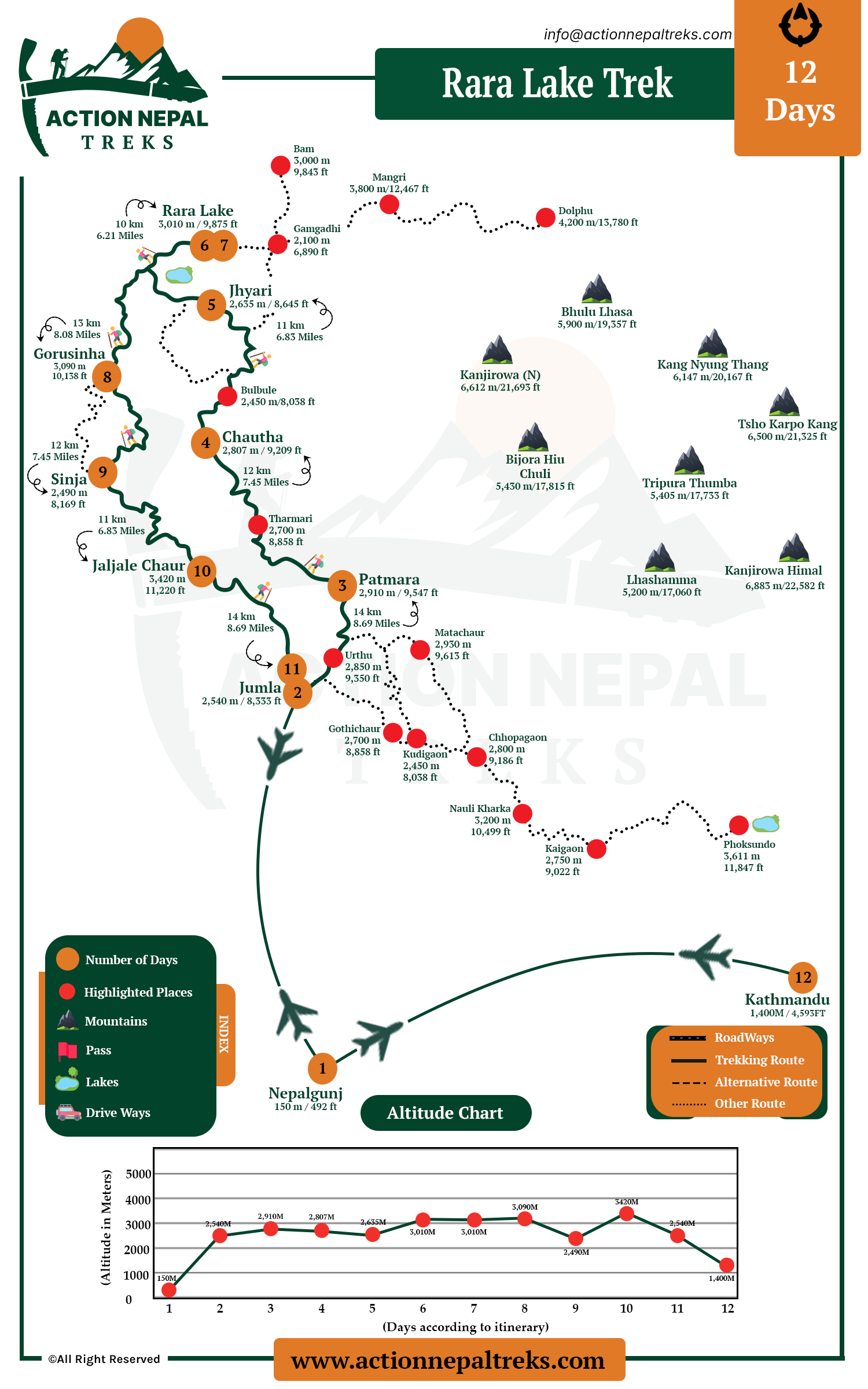
Rara Lake is located in the far-western part of Nepal, specifically in the Mugu District of Karnali Province, with a portion extending into Jumla District. It lies inside the Rara National Park (the smallest national park of Nepal), surrounded by thick coniferous forests and backed by Himalayan peaks. Its elevation is 2,990m above sea level and covers roughly 10.8km² in surface area, and is 167m deep in places.
Now, let’s talk about what makes Rara Lake so special and worthy of the title “Nepal’s Hidden Paradise.” It is due to the lake’s untouched beauty, alpine serenity, and remote location that make it feel like a true escape from the world. As the country’s largest lake in terms of freshwater, it offers crystal-clear water that reflects the surrounding mountains and forests. What makes it even more extraordinary is its remote location, far from the crowds. To get there, one needs to first fly to Jumla, and then trek on quiet, off-the-beaten-path trails. Additionally, the region has limited infrastructure, minimal connectivity, and protected status within Rara National Park, as well as geographic isolation, which keeps mass tourism at bay, preserving the region’s natural charm.
So, is Rara Lake Trek Worth It, despite its remoteness?
Definitely, the Rara Lake Trek is worth it, especially if you are someone who loves adventure, serenity, and wants to escape the hustle of crowded trekking trails. That being said, it’s an ideal trek for both beginners and nature lovers. You will trek through quiet forest and village areas, where you will be immersed in the pure beauty of the alpine landscape. And don’t worry about high altitudes. The highest elevation you reach is 3,190m at Gorusinha, and Rara Lake itself is at 2,990m, so you can comfortably handle the trek without the fear of altitude sickness.
Furthermore, the trek takes place in the Rara National Park. This means you have a chance to spot rare wildlife, such as musk deer, red pandas, and even the elusive Himalayan black bear. Add over 200 species of birds, high ridges, and alpine meadows to the mix, and you’ve got a photographer’s paradise. So, if you are a birdwatcher or plant lover, this area will be a paradise for you.
Also, if you seek a more immersive cultural experience, you have the opportunity to learn about the Thakuri and Chhetri cultures and traditions in Gorusinha, Sinja, and Jaljala villages. Local people here still follow a culture that has been preserved for centuries, and their unhurried lifestyle will surely make you reflect on your own life and teach you to embrace stillness and savor each moment. It’s something very few treks teach. So yeah, Rara Lake must be in a remote area, but that’s what makes it such a treasure.
What to Expect (and What Not to) on the Rara Lake Trek
Now that we have talked about how remote Rara Lake is, why it is called the Hidden Paradise, and what makes Rara Lake special, it’s time to discuss the main topic, which is “what can you expect and not expect on the trek”. Let’s be clear first, this trek is not any sort of fancy or comfort trek. It’s raw, authentic, and unfiltered. Here’s the real Rara Lake Trek experience:
- Basic accommodation: You will stay in small, family-run teahouses in Patmara, Chautha, Jhyari, and around Rara Lake. The rooms are simple, and there are wooden beds and thin mattresses. So, during cold nights you need to wear warm clothes to cope with the weather.
- Simple meals: You will eat dal bhat for lunch and dinner most days. You’ll also get boiled potatoes, eggs, noodles, and bread. Just don’t expect gourmet meals like those in other popular trekking regions.
- Limited power for charging: Electricity is unreliable in this area. But you may find solar or hydro power in some teahouses, but not everywhere. You may charge your electronic devices if the hotel owner permits. Most of the time, you have to pay extra for that.
- Minimal connectivity: The mobile signal is patchy or unavailable altogether. Plus, the Wi-Fi is not available at all. So, you will be fully offline. Think of this trek as a total disconnection from any digital distractions.
Minimal medical assistance: There are small health posts in Jumla and Sinja, but they don’t have much medicine. For serious issues, a helicopter evacuation might be necessary. So, make sure your insurance covers this and bring a first-aid kit with altitude sickness medication, pain relief, and basic supplies.
- Fewer shops: Once you leave Jumla, there are no more stores, or just one or two to buy extra snacks or other items. Thus, bring everything you need from the start.
- Friendly locals: The local people along the trek are warm and friendly. Many are shy at first, but their smiles say it all. Children often follow you along the trail, greeting you with cheerful “Namaste!” and sharing little stories or showing their daily lives.