Sambir
Connect With a Trek Expert(Simbir) +977 9709278526

Short Annapurna Circuit Trek

Mountain Icon

Max. Altitude

5,416m/ 17,769ft

Duration Icon

Duration

8 Days

Grade Icon

Grade

Moderate
Activity Icon

Activity

short treks in Nepal

Season Icon

Best Season

March, April, May, September, October, November

Transportation Icon

Transportation

Tourist Bus and Shared Jeep

Meals Icon

Meals Included

B.L.D

Breakfast
Lunch
Dinner

Accommodation Icon

Accommodation

Hotel
Region Icon

Trek Region

Annapurna Region Trek Packages

Destination Icon

Destination

Tours & Treks in Nepal

Destination Icon

Group Size

1 - 20

Activity Icon

Activity Per Day

4-6 Hrs Walk

Start End Icon

Start/End Point

Kathmandu / Pokhara

Nature Icon

Nature Of Trek

Lodge-to-Lodge Trekking

Short Annapurna circuit Trek Overview

The 8-Day Short Annapurna Circuit Trek is designed for trekkers who want to experience the circuit’s most spectacular section without committing to the full route. The trek skips the lower road sections and begins directly from Chame (2,610m/ 8,890ft), taking you straight into the heart of the Annapurna region. From there, the trail passes through traditional mountain villages, pine forests, and dramatic river valleys. As you move higher, the views of Annapurna, Dhaulagiri, Gangapurna, and other Himalayan peaks become increasingly impressive.

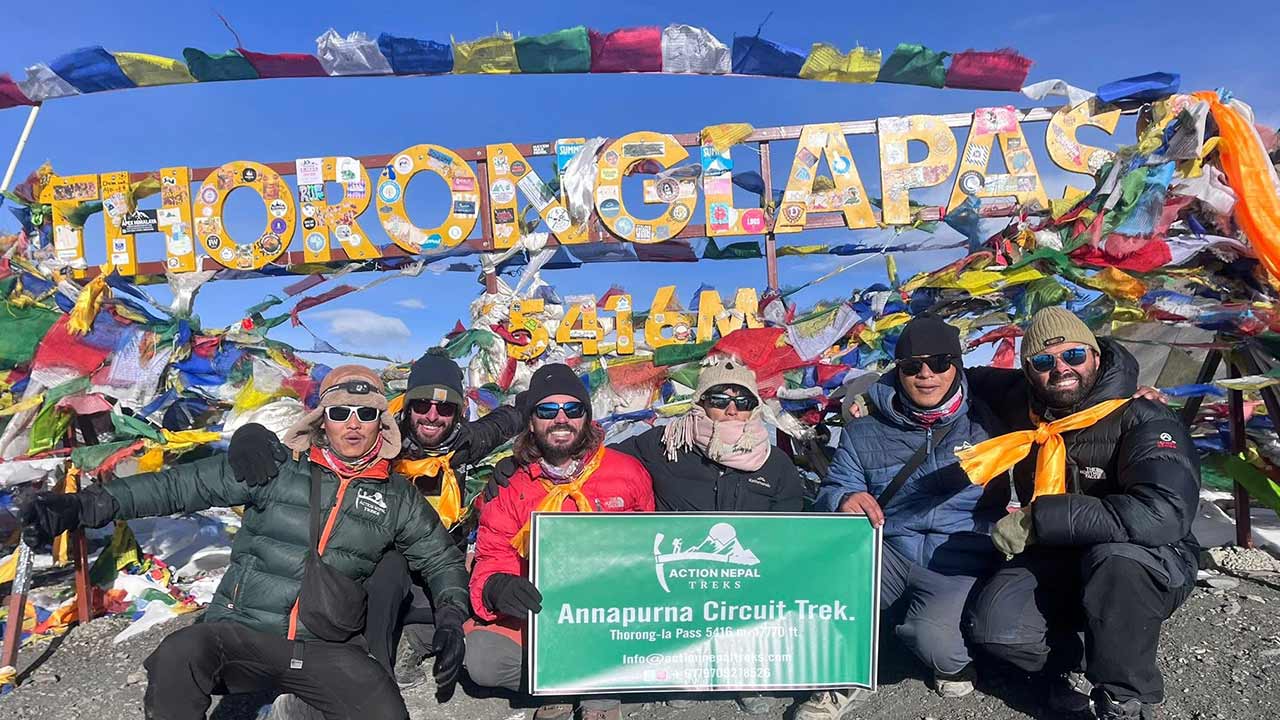
The highlight of the trek is crossing Thorong La Pass (5,416m/ 17,769ft), one of Nepal’s highest and most famous trekking passes. After reaching the summit, the trail descends into the Mustang region and continues to the sacred Muktinath Temple, an important pilgrimage site for both Hindus and Buddhists. Along the way, you’ll stay in traditional teahouses and experience the culture and hospitality of local mountain communities.

This trek is suitable for people with a reasonable level of fitness and some prior hiking experience. Most days involve 5-7 hours of walking, while the Thorong La crossing is the longest and most demanding day of the journey. Technical climbing skill isn’t required, making it an excellent choice for trekkers seeking a shorter but rewarding Himalayan trekking experience.

8 Days Short Annapurna Circuit Trek Itinerary

Day 1: Drive to Besishahar, then drive to Chame

Starting off easy, your journey to the Himalayas begins with a drive from Kathmandu to Besisahar. This exciting adventure towards the northwest takes around 5-6 hours to complete. During this drive, you cross multiple urban villages and get a glimpse of the snow-capped Annapurna and Manaslu mountains.

Once you arrive in Besisahar, board a shared jeep and drive to Chame via an off-road route. This takes another 4 hours as you cover about 67 km straight without any stops. Finally, you reach Chame and spend the night in a lodge after a tiring travel day.

Itinerary Details
Itinerary Fact Details
Meals Icon
Meals
Breakfast, Lunch, Dinner
Accommodation Icon
Accommodation
Lodge
Distance Icon
Trek Distance
240km/ 149miles
Mountain Icon
Highest Altitude
2,610m/ 8,890ft
Duration Icon
Drive Duration
9-10 hours

Day 2: Chame to Upper Pisang

The second day marks the beginning of your daily trekking journey. After having breakfast, you continue toward Upper Pisang, which stands at an altitude of 3,115m/ 10,200ft, following the trail of the Marsyangdi River. After a couple of hours, you come across a suspension bridge and make a steep climb to reach the first stop of the day, the village of Dhukur Pokhari. Here, you can enjoy a freshly prepared lunch and continue trekking towards Pisang.

Along the way, stunning views of Annapurna II, Annapurna IV, and Pisang Peak continue to captivate you. On the route, other remote villages like Chemyau Kharka and Bratang, as well as a memorial of a Japanese climber, can also be seen. Passing through a forest, you eventually arrive at Lower Pisang and continue trekking to Upper Pisang to spend the night.

Itinerary Details
Itinerary Fact Details
Meals Icon
Meals
Breakfast, Lunch, Dinner
Accommodation Icon
Accommodation
Lodge
Distance Icon
Trek Distance
13.6 km/ 8 miles
Mountain Icon
Highest Altitude
3,115m/ 10,200ft
Duration Icon
Trek Duration
5-6 hours

Day 3: Upper Pisang to Manang

The trek continues on the third day after breakfast at Upper Pisang. On this day, you hike towards Manang. This 6-7 hour hike is one of the main highlights of the Annapurna Circuit. You trek alongside the pine trees to reach the village of Braga. At Braga, you can explore a popular hilltop monastery and the surrounding area.

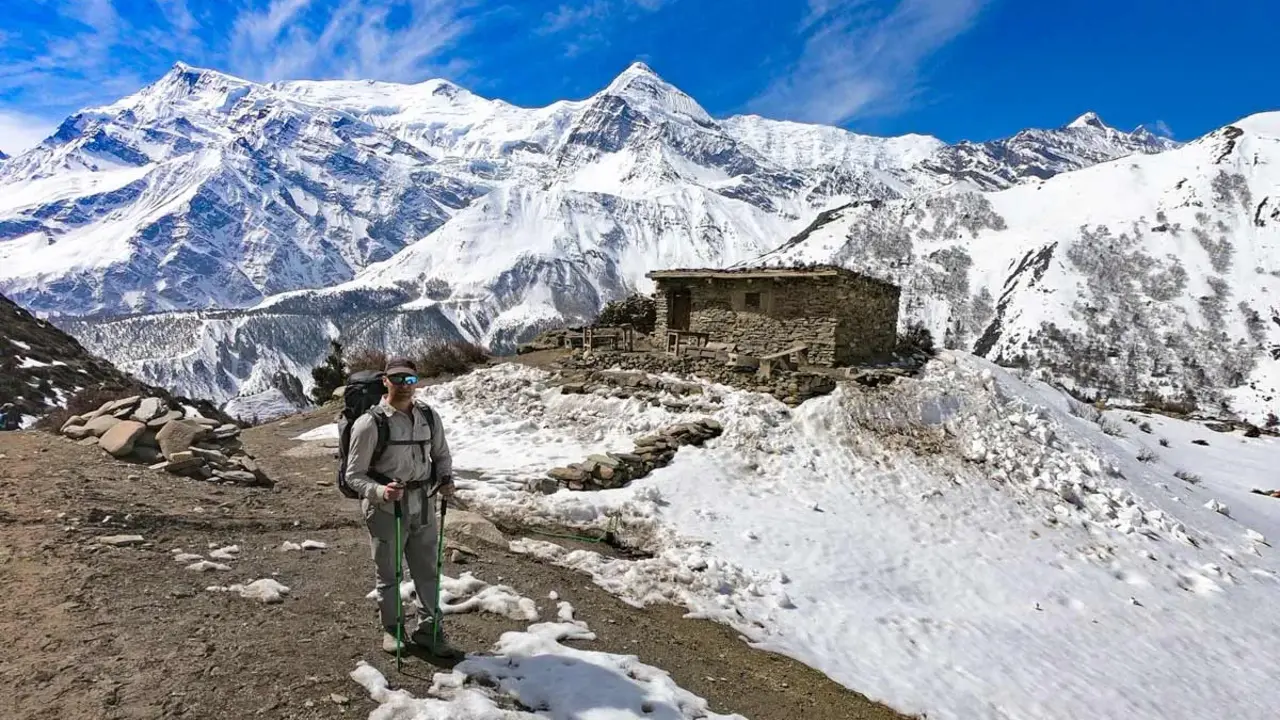
Moving forward, you ascend through more pine forests and cross multiple suspension bridges to finally arrive at the village of Manang. Here, you spend two nights straight before continuing the trek towards Yak Kharka for acclimatization and rest. At Manang, you can enjoy views of Mt. Chulu and Gangapurna.

Itinerary Details
Itinerary Fact Details
Meals Icon
Meals
Breakfast, Lunch, Dinner
Accommodation Icon
Accommodation
Lodge
Distance Icon
Trek Distance
17km/ 10.4miles
Mountain Icon
Highest Altitude
3,540m/ 11,614ft
Duration Icon
Trek Duration
6-7 hours

Day 4: Acclimatization Day in Manang

Today is the rest day in Manang. Waking up early in the morning, you gather around for breakfast. After breakfast, the guide leads a short hike to the nearby Gangapurna Lake and Glacier to acclimate to the thin air. Along with helping you acclimatize, this hike rewards you with stunning views of the towering Himalayas.

You can even visit the Chongkor viewpoint for panoramic views of the surroundings. After spending a few hours at the viewpoint, you can return to the town to explore a few cultural museums and the Braga Monastery, nestled inside. With the day coming to an end, you get back to the lodge for a hearty meal and take a rest for the day.

Itinerary Details
Itinerary Fact Details
Meals Icon
Meals
Breakfast, Lunch, Dinner
Accommodation Icon
Accommodation
Lodge
Distance Icon
Trek Distance
4km/ 2.5miles
Mountain Icon
Highest Altitude
3,800m/ 12,467ft
Duration Icon
Trek Duration
3 hours

Day 5: Manang to Yak Kharka (Ledar)

The day involves a quite challenging hike to reach Yak Kharka. Starting with a steady climb through the juniper forest, you continue towards Gunsang, crossing the village of Tengi. Walking for a while alongside locals, horses, and yaks, you reach the village of Gunsang on time to have lunch.

After both a stomach and heart-filling lunch, the ascent continues until you reach Yak Kharka in the afternoon. Today’s hike is relatively short to avoid altitude sickness with the sudden increase in altitude. At Yak Kharka, you get enough time to explore the neighborhood before taking a short hike towards Ledar to rest for the night in a comfortable lodge.

Itinerary Details
Itinerary Fact Details
Meals Icon
Meals
Breakfast, Lunch, Dinner
Accommodation Icon
Accommodation
Lodge
Distance Icon
Trek Distance
12km/ 7.4miles
Mountain Icon
Highest Altitude
4,200m/ 13,780ft
Duration Icon
Trek Duration
4-5 hours

Day 6: Ledar to High Camp

On the third last day of your trekking journey, the day begins as usual, with breakfast followed by a hike. Today’s hike is from Ledar to High Camp. It takes about 4 hours. You start slowly and walk towards the popular rest point, Thorong Phedi, passing through the alpine zone, grassy slopes, and rocky terrain.

Along the way, you also come across multiple small settlements, some Buddhist stupas, and prayer flags marking the way. After a few challenging twists and turns, Phedi comes into sight. Here, you can take a brief rest and have a light snack to fuel up before tackling the final, infamously steep switchback climb. After another hour of steady climbing, you reach the final destination for the day, High Camp. After checking in, you enjoy a warm lunch and rest up for tomorrow’s big pass crossing.

Itinerary Details
Itinerary Fact Details
Meals Icon
Meals
Breakfast, Lunch, Dinner
Accommodation Icon
Accommodation
Lodge
Distance Icon
Trek Distance
7.8km/ 5 miles
Mountain Icon
Highest Altitude
4,800m/ 15,744ft
Duration Icon
Trek Duration
4 hours

Day 7: High Camp to Thorong Pass, then to Muktinath

This is the highlight of the trek of your trekking journey. On this very day, you wake up before dawn to hike to Muktinath, crossing the Thorong La Pass. This is a high-altitude pass located at 5,416m/ 17,769ft with some of the most majestic views of the Annapurna range and the Kali Gandaki Valley. After gazing at the mountains and celebrating at the top, you then continue down to Muktinath.

Upon reaching Muktinath, you can spend the rest of the day exploring religious temples and shrines. As the day comes to an end, you then spend the night in one of the lodges in Muktinath to regain the energy lost during the day’s trek.

Itinerary Details
Itinerary Fact Details
Meals Icon
Meals
Breakfast, Lunch, Dinner
Accommodation Icon
Accommodation
Lodge
Distance Icon
Trek Distance
14km/ 8.9miles
Mountain Icon
Highest Altitude
5,416m/ 17,769ft
Duration Icon
Trek Duration
7-8 hours

Day 8: Muktinath to Pokhara by Local Bus

On the last day of your journey, you hop on a local bus for a scenic drive towards Pokhara. The drive takes around 8-9 hours, during which you have an opportunity to enjoy the beauty of the lower Mustang Valley and drive through the world’s deepest river gorge, the Kali Gandaki Gorge. After traveling through the hilly roads for hours, you arrive at Pokhara to spend a rewarding night at a luxury hotel.

Pokhara is also famous for its bustling nightlife, which you can explore for a fun experience. The next day, you can either take a flight or travel back to Kathmandu on a comfortable tourist bus. Finally, your 8-day journey to the Annapurna Circuit comes to an end, and you return with a sack full of memories. Namaste.

Itinerary Details
Itinerary Fact Details
Meals Icon
Meals
Breakfast, Lunch, Dinner
Accommodation Icon
Accommodation
Luxury hotel
Mountain Icon
Highest Altitude
3,710m/ 12,172ft
Duration Icon
Drive Duration
175km/ 108miles
Duration Icon
Drive Duration
8-9 hours

What Our Plan Includes and Excludes

Include

Exclude

  • Vehicles drop pick-up at international and domestic airports.
  • A highly experienced government license holder, guide with all his food, accommodation, salary, insurance, and transportation.
  • For two clients, one strong porter with all his food, accommodation, salary, insurance, and transportation.
  • Porter can carry a maximum weight of 20kg with 10 kg of luggage for each trekker.
  • Three meals a day (Breakfast, Lunch, and Dinner) during the trek.
  • For more than six clients, one assistant guide.
  • For every two clients, one room with 2 separate beds.
  • All sharing transportation from Kathmandu to Besisahar to chame. and Muktinath to Pokhara to kathmandu.
  • One night hotel in Pokhara with breakfast.
  • Fresh seasonal fruits every evening after dinner.
  • Light snacks such as Cookies every day.
  • Water purification tablets.
  • Sleeping Bags, Down Jackets, and duffel bags during the Trek. If you don’t have your own.
  • TIMS Card (Trekking Information Management System)
  • ACAP (Annapurna Conservation Area Permit)
  • All entrance fees during the trek.
  • Assistance for emergency Rescue.
  • First aid kit for trek.
  • All government taxes.
  • Successful trip certificate from Action Nepal Treks.
  • Farewell dinner after the trip.
  • International flight tickets.
  • Nepali entry visa fee.
  • All accommodation and meals in Kathmandu and extra accommodation in Kathmandu due to early return from the trek, early arrival, or late departure.
  • Personal expenses. (hot shower, wifi, battery charge, cold drinks, alcohol, extra porters, shopping snacks, personal clothing & gear)
  • Travel insurances.
  • Tips for guides and porters.

Short Annapurna Circuit Trek Route Map

Explore the Trek Route in Google Satellite View for Better Clarity.

Trail
Return Trail

Why Choose a Short Annapurna Circuit Trek Over the Full Route?

The Annapurna Circuit Short Trek package is a condensed version of the classic Annapurna Circuit, which usually takes 14-18 days to complete. It focuses on the upper section of the route, from Chame to Muktinath, in 8 days, skipping the lower valley stretch between Besisahar and Chame, where trails run alongside motor roads with jeep traffic and dust. While scenic in parts, this section is generally considered less rewarding compared to the higher Himalayas.

Thorong la pass
Thorong la pass

This shorter itinerary fits a standard holiday window and reduces overall costs for accommodation, food, guide services, and permits, typically by around USD 300-500 compared to the full circuit. It still includes the main highlights of the trek: Manang Valley, Thorong La Pass at 5,416m/ 17,769ft, and Muktinath Temple, making it a high-reward option in a shorter timeframe.

The trek is suitable for reasonably fit trekkers with some hiking experience. Although not technically difficult, the challenge comes from altitude, especially during the 7-8 hour crossing of Thorong La Pass. Since the journey starts with a jeep transfer to 2,610m/ 8,890ft at Chame, acclimatization is faster, making the rest day in Manang essential for a safe and successful crossing.

Major Attractions of the Short Annapurna Circuit Trek

Even though it is a short, 8 days Annapurna Circuit trek itinerary, it still covers the full range of the classic route’s most important highlights, from cultural valleys to high-altitude passes and sacred sites. Some of the key experiences that define the entire circuit are:

Besisahar

Besisahar is an energetic starting hub and gateway to the entire Annapurna region. Nestled in the lush lower foothills, this bustling town is the key transition point where you verify your trekking permits and board rugged 4×4 jeeps to begin the off-road ascent into the Himalayas. It also offers the final access to modern amenities, banking services, and mobile connectivity before entering remote river valleys.

Manang

Manang, sitting at 3,540m/ 11,300ft, is a hidden valley in the northern Annapurna region of Nepal and one of the most important acclimatization stops on the circuit. It offers wide views of snow-capped peaks like Annapurna II, Gangapurna, and Tilicho Peak, while the village itself feels timeless with its stone houses, prayer flags, and ancient monasteries.

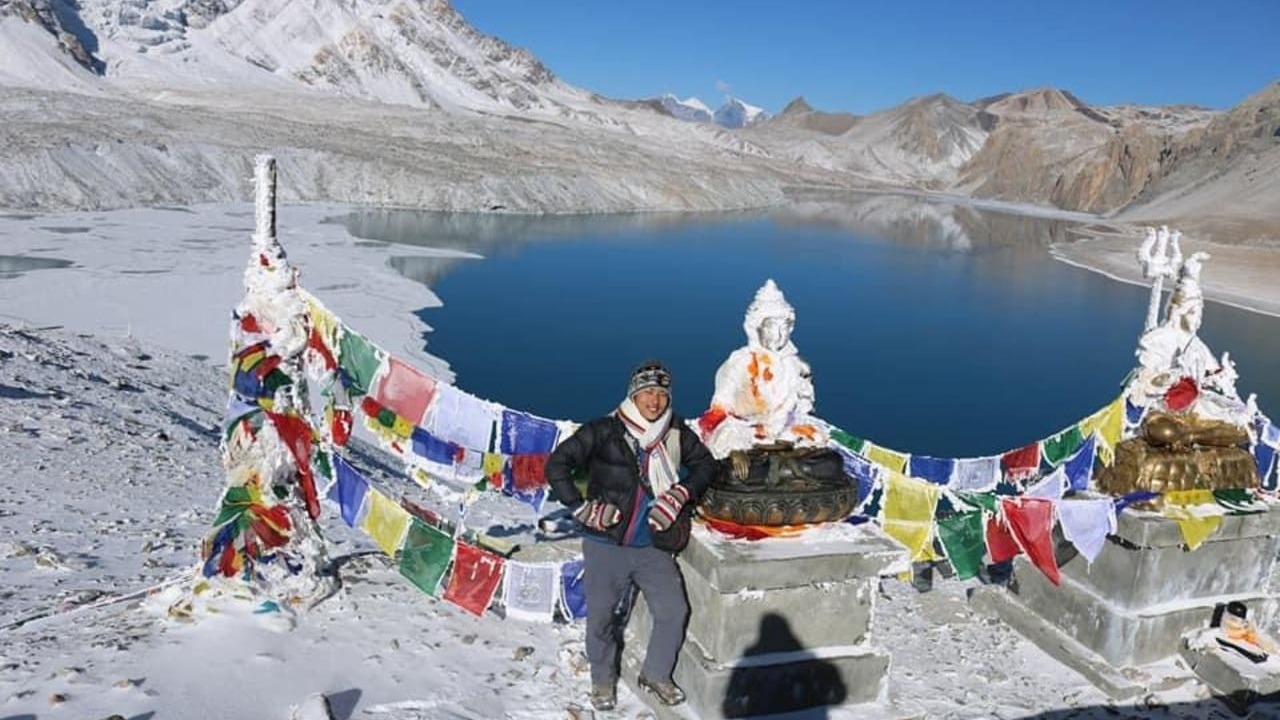
Beyond its mountain scenery, Manang is rich in culture and short hikes. You can visit the sacred Milarepa Cave, explore Braga Monastery, or walk to viewpoints overlooking Gangapurna Glacier Lake. It is also the main gateway to Tilicho Lake (4,920m/ 16,142ft), one of the highest lakes in the world, making Manang both a cultural hub and a key adventure base before crossing Thorong La Pass.

Thorong La Pass, the highest point of the Annapurna Trek

Thorong La Pass is the highest point that you reach during a short Annapurna Circuit Trek. It reaches an altitude of 5,416m/ 17,769 ft, making it one of the highest passes in Nepal. Upon reaching here, you can enjoy stunning views of majestic mountains and pristine glaciers. Additionally, the panoramic vistas of the Annapurna and Damodar Himalayan range seen from here are awe-inspiring.

The Sacred Muktinath Temple and its 108 Water Spouts

Hidden in the desert landscape of Lower Mustang at 3,760m/ 12,335ft, Muktinath Temple is revered by both Hindus and Buddhists. Its complex includes monasteries alongside the main Vishnu temple. For Hindus, it is one of the 108 Divya Desams dedicated to Lord Vishnu. For Buddhists, it is linked to Guru Rinpoche.

It is known for the Jwala Mai shrine, where a natural flame burns above a water source. It is also famous for its 108 curved water spouts, where pilgrims bathe in freezing water as a ritual of cleansing. For trekkers coming from Thorong La Pass, it marks the natural and emotional end of the circuit.

How to get to the starting point of the trek?

The Short Annapurna Circuit Trek officially begins from Chame (2,610m/ 8,890ft). To reach here from Kathmandu or Pokhara, the journey is usually done in two stages. First, you travel along the highway to Besisahar, and from there, you continue on a rugged off-road drive following the Marsyangdi River valley up to Chame. This travel day is long, but it also marks the real entry into the Himalayan landscape.

Standard Option (Bus + Shared Jeep)

This is the most budget-friendly and commonly used route. You start with an early morning bus or tourist coach from Kathmandu or Pokhara to Besisahar. This journey takes around 5 to 6 hours through winding highway roads and river valleys.

From Besisahar, the journey continues in a shared 4×4 jeep with other trekkers. This section is more adventurous, as the road follows a rough mountain track alongside the Marsyangdi River. The drive to Chame usually takes about 4 hours, but it can take longer depending on road conditions, traffic, and weather.

Private Option (Direct 4×4 Jeep)

This option is more comfortable and time-saving, ideal for small groups or families. It’ll pick you up directly from your hotel in Kathmandu or Pokhara and drive straight to Chame without changing vehicles at Besisahar.

The main advantage is convenience and flexibility. You can stop for meals, breaks, and photos along the way, and you avoid the hassle of switching transport. It also reduces waiting time and makes the long travel day more relaxed before starting the trek.

A Typical Day During the Short Annapurna Circuit Trek

A typical trekking day on the Short Annapurna Circuit follows a simple, steady rhythm shaped by mountain life. You wake around 6:30 AM with hot tea or coffee and a filling breakfast in the lodge dining room. After that, you start walking at 7:30-8:00 AM, to make the most of clear morning conditions and stable weather.

ACT in winter

Along the trail, you take short breaks every few hours to rest, hydrate, and enjoy views of the surrounding peaks. Around midday, you stop at a village teahouse for a freshly cooked lunch, which gives you energy for the final stretch of the day. Most trekking sections are completed in the afternoon.

You usually reach the next lodge by 2:00-3:00 PM, leaving time to explore the village or nearby monasteries. As evening sets in, everyone gathers in the heated dining room around a wood or yak-dung stove. You enjoy dinner with fellow trekkers, often followed by stories, card games, and rest before the next day’s journey.

Add-Ons You Can Combine with Your Trek Package 

If you have extra time in Nepal, these add-ons can make your Short Annapurna Circuit Trek even more rewarding. Some enhance the trekking experience itself, while others add cultural, wildlife, or relaxation experiences before or after the trek. The most popular trekking destinations are Tilicho Lake, Upper Mustang, and the Jomsom-Pokhara scenic flight.

Tilicho Lake Extension

Annapurna Circuit Trek with Tilicho lake
Tilicho lake

After your acclimatization day in Manang, you can leave the main circuit trail and head toward Tilicho Lake (4,920m/ 16,142ft). The lake is one of the world’s highest alpine lakes, lying beneath the northern slopes of the Annapurna Massif. The trek takes you through remote, rugged terrain and dramatic glacial landscapes. Soon, the lake’s turquoise waters come into view. Snow-covered Himalayan peaks rise above the shoreline. After your visit, return to the main route and continue onward to Yak Kharka and Thorong La Pass.

  • Additional time required: +3 days
  • Difficulty: Challenging
  • Best for: Adventure seekers, photographers, and trekkers wanting a more demanding high-altitude experience

Ice Lake Acclimatization Hike

Instead of the standard acclimatization walk to Gangapurna Lake, hike to Ice Lake (Kicho Tal) at 4,600m/ 15,091ft. This challenging day hike takes around 6-8 hours round-trip and rewards you with some of the best views in the Annapurna region, including Annapurna II, Annapurna III, Gangapurna, and Tilicho Peak. It takes you to a higher elevation during the day, helping your body acclimate better before the crossing of Thorong La Pass.

  • Additional time required: None
  • Difficulty: Moderate to challenging
  • Best for: Trekkers seeking better acclimatization and exceptional mountain views

Upper Mustang Extension

After trekking to Muktinath, instead of driving south toward Pokhara, you can continue north into Upper Mustang, a remote Himalayan region often called Nepal’s “Last Forbidden Kingdom.” With this extension, you get to see the high-altitude desert of colorful cliffs, ancient cave dwellings, and centuries-old monasteries. The journey culminates at Lo Manthang, a historic walled city that preserves a unique Tibetan-influenced culture.

  • Additional time required: +5 to 7 days
  • Difficulty: Moderate
  • Best for: Culture enthusiasts, photographers, and travelers seeking a more remote Himalayan experience

Jomsom to Pokhara Scenic Flight

Rather than taking the full overland journey from Muktinath to Pokhara on Day 8, you can drive to Jomsom and board a short mountain flight to Pokhara. The flight follows the Kali Gandaki Valley between the Annapurna and Dhaulagiri ranges, allowing you spectacular aerial views while significantly reducing travel time.

  • Additional time required: None
  • Difficulty: Easy
  • Best for: Travelers short on time and anyone wanting a memorable mountain flight experience

Pokhara Wellness Extension

Peace Pagoda as one of the main attraction of Pokhara
Peace Pagoda

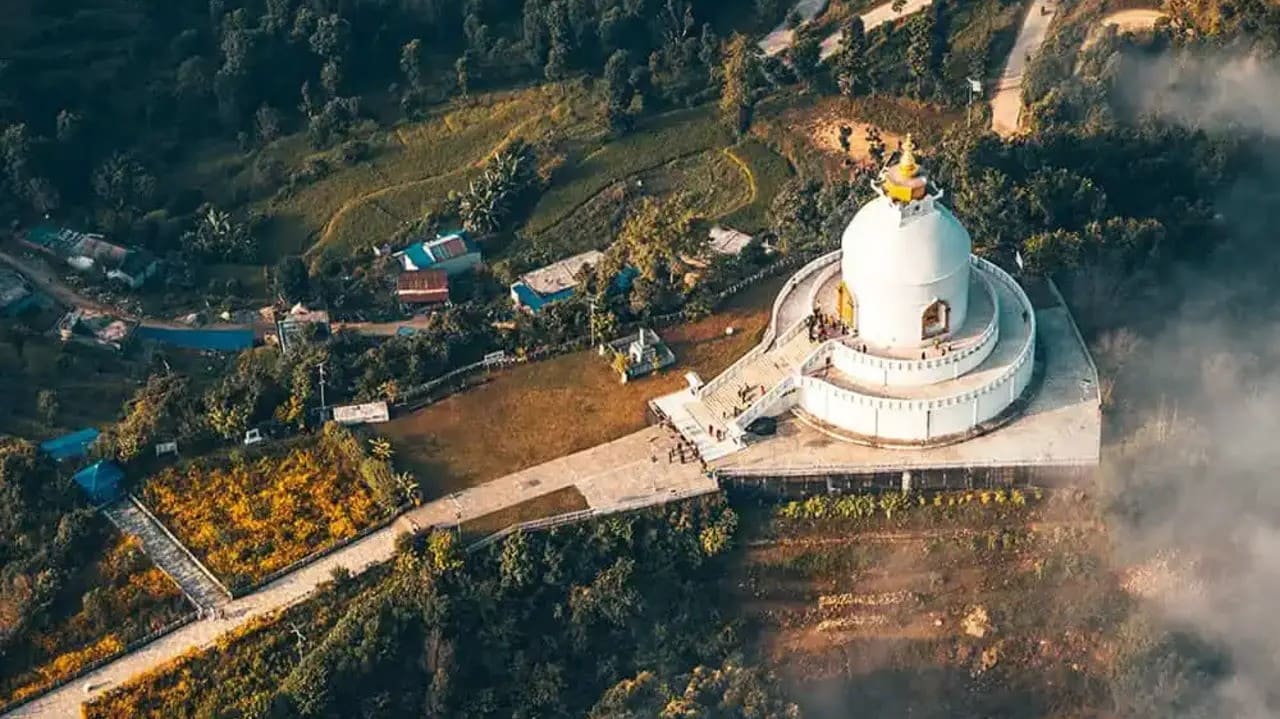
After arriving in Pokhara at the end of the trek, you can extend your stay by a day or two to relax and recover. Enjoy lakeside accommodation, spa treatments, boat rides on Phewa Lake, and visits to attractions such as the World Peace Pagoda and Davis Falls. It is an ideal way to unwind after crossing Thorong La Pass.

  • Additional time required: +1 to 2 days
  • Difficulty: Easy
  • Best for: Couples, leisure travelers, and trekkers looking for post-trek relaxation

Chitwan National Park Safari

After the trek, you can travel from Pokhara to Chitwan National Park for a completely different side of Nepal. You can enjoy activities such as jungle safaris (on jeeps or guided walks) and canoe rides, which offer countless opportunities to spot one-horned rhinoceroses, crocodiles, deer, and a wide variety of birdlife in their natural habitat.

  • Additional time required: +3 days
  • Difficulty: Easy
  • Best for: Wildlife lovers, families, and travelers wanting to combine mountains with nature and wildlife

Bandipur Heritage Village Stopover

You can also break up the journey to or from the Annapurna region with a stop in Bandipur. It is a beautifully preserved Newari hill town known for its traditional architecture, stone-paved streets, and Himalayan viewpoints. It offers a peaceful cultural experience and a slower pace before or after the trek.

  • Additional time required: +1 day
  • Difficulty: Easy
  • Best for: Culture lovers, couples, and travelers interested in traditional Nepali heritage

Kathmandu Valley Cultural Tour

This extension can be added before or after the trek. You spend a day exploring the valley’s UNESCO World Heritage Sites. Highlights include Boudhanath Stupa, Swayambhunath (Monkey Temple), Pashupatinath Temple, and Kathmandu Durbar Square, each offering insight into Nepal’s rich history, architecture, and spiritual traditions.

  • Additional time required: +1 day
  • Difficulty: Easy
  • Best for: First-time visitors, history enthusiasts, and cultural travelers

Food and Accommodation on Short Annapurna Circuit Trek

Your 8-day journey through the Himalayas is supported by Nepal’s well-established network of mountain teahouses and local lodges. Accommodation becomes progressively simpler as you gain altitude, shifting from basic comfort to more rustic, high-altitude living. Despite the simplicity, these lodges provide everything needed for rest, warmth, and recovery after long trekking days.

Accommodation on the trail

Rooms along the Annapurna Circuit are generally twin-sharing with basic wooden beds, mattresses, pillows, and blankets. The standard changes noticeably with altitude. In lower villages like Chame and Pisang, lodges are generally more comfortable, with slightly better bedding, warmer dining areas, and more reliable hot water. As you move higher toward Manang, Yak Kharka, and High Camp, facilities become more basic due to limited resources and harsher weather, with thinner bedding and colder rooms.

ACT Accommodation

Bathrooms also vary by elevation. Lower settlements may offer a mix of shared bathrooms, sometimes attached, with basic Western-style toilets and occasional hot showers (usually gas or solar-heated). Higher up, especially after Manang, facilities are mostly shared squat toilets, with limited or no hot water depending on weather and supply conditions.

Every lodge has a central dining hall that serves as the main social space regardless of altitude. This room becomes especially important at higher elevations in the evening, as it is the only heated space warmed by a wood- or yak-dung stove. Trekkers eat, rest, and share stories here after each day’s walk before heading into cold, unheated rooms for the night.

Meals on the trek

Food on the Annapurna Circuit is simple, fresh, and designed to support long trekking days. Most teahouses offer a mix of Nepali, Tibetan, and basic Western dishes, with meals becoming more limited as altitude increases.

Meal Type Popular Menu Options Specialty & Benefits
Breakfast Pancakes, porridge, muesli, eggs, toast, Tibetan bread Provides steady morning energy for hiking
Lunch & Dinner Dal Bhat, Thukpa, Momos Dal Bhat is unlimited and ideal for sustained trekking energy
Western Options Pasta, pizza, burgers, fried noodles Familiar comfort food available in most lodges
Trail Snacks Apple pie, Snickers pie, spring rolls, popcorn Quick energy boosts from small teahouse bakeries

How Difficult Is the Short Annapurna Circuit Trek?

The Short Annapurna Circuit Trek is classified as moderately challenging to demanding. Although it follows a non-technical trekking route, the compressed 8-day schedule makes the physical load more intense compared to the full circuit. It requires strong cardiovascular fitness, leg endurance, and mental resilience to handle long trekking days at high altitude.

One of the main challenges is the rapid ascent profile. On the first day, you travel directly to Chame at 2,610m/ 8,890ft, skipping the gradual multi-day walk-in from lower elevations. This accelerates altitude gain and reduces natural acclimatization time, making the rest day in Manang essential to reduce the risk of altitude sickness.

Trekking at Annapurna Circuit

Secondly, daily trekking also adds to the difficulty. You should expect 5-7 hours of hiking on most days, with the toughest section on Day 7, when the climb to Thorong La Pass (5,416m/ 17,769ft) can take 8-10 hours starting before dawn in freezing temperatures. The trail includes rocky paths, steep stone steps, and exposed ridgelines, especially on the approach to High Camp, where the climb becomes continuously steep.

Thirdly, the altitude itself is a major factor. At Thorong La, oxygen levels drop to nearly half those at sea level. You’ll feel tired even when you walk slowly. Facilities also become more basic beyond Manang. Lastly, you must deal with unpredictable alpine weather and nighttime temperatures that can drop to around -15°C at higher camps like High Camp.

Tips to Make Your Short Annapurna Circuit Trek Easier

While the 8-day itinerary is physically demanding, the right preparation and habits can significantly reduce strain and make the trek more manageable. Here are some small, smart choices on and off the trail that directly impact your energy levels, recovery, and altitude adaptation:

  • Build cardio before arrival: Start training 6-8 weeks in advance with stair climbing, incline walking, running, or cycling. Since you reach 2,610m/ 8,890ft on Day 1, a strong cardiovascular base helps your body handle reduced oxygen more efficiently from the start.
  • Attend the pre-trek briefing: Use this time to let your trekking guide check your gear and remove any unnecessary items. Every extra kilogram matters at altitude, so cutting down to essentials makes a noticeable difference in daily energy levels, especially on long climbs and descents.
  • Travel light with a porter: Carrying a heavy backpack increases fatigue on long ascents and descents. Hire a porter so you can trek with only a light daypack. This helps you maintain your stamina and makes high-altitude days much easier.
  • Use trekking poles: They reduce pressure on the knees and improve balance on steep or uneven terrain. They are especially helpful on the climb to High Camp and the long descent to Muktinath.
  • Maintain a slow, steady pace: Walk slowly and consistently instead of rushing. Match your breathing to your steps and avoid overexertion. If you cannot speak in short sentences while walking, your pace is too fast.
  • Stay well hydrated: Dry mountain air increases fluid loss. So, aim for 3-5 liters of water daily and use electrolytes to prevent dehydration, headaches, and fatigue at higher altitudes.
  • Prioritize warmth at night: Cold drains energy quickly at high altitude. Sleep in thermal layers, use a warm hat, and request a hot water bottle in your sleeping bag to conserve body heat and improve recovery.

Short Annapurna Circuit Trek Permits

You must carry two mandatory permits to legally complete the trek. These are checked at multiple points along the route, including Besisahar and Chame, so make sure to carry physical copies throughout the trek. Since the route passes through restricted and protected areas, permits are issued through a registered trekking agency with a licensed guide.

Annapurna Conservation Area Project Permit (ACAP)

The ACAP is managed by the National Trust for Nature Conservation (NTNC). It is required to enter the Annapurna Conservation Area, which helps fund trail maintenance, conservation projects, and wildlife protection. It can be obtained in Kathmandu, Pokhara, or processed through the official NTNC permit system.

Trekkers Information Management System (TIMS) Card

The TIMS card is issued by the Nepal Tourism Board (NTB) and is used for trekker tracking and safety monitoring. It helps authorities record movement along the trail and supports emergency response in remote areas. Each card includes a unique QR code that is scanned at checkpoints.

Permit Costs Summary

Permit Type Foreign Nationals SAARC Nationals Nepali Citizens Where to Obtain the Permit?
ACAP Permit NPR 3,000 (USD 19.85) NPR 1,000 (USD 6.60) NPR 100 (USD 0.65) Available at the Nepal Tourism Board (NTB) in Kathmandu or the NTNC office in Pokhara
TIMS Card NPR 2,000 (USD 13.25) NPR 1,000 (USD 6.60) None Available at Nepal Tourism Board (NTB) counters in Kathmandu or Pokhara
Total Cost NPR 5,000 (USD 33.10) NPR 2,000 (USD 13.20) NPR 100 (USD 0.65)
Note: Children under 10 years do not require permits. Your trekking agency typically handles all documentation, including passport copies and photos, before departure.

Best Time for Short Annapurna Circuit Trek

Spring and Autumn remain the most practical periods for the Short Annapurna Circuit Trip due to stable weather, clear visibility, and safer high-altitude travel conditions. These seasons are widely considered ideal, as they bring stable weather, clear mountain visibility, safer trail conditions, and a better chance of crossing Thorong La Pass without major disruption.

Spring (March to May)

Spring is one of the most scenic seasons on the trail. Early mornings often open to clear views of Annapurna II, Gangapurna, and Tilicho Peak, while lower valleys between Besisahar and Chame come alive with blooming rhododendrons and fresh greenery. As winter snow melts, higher sections also become easier to walk.

The weather stays mostly stable, so trekking days feel smooth and consistent. Conditions are generally comfortable for walking, with mild daytime weather and cooler nights at higher altitudes. Overall, it is a balanced season for both scenery and trail conditions.

Autumn (September to November)

Autumn is widely considered the clearest season for Himalayan views. After the monsoon, the air feels cleaner and drier. This allows you sharp visibility of the Annapurna range throughout the trek, especially around Manang and the approach to Thorong La Pass.

Trails stay firm and dry, which makes long climbs and descents easier to manage. The weather is steady, so trekking schedules usually run without interruption. It is also a busy season, as conditions are at their most reliable for high-altitude trekking, especially for the Annapurna Circuit Trek 8 days itinerary.

Monsoon (June to August)

Monsoon brings rain to the lower sections of the route, reducing visibility and making the trails muddy and slower to walk. Road travel between Kathmandu, Besisahar, and Chame can also face delays due to landslides.

Even so, the upper sections of the Annapurna Circuit, such as Manang, remain relatively dry because they lie in a rain shadow. You can trek, but mountain views are often blocked by clouds, and the trail feels heavier due to humidity.

Winter (December to February)

Winter offers quiet trails and strong mountain views on clear days, but conditions are much colder and less predictable. Snow can accumulate in higher elevations and, at times, even cause closure at Thorong La Pass, affecting the entire route.

As you go higher, cold becomes more intense, especially at night. Some teahouses also reduce services or close. While the landscape is peaceful and dramatic, it demands better preparation and flexibility compared to other seasons.

Why Trek With Action Nepal Treks?

Action Nepal Treks connects you directly with over 15 years of hands-on Himalayan trekking experience. We focus on safe, well-organized, and high-quality expeditions across Nepal, including the Annapurna Circuit. If you want a trek that is smooth, safe, and guided by people who actually know the mountains, we are here to make that happen.

  • Experienced Himalayan leadership – We are led by veteran guide Simbir Ghale with 15+ years of real trekking experience in Nepal.
  • Safety-focused guiding – We work with licensed guides trained in high-altitude first aid and emergency response.
  • Smart altitude management – We follow steady pacing and health monitoring above 3,000m to reduce altitude risks.
  • Flexible itineraries – We adjust routes, timing, and group plans based on your fitness and travel needs.
  • Reliable on-trip support – We provide quick help and coordination for changes or emergencies during the trek.
  • Responsible trekking practices – We follow eco-friendly habits to keep trails clean and protected.
  • Community support – A portion of every trek helps fund education and healthcare in remote mountain villages.
  • Fair treatment for staff – We ensure guides and porters are paid fairly, insured, and properly supported.

Dates & Prices

Our fixed departure dates and per-person pricing make it simple for both solo travelers and small groups to join the adventure. It’s a great chance to meet new people and share the experience with other trekkers. Just choose your preferred date, and we’ll take care of the rest.

Short Annapurna Circuit Trek Departure Date

Start Wednesday

2 Sep

Status

Booking Open

Days

8

Per Person

USD 699

Short Annapurna Circuit Trek

Start Friday

4 Sep

Status

Booking Open

Days

8

Per Person

USD 699

Short Annapurna Circuit Trek

Start Monday

7 Sep

Status

Booking Open

Days

8

Per Person

USD 699

Short Annapurna Circuit Trek

Start Wednesday

9 Sep

Status

Booking Open

Days

8

Per Person

USD 699

Short Annapurna Circuit Trek

Start Friday

11 Sep

Status

Booking Open

Days

8

Per Person

USD 699

Short Annapurna Circuit Trek

Start Monday

14 Sep

Status

Booking Open

Days

8

Per Person

USD 699

Short Annapurna Circuit Trek

Start Wednesday

16 Sep

Status

Booking Open

Days

8

Per Person

USD 699

Short Annapurna Circuit Trek

Start Friday

18 Sep

Status

Booking Open

Days

8

Per Person

USD 699

Short Annapurna Circuit Trek

Start Monday

21 Sep

Status

Booking Open

Days

8

Per Person

USD 699

Short Annapurna Circuit Trek

Start Wednesday

23 Sep

Status

Booking Open

Days

8

Per Person

USD 699

Short Annapurna Circuit Trek

Start Friday

25 Sep

Status

Booking Open

Days

8

Per Person

USD 699

Short Annapurna Circuit Trek

Start Monday

28 Sep

Status

Booking Open

Days

8

Per Person

USD 699

Short Annapurna Circuit Trek

Start Wednesday

30 Sep

Status

Booking Open

Days

8

Per Person

USD 699

Short Annapurna Circuit Trek

Gear and Equipment Guide for the Short ACT

Clothing
boot
sleeping bag
trekking Gear
first-aid
powerbank

Clothing

  • Base Layers (Top & Bottom)
  • Mid-layer (Fleece or Insulated Jacket)
  • Outer Layer (Waterproof Jacket & Pants)
  • Trekking Pants
  • Trekking Shirt
  • Insulated Jacket (Down or Synthetic)
  • Warm Hat
  • Sun Hat
  • Gloves (Light & Warm)
  • Buff/Neck Gaiter
  • Socks (3-4 Pairs)
  • Gaiters (Optional)

Footwear

  • Trekking Boots
  • Camp Shoes (Sandals or Lightweight Shoes)
  • Hiking Socks

Sleeping Gear

  • Sleeping Bag (3-Season, Rated to -5°C or 0°C)
  • Sleeping Pad
  • Sleeping Liner (Optional)

Trekking Gear

  • Backpack (30-50L)
  • Daypack (Optional)
  • Trekking Poles
  • Water Bottle (1-2L) or Hydration Bladder
  • Water Filters or Purification Tablets
  • Waterproof Dry Bags
  • Headlamp with Extra Batteries
  • Sunglasses (UV Protection)
  • Sun Protection (Sunscreen & Lip Balm)
  • Trekking Map/Guidebook
  • Camera/Smartphone with Portable Charger

Personal Items

  • First Aid Kit
  • Toiletries (Biodegradable Soap, Toothbrush, etc.)
  • Toilet Paper
  • Snacks (Energy Bars, Trail Mix)
  • Personal Identification & Copies
  • Cash (Nepalese Rupees)
  • Annapurna Conservation Area Permit (ACAP)
  • TIMS Card (Trekkers’ Information Management System)

Optional Gear

  • Camera Gear
  • Portable Charger (Solar or Power Bank)
  • Earplugs
  • Binoculars
  • Notebook & Pen
  • Clothesline (Lightweight)
  • Duct Tape/Repair Kit
  • Spare Batteries

FAQs For Short Annapurna Circuit

Short ACT Trek Reviews

Action Nepal Treks is a reliable trekking company run by a professional guide who has been active in Nepal’s tourism industry for 15 years.

Verified

Journey to ACT

It was exhilaration. The guides Simbir, Prashant, Nibil and Suman are very experienced, fun and caring ones. Without them, I may not have completed this ACT. Thank you 🙏🙏🙏

Verified

Journey to ACT

It was exhilaration. The guides Simbir, Prashant, Nibil and Suman are very experienced, fun and caring ones. Without them, I may not have completed this ACT. Thank you 🙏🙏🙏

Verified

Thanks Action Nepal Trek

Great experience with Action Nepal Trek. I'll advise all my travelling friends. Amazing to meet people like that and share all those emotions. Many THANKS to Umesh, Prashant and Niri Man for their kindness, fun, and devotion!!

Verified

Thanks Action Nepal Trek

Great experience with Action Nepal Trek. I'll advise all my travelling friends. Amazing to meet people like that and share all those emotions. Many THANKS to Umesh, Prashant and Niri Man for their kindness, fun, and devotion!!

Verified

8 Days Annapurna Circuit Trek

We were glad to complete the 8 days Annapurna Circuit Trek with Action Nepal Trek (ACT). Simbir and his team were thoughful and took care of us throughout the trek. They never stopped asking how we are feeling and whether we need extra foods and helps. We are now planning our next trek in Nepal with ACT.

Verified

8 Days Annapurna Circuit Trek

We were glad to complete the 8 days Annapurna Circuit Trek with Action Nepal Trek (ACT). Simbir and his team were thoughful and took care of us throughout the trek. They never stopped asking how we are feeling and whether we need extra foods and helps. We are now planning our next trek in Nepal with ACT.

Verified

Highly recommend this company for treks in Nepal!

I had an extremely memorable Annapurna Circuit trek with Simbir. It was my first time doing a multi-day trek and he made sure that the group was taken care of well, ensuring we were paced and caught all the good view points! He would stop to share the names of the mountains and stories about the local people. It was...

Verified

Highly recommend this company for treks in Nepal!

I had an extremely memorable Annapurna Circuit trek with Simbir. It was my first time doing a multi-day trek and he made sure that the group was taken care of well, ensuring we were paced and caught all the good view points! He would stop to share the names of the mountains and stories about the local people. It was such a great experience, I reached out again to Simbir 6 years later to do the Annapurna base camp trek and it was equally memorable. We had a shortened itinerary but Simbir’s positive attitude and pacing every day made things really fun along the entire trek. I’d definitely return to Actionnepaltreks for any future treks I plan in Nep. 10/10 recommend this company!

Similar Trips

Join us on similar trips in the same region

View Details
Ghorepani Poon Hill Trek

Ghorepani Poon Hill Trek

View Details
Nar Phu Valley Trek

Nar Phu Valley Trek

View Details
Experience Remote Establishments of Upper Mustang

Upper Mustang Round Trek

USD 699/ pp