


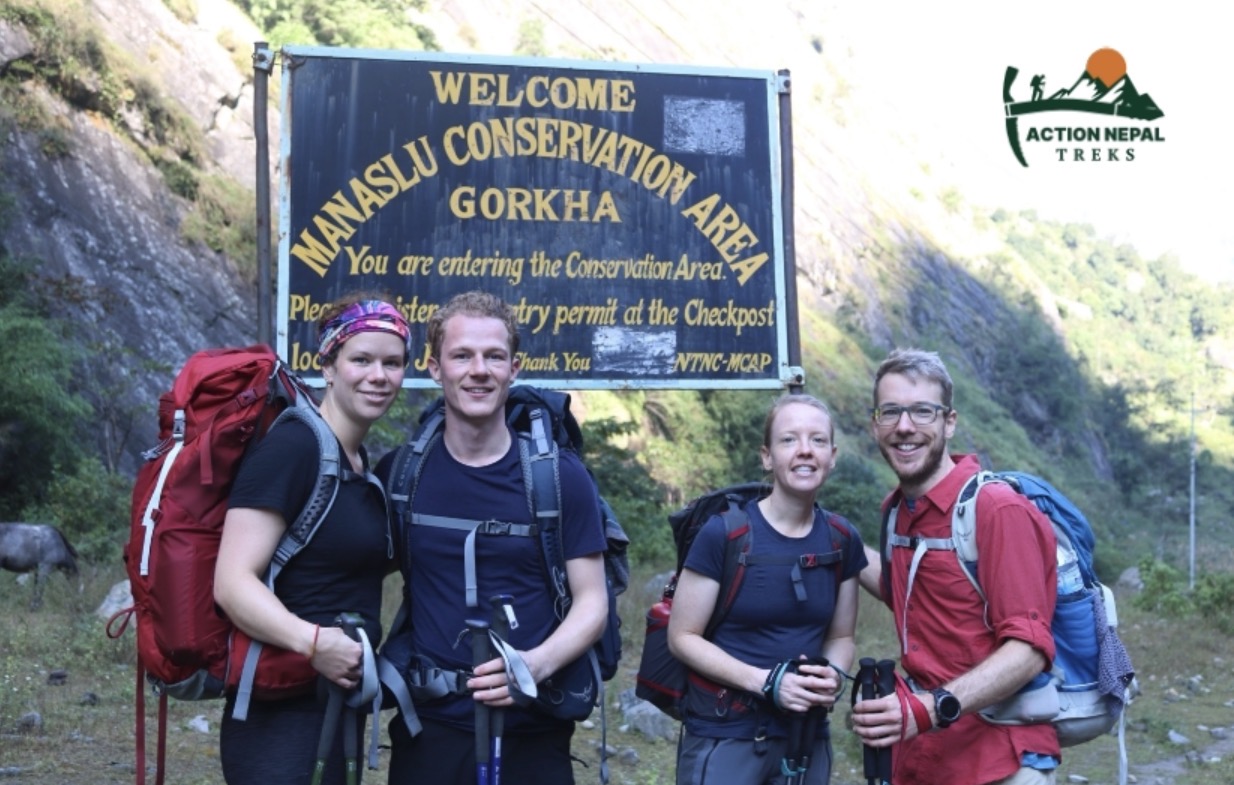
In a world increasingly shaped by rapid modernization, the Manaslu Conservation Area remains a sanctuary where time still follows the slow rhythm of the mountains. This remote landscape serves as a vital refuge, preserving the rugged beauty of the Himalayas and the ancient pathways that have remained unchanged for centuries.
It is more than a collection of ecosystems, a living conservation project that is dedicated to protecting fragile biodiversity and local heritage. It preserves the traditional ways of life for the Gurung, Tamang, Tsumba, and Nubripa communities, ensuring their cultural legacy continues alongside the wilderness they call home.
Where the Manaslu Conservation Area Is Located
The conservation area is located in the historic Gorkha District of Nepal, between the Annapurna region and the high-altitude world of Tibet. You can reach the Manaslu trek trailhead at Machha Khola (869m) with an 8-9-hour drive from Kathmandu or Pokhara. It comprises three distinct valleys: Nubri (the main trekking corridor), Tsum (a sacred, hidden valley rich in spirituality), and Kutang, which lies between them.

You officially enter the region at Jagat (1,340m) and trek through villages including Sirdibas, Bihi, Prok, Lho, and Samagaun. Then you cross the formidable Larkya La Pass (5,106m) and exit at Dharapani (1,860m), where the Manaslu trail seamlessly merges into the Annapurna Circuit.
Why the Manaslu Conservation Area Was Established
The Manaslu Conservation Area Project was established in 1998 to protect a fragile living museum where rare wildlife and ancient cultures coexist. Its purpose is simple: to protect ecosystems ranging from subtropical forests to high-alpine zones and to give endangered species such as snow leopards and red pandas a fighting chance against habitat loss and poaching. It also emphasizes safeguarding the Nubri and Tsumba heritage, which has preserved Tibetan Buddhist traditions for centuries.
Additionally, the region’s isolation and proximity to the Tibetan border require controlled conservation and strategic monitoring, which the conservation status enables. Thus, the project allows trekkers to support local livelihoods while preventing the cultural erosion and environmental damage seen on busier Himalayan routes.
Size and Elevation Range of the Conservation Area
It covers an area of about 1,663 km2 andrises in a single, continuous vertical climb. The elevation range starts around 1,400m at Jagat to the base camp of the 8,163-meter summit of Mount Manaslu. You reach the highest point of the Manaslu region at Larkya La Pass at 5,106m, on both the Manaslu Circuit and the Tsum Valley Trek. Thus, the trek tests your physical endurance while also allowing tropical species, high-mountain wildlife, and elusive snow leopards to coexist within a single conservation landscape.
| Location | Approximate Elevation |
|---|---|
| Jagat | 1,340m – 1,410m |
| Deng | 1,860m |
| Namrung | 2,630m – 2,900m |
| Lho | 3,180m |
| Samagaun | 3,500m – 3,530m |
| Manaslu Base Camp | 4,800m |
| Samdo | 3,860m – 3,875m |
| Dharamsala | 4,450m – 4,460m |
| Larkya La Pass | 5,106m – 5,160m |
| Dharapani | 1,860m |
Wildlife Found in the Manaslu Conservation Area
The Manaslu Conservation Area stands as a rare place where wildlife still thrives. It is home to more than 33 species of mammals and over 110 species of birds. The Tsumba and Nubripa communities followan age-old code of nonviolence, called Shyagya, that prohibits hunting. As a result, animals here don’t vanish at the sound of footsteps.
You can often spot Himalayan blue sheep grazing above Samagaun and Himalayan tahr clinging to sheer cliffs. Lower down, langur monkeys rule the forest canopy, while high meadows buzz with pikas and marmots darting between rocks. There are also snow leopards, the “Ghost of the Mountains,” and the elusive red pandas, tucked deep into bamboo and rhododendron forests. Other species include Musk deer, Himalayan black bears, soaring golden eagles, and the jewel-toned Himalayan monal.
Rivers and Landscapes in the Manaslu Region
The Manaslu region includes the Budhi Gandaki River. It flows like a pulse, originating from the high Himalayan glaciers and cutting through one of the deepest gorges on the planet. You walk beside this river for much of the trek, as it guides you through three cultural corridors: the central Nubri Valley, the narrow Kutang Valley, and the sacred, secluded Tsum Valley. These routes act like ancient passageways, where tight, misty canyons slowly open into vast glacial basins beneath the looming presence of Mount Manaslu.
As altitude gains, the land rises from steamy subtropical forests with rice terraces, waterfalls, and dense greenery into cooler temperate zones of pine, oak, and blazing rhododendron. Once you reach above 3,500m, life strips down to essentials. Alpine meadows fade into stark, Arctic-like terrain, with rock, ice, frozen lakes, and glaciers. By the time you reach Larkya La Pass, the lush valleys feel like another lifetime, replaced by a raw, silent amphitheater of snowbound peaks in every direction.
Permits Required for the Manaslu Conservation Area
You need to obtain three or four mandatory permits to access the Manaslu Conservation Area. You’ll need to apply through a registered trekking agency. Additionally, independent or solo trekking is not permitted, so you must be accompanied by a government-licensed guide and be in a group of at least two people.
Manaslu Restricted Area Permit (RAP)
This permit is required for the area between Jagat and Dharapani. The cost varies by season. It costs USD 100 per person for the first seven days from September to November, with an additional USD 15 per day thereafter. From December to August, the cost is USD 75 for the first seven days, plus USD 10 per day for each additional day.
Manaslu Conservation Area Permit (MCAP)
This permit has a fixed cost for conservation efforts. It costs approximately USD 30 (NPR 3,000) for foreign nationals and NPR 1,000 for SAARC nationals.
Annapurna Conservation Area Permit (ACAP)
This permit is required when the trek enters the Annapurna Conservation Area at Dharapani and has a fixed rate. It costs approximately USD 30 (NPR 3,000) for foreign nationals and NPR 1,000 for SAARC nationals.
Chumnubri Rural Municipality Permit (CRMP)
As of 2024, this additional local permit is required to support local people and infrastructure. The cost is approximately USD 15 (NPR 1,000) per person and can be obtained in Jagat.
Note: All permits, except the CRMP, must be arranged in advance in Kathmandu or Pokhara. You can’t pick these up casually on the trail.
Rules Trekkers Must Follow Inside the Conservation Area
Trekking in the Manaslu Conservation Area in 2026 comes with responsibilities to protect its fragile environment, cultural heritage, and wildlife. Follow these rules to trek safely and respectfully:
- Trek in groups of at least two with a government-licensed guide.
- Carry all required permits (RAP, MCAP, ACAP).
- Pack out all non-biodegradable waste, such as plastics and batteries, and return it to the major hubs.
- Use refillable bottles with purification tablets or filters. Avoid single-use plastics.
- Walk clockwise around Mani walls, Chortens, and prayer wheels to respect local traditions.
- Ask permission before photographing locals or monastery interiors, and dress modestly.
- Do not hunt, fish, or disturb wildlife. Follow local Shyagya practices in Tsum Valley.
- Avoid wood fires. Ensure cooking is done with kerosene or gas.
- Stay on established trails to prevent soil erosion and protect flora.
- Keep noise levels down. Avoid loudspeakers or music to respect both wildlife and spiritual sites.
Why the Conservation Area Matters for the Manaslu Circuit Trek
The establishment of the Manaslu Conservation Area has made the Manaslu Circuit a truly unique trekking destination. Its status as a Restricted Area, managed by the National Trust for Nature Conservation (NTNC), ensures an off-the-beaten-path experience. Special permits, mandatory guides, and group travel keep the trails less crowded than popular routes like Everest or Annapurna, allowing you to immerse yourself in genuine wilderness.

Beyond the solitude, the conservation framework actively protects the region’s rich cultural heritage. Indigenous communities such as the Gurung, Tamang, and Nubripa/Tsumba continue centuries-old traditions, including the Shyagya non-violent practice in the Tsum Valley. Thus, you can witness a living culture that has largely resisted rapid modernization, a rare opportunity to experience the Himalayas’ spiritual and cultural depth.
The conservation area also safeguards the environment and supports sustainable development. Its protected status preserves the vertical gradient of ecosystems, from subtropical jungles to alpine deserts. It also includes a local permit fee that is reinvested in local infrastructure, teahouses, trails, health posts, and schools, ensuring tourism directly benefits the local communities.
Furthermore, because it’s a protected area, it has strict environmental regulations governing waste management and preventing deforestation. This preserves natural beauty and helps keep the landscapes pristine and healthy, making this circuit an immersive, culturally rich, and environmentally conscious adventure.
Conclusion
In short, the Manaslu Conservation Area is a rare gem in the Himalayas of Nepal where nature, local culture, and responsible access coexist. Trekking here is more than a journey. It is a chance to support conservation efforts, protect endangered wildlife like snow leopards, and honor the living traditions of the Nubri and Tsumba people. Thus, you should respect local customs and follow environmental regulations while trekking in Manaslu area to help preserve this pristine wilderness for generations to witness and experience.
Trek with purpose in 2026. On the Manaslu adventure, you help protect wildlife and preserve sacred valleys while promoting responsible travel.

