


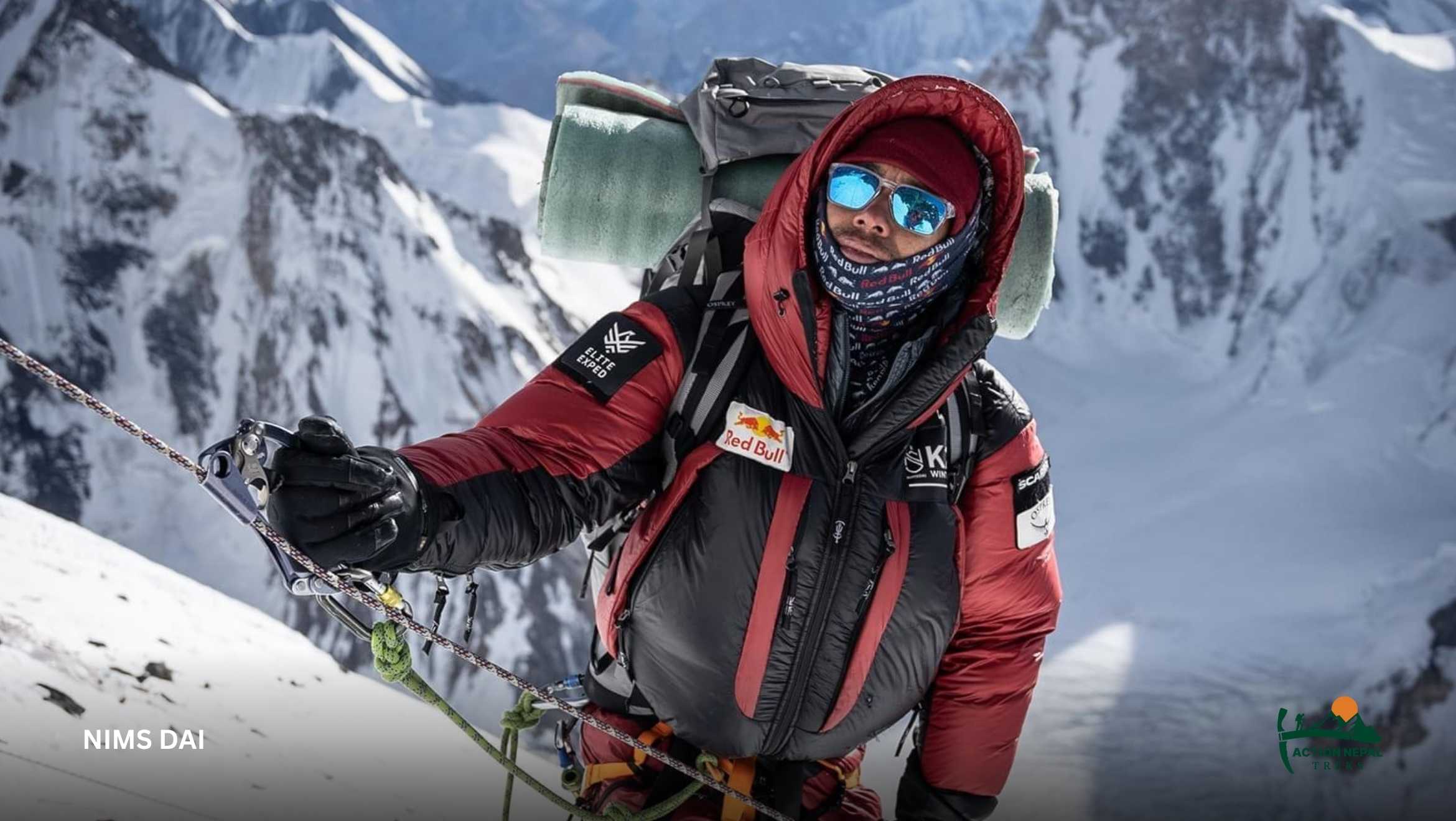
“Don’t listen to the people who tell you it’s impossible. If I can do it, you can do it. We are all capable of greatness.” – Nirmal “Nims Dai” Purja, MBE
Nirmal Purja, widely known as Nims Dai, was a Nepali mountaineer who became known around the world for his achievements in high-altitude climbing. He rose to fame through Project Possible, after summiting all 14 of the world’s 8,000-meter peaks in just six months and six days. He later became part of the Nepali team that made the first successful ascent of K2 in winter. His daring climbs and high-altitude rescue missions further strengthened his reputation among climbers worldwide.
Sadly, Purja died in an avalanche on Broad Peak in Pakistan on 30 July 2026, along with nine other climbers. His death was a major loss for not only Nepal’s but the global mountaineering community and the wider climbing world. Beyond his records, he helped bring more attention to the skills and experience of Nepali climbers. His achievements, rescue missions, and influence have left a lasting mark on Himalayan mountaineering.
Who Was Nirmal Purja?
Nirmal Purja was a Nepali mountaineer, former Gurkha soldier, and expedition leader. Before entering professional mountaineering, he spent years serving in the British military. His military background later helped shape how he approached expeditions, teamwork, and difficult conditions.
Early Life and Childhood in Nepal
Nirmal Purja was born on 25 July 1983 in Dana, Myagdi District, near Mount Dhaulagiri. He was born into the Magar community, an Indigenous ethnic group of Nepal, rather than a mountain-based climbing family. At the age of four, he moved with his family to Chitwan, where he grew up far from the high mountains. His three older brothers helped support his education, while kickboxing became one of his main interests. Seeing their efforts from a young age gave Purja a strong sense of responsibility.
Military Career Before Mountaineering
Military service was already part of Purja’s family history. Following the footsteps of his father and older brothers, he joined the British Army’s Brigade of Gurkhas in 2003 at the age of 18. Six years later, he became the first Gurkha to join the UK’s Special Boat Service (SBS), the elite special forces unit of the British Royal Navy. The role demanded discipline, physical strength, teamwork, and the ability to stay calm under pressure. During his military career, Purja was also wounded in action when a bullet struck his rifle and sent shrapnel into his face and neck.
From Special Forces to Mountaineering
After years in the military, Purja decided to pursue mountaineering full-time. In 2018, he left the SBS and gave up his military pension to focus on climbing. The decision came with financial risks and created tension within his family. Still, he moved forward and founded Elite Exped. His military experience proved useful in expedition planning, logistics, teamwork, and dealing with difficult situations in the mountains.
What Happened on Broad Peak
Broad Peak was not originally part of Nirmal Purja’s plans for the summer of 2026. He had traveled to Pakistan to climb Gasherbrum II, which he successfully did on 21 July. After that climb, his attention turned to Broad Peak, which offered another chance to pursue a major mountaineering goal. If he completed the ascent, only Cho Oyu would remain for him to become the first person to climb all 14 of the world’s 8,000-meter peaks twice without supplemental oxygen.
The decision came as conditions on Broad Peak were becoming increasingly difficult. By 25 July, several other teams had left the mountain because of unstable snow and dangerous slopes due to poor weather. But Purja and his team remained, hoping to make use of a short weather window. Just days before the climb, Purja shared a message online asking Broad Peak for “safe passage up and back down.”
On 30 July 2026, Purja was leading his 10-member international team between Camp 2 and Camp 3, at around 6,600 meters. Then, at about 9:30 a.m., an avalanche struck the team and swept the climbers into a nearby gully. Purja was among those caught in the slide, and all ten members of the expedition died. The disaster brought an abrupt end to his attempt to add another major achievement to an already extraordinary climbing career.
The Mountaineers Who Died in the Broad Peak Avalanche
The Broad Peak avalanche claimed the lives of 10 mountaineers from Nepal, Pakistan, Oman, China, and the United States. The group included experienced high-altitude climbers, mountain guides, and international expedition members. Nirmal Purja was the expedition leader, while the other climbers brought their own experience and achievements to the team.
- Nirmal Purja (Nims Dai), 43, Nepal/UK: The legendary expedition leader, former elite Special Boat Service (SBS) operative, and record-setting mountaineer behind Project Possible.
- Pur Bahadur Gurung (“Yukta”), Nepal: An accomplished IFMGA-certified guide and key member of Elite Exped, with 28 total summits, including 12 of the world’s 14 eight-thousanders.
- Kili Pemba Sherpa (“Kilu”), Nepal: An experienced high-altitude climber with 15 Everest summits who stood alongside Nims during the historic first winter ascent of K2 in 2021.
- Nima Sherpa, Nepal: A dedicated high-altitude guide from Sankhuwasabha with extensive experience in route-fixing across the high Himalayas.
- Nawang Thindu Sherpa, 28, Nepal: The youngest member of the group, a rising star in Nepal’s climbing community who had already summited five 8,000-meter peaks.
- Gyalu Sherpa (“Gyaljen”), 47, Nepal: A seasoned Himalayan mountaineer who held a Guinness World Record for making three ascents of Kanchenjunga in a single season.
- Nadhira Al Harthy, Oman: A celebrated Omani mountaineer who became the first Omani woman to summit Mount Everest in 2019.
- Sohail Sakhi, Pakistan: A respected veteran climber from Hunza known for his high-altitude ascents and for mentoring the next generation of Pakistani mountaineers.
- Sarah Mallory Geis, United States: A passionate climber and studio owner from Texas who traveled to the Karakoram for her first 8,000-meter expedition.
- Wang Zhong, China: An experienced international expedition member with a strong passion for the technical challenges of the Karakoram range.
The loss was especially significant for Nepal’s mountaineering community. Six members of the team were Nepali climbers, including several experienced high-altitude guides. Their deaths highlighted the risks faced by Nepali mountaineers, whose expertise plays a major role in Himalayan expeditions.
The Recovery
The search and rescue operation began on Friday morning, 31 July, after the tragic Broad Peak avalanche struck Nirmal Purja’s expedition the previous day. The brutal conditions of Pakistan’s Karakoram quickly turned the mission into a dangerous recovery effort. Steep slopes covered in rock and ice, unstable terrain, extreme altitude, and the threat of secondary avalanches made the search exceptionally difficult. While military helicopters supported the operation, experienced guides from Nepal and Pakistani mountaineers had to enter the hazardous debris zone on foot.
For the first 48 hours, rescue teams searched the avalanche site while hope remained that Nims Dai and other missing climbers could still be found alive. Several tracking devices, including one associated with Nims Dai, continued transmitting signals from the mountain, creating uncertainty about the climbers’ condition. As teams reached the affected area, however, the signals did not lead to survivors. The search gradually shifted from a rescue mission to recovering those caught in the avalanche.
A specialized ground team led by renowned Nepali climber Mingma Gyalje Sherpa (“Mingma G”), alongside guides from Nepal and Pakistani mountaineers, eventually reached the main debris area. The team located Nirmal Purja’s body alongside those of Wang Zhong, Kili Pemba Sherpa, and Nima Sherpa and carefully brought them down through the dangerous rock and ice to Broad Peak Base Camp. For Nims Dai, who had spent his career confronting some of the world’s harshest mountains, the recovery marked a devastating final chapter to an extraordinary mountaineering career.
The recovery of Nims Dai did not end the operation immediately. His body remained at Base Camp until a suitable weather window allowed Pakistani military helicopters to transport the recovered climbers toward Skardu. His remains were later brought back to Nepal, where his family, fellow mountaineers, and thousands of mourners gathered to pay their respects. After years of pushing the limits of what was considered possible in high-altitude climbing, Nirmal Purja had returned home for the final time.
Nims Dai’s Family and the Loss They Faced
For Purja’s family, mountaineering meant living with the risks that came with his career. His wife, Suchi Purja, married him in 2006, before his major climbing achievements began. She also appeared in the Netflix documentary, 14 Peaks: Nothing Is Impossible, where she spoke about the risks and uncertainty surrounding his expeditions.
Over the years, Purja’s climbing career took him to some of the world’s most dangerous mountains. His family supported those ambitions while knowing that every expedition carried serious risks. The couple welcomed their daughter, Himani, in 2022, adding another personal dimension to a career that already demanded long periods away from home.
When Purja died in the Broad Peak avalanche on 30 July 2026, that long-standing fear became a reality. His death left behind his wife, daughter, mother, siblings, friends, teammates, and many others who had been part of his life. While climbers around the world remember his achievements, the loss remains deeply personal for the people who knew him beyond the mountain.
Major Records and Achievements That Made Nims Dai Famous
Nirmal Purja built his reputation through a series of record-breaking climbs and high-altitude expeditions. From completing all 14 of the world’s highest peaks in record time to making history on K2, his accomplishments changed what many believed was possible in modern mountaineering.
The Historic Project Possible That Inspired the World
In 2019, Nirmal Purja launched Project Possible, with the goal of climbing all 14 of the world’s 8,000-meter peaks in less than seven months. He completed the challenge in six months and six days and set a new record for the fastest completion of all 14 mountains. The expedition took him across Nepal, Pakistan, and Tibet and included climbs on some of the world’s most difficult mountains.
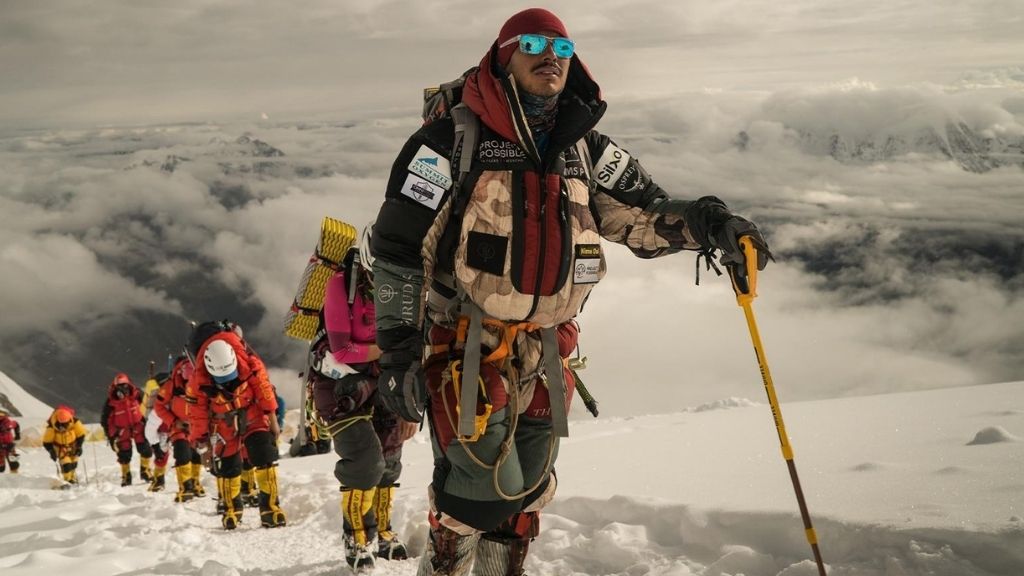
The achievement attracted worldwide attention, especially because previous attempts had taken years rather than months. During the expedition, Purja also captured the now-famous image of a long line of climbers near the summit of Mount Everest. The photograph drew global attention to overcrowding and the risks associated with climbing the world’s highest mountain.
The Historic First Winter Ascent of K2
On 16 January 2021, Purja was part of the Nepali team that made the first successful winter ascent of K2 (8,611m). Ten Nepali climbers reached the summit together, achieving something that previous international teams had failed to do during decades of winter attempts.
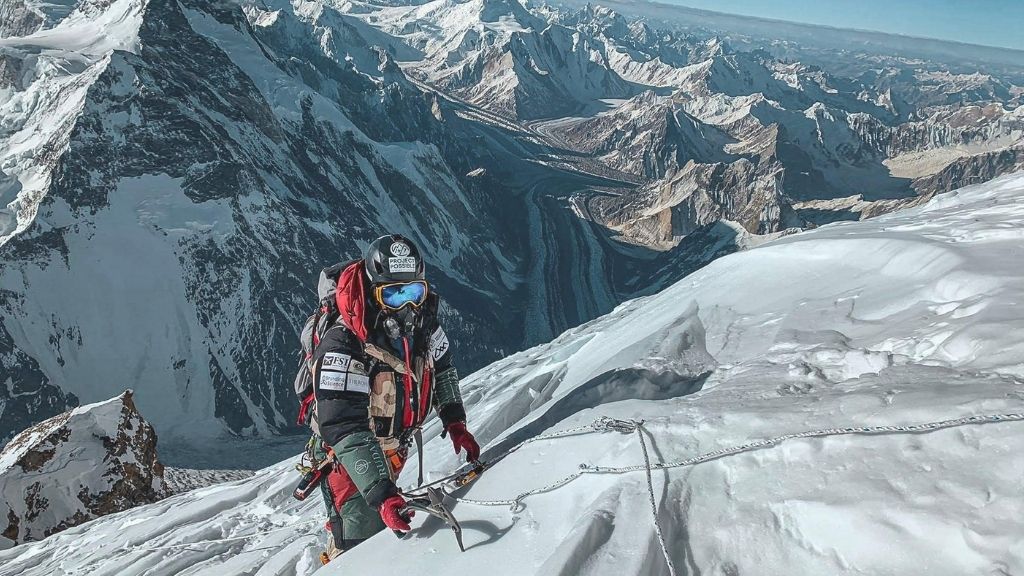
More importantly, Purja completed the climb without supplemental oxygen. The ascent became one of the defining achievements of his career and highlighted the ability of Nepali mountaineers to lead major high-altitude expeditions.
World-Record Speed Combinations
Purja also became known for completing several major climbs in unusually short periods.
- Everest, Lhotse, and Makalu: He climbed all three mountains within 48 hours during Project Possible.
- Kanchenjunga, Everest, and Lhotse: In May 2022, he completed the three peaks in under nine days without supplemental oxygen.
- All 14 peaks twice: In October 2024, Purja completed his second ascent of all 14 8,000-meter peaks. He completed the second circuit without supplemental oxygen.
These achievements added another dimension to his reputation. His career was not only about reaching the highest mountains, but also about completing difficult climbs at an extraordinary pace.
Other Remarkable Achievements
By the time of his final expedition, Purja had collected numerous mountaineering records and completed 57 ascents of 8,000-meter peaks, following his Gasherbrum II summit in July 2026. He also received an MBE in 2018 for his contribution to high-altitude mountaineering.
His achievements extended beyond the mountains themselves. His autobiography, Beyond Possible, and the Netflix documentary 14 Peaks: Nothing Is Impossible introduced his story to a much wider audience. Together, they also helped bring greater attention to Nepali climbers and the expertise they bring to high-altitude expeditions.
Famous Rescue Missions That Made Nims Dai a Hero
Nims Dai’s reputation was built on more than records and rapid ascents. Throughout his career, he also became known for helping climbers in serious trouble. Some of his most notable rescues happened during expeditions where he was already pursuing major mountaineering goals.
Nims Dai’s reputation was built on more than records and rapid ascents. Throughout his career, he also became known for helping climbers in serious trouble. Some of his most notable rescues happened during expeditions where he was already pursuing major mountaineering goals.
The Perilous Annapurna Rescue, April 2019
In April 2019, Malaysian climber Dr. Chin Wui Kin became stranded near 7,500 meters on Annapurna after becoming separated from his team. Purja and his team had already completed their summit push and descended toward Base Camp when they received the distress call.
Purja returned to the mountain to help with the rescue. He and his team reached Chin at high altitude, where they provided medical assistance and helped bring him down. The rescue required them to work through difficult terrain and unstable snow conditions, making the operation especially dangerous.
Chin was eventually brought down the mountain and evacuated for further treatment. The successful rescue became one of the defining moments of Purja’s Project Possible expedition. It also showed his willingness to interrupt his own record attempt to help another climber.
The Kanchenjunga Tragedy, May 2019
Just weeks later, while descending from Kanchenjunga (8,586m), Purja’s team encountered three Indian climbers: Biplab Baidya, Kuntal Karar, and Rodrigo Cordova suffering from severe altitude sickness and running out of oxygen. Purja and his team gave them emergency oxygen while attempting to help them descend.
The rescue became increasingly difficult as weather conditions deteriorated and created avalanche conditions. Spindrift and small powder-snow avalanches repeatedly swept across the route, reducing visibility and making movement dangerous. Purja also spent hours communicating with others and seeking additional support.
Despite the team’s efforts, Biplab Baidya and Kuntal Karar died on the mountain. The incident became another important part of Purja’s climbing story, particularly because it happened during the same record-setting expedition.
Everest Chaos and Death Ridge Lifelines, 2026
Purja’s rescue work also extended to Mount Everest, where climbers regularly face altitude sickness, exhaustion, frostbite, and rapidly changing conditions. His military background and years of high-altitude experience helped him respond to emergencies in demanding environments.
During his Everest expeditions, Purja and his teams assisted climbers in trouble and helped coordinate emergency responses. Some rescues took place around difficult sections such as the Balcony, where steep terrain and extreme altitude make even a short descent challenging.
The Netflix Documentary That Introduced Nims Dai to the World
Released globally in November 2021, 14 Peaks: Nothing Is Impossible brought Nirmal Purja’s story to a much wider audience. Directed by Torquil Jones and executive produced by Jimmy Chin, the documentary follows Purja and his team as they attempt to climb all 14 of the world’s 8,000-meter peaks in just over six months.
The film shows the physical demands of the project, but it also gives viewers a closer look at the planning, setbacks, and pressure behind the record. Purja’s leadership and the role of his Nepali team are central to the story, rather than being treated as background to a foreign-led expedition.
The documentary also helped introduce international audiences to the expertise of Nepali mountaineers. Local climbers have long played major roles in Himalayan expeditions, but their contributions have not always received the same global attention as those of foreign climbers. 14 Peaks placed Nepali climbers at the center of its story and showed them leading one of mountaineering’s most ambitious projects.
For many viewers, the documentary became their first introduction to Purja and his approach to high-altitude climbing. Its message was closely tied to the idea behind Project Possible: limits can be challenged when preparation, teamwork, and determination come together.
How Nims Dai Changed the Image of Nepali Climbers
Nirmal Purja changed how Nepali climbers are represented on the international mountaineering stage. His record-setting achievements and high-profile expeditions showed that Nepali mountaineers could lead major international climbing projects rather than being viewed mainly as guides or support staff.
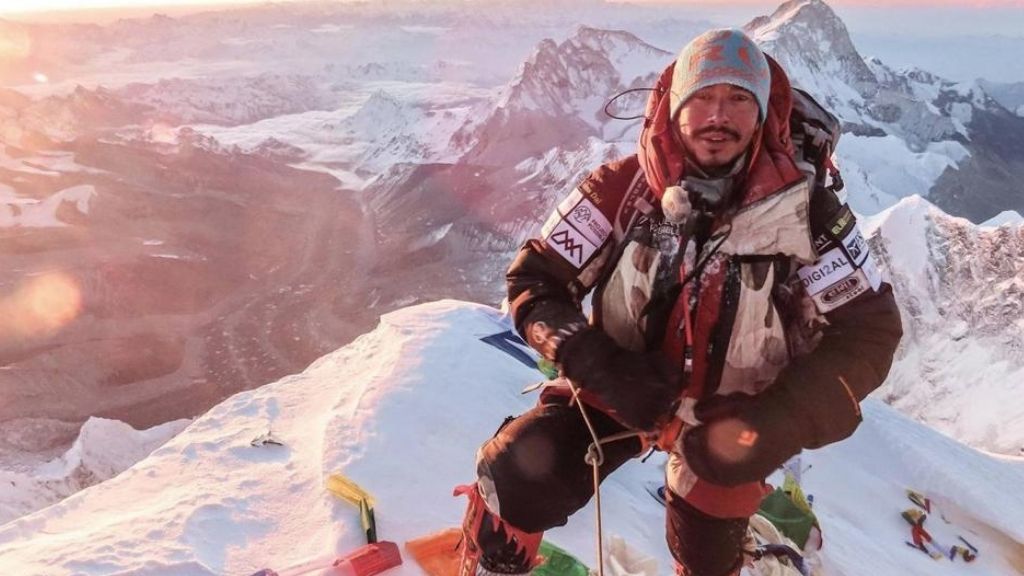
His success on the world’s 8,000-meter peaks brought global attention to the expertise, strength, and experience of Nepali climbers. The documentary 14 Peaks: Nothing Is Impossible further expanded his reach, introducing his story and the wider world of Himalayan mountaineering to audiences around the globe.
His legacy also sits within a much larger community of Nepali climbers who have helped shape modern Himalayan mountaineering. Figures such as Mingma Gyalje Sherpa represent the same tradition of technical skill, high-altitude experience, and leadership that has made Nepali mountaineers central to expeditions across the Himalayas.
Remembering Nims Dai and His Legacy
Nims Dai’s influence goes beyond the records he set. His career encouraged people to view high-altitude mountaineering as a field in which Nepali climbers could be recognized as elite athletes, expedition leaders, and international figures.
His story also inspired aspiring climbers and adventure enthusiasts to pursue challenging goals while highlighting the preparation, teamwork, and resilience required to operate in extreme environments. His achievements have become part of the broader story of Nepal’s growing presence on the international mountaineering stage.
Following his tragic death on Broad Peak, the global community found comfort in the words he left behind. In the days following the accident, one phrase from Nims resurfaced across social media more than any other:
“Giving up is not in the blood, sir. It’s not an option.”
It was this precise attitude that defined his memory. For millions who followed his journeys, the impact was never just about the statistics or the trophies; it was his fierce refusal to accept a human limit before testing it. His determination, bold approach to climbing, and love for his team will remain an enduring beacon for anyone facing an impossible mountain in their own life.
Nims Dai’s Contribution to Nepal Tourism and Adventure
Nims Dai’s international profile also helped place Nepal’s mountains in front of a much wider audience. The global success of 14 Peaks introduced viewers to Nepal’s Himalayan landscapes, climbing culture, and expedition community.
However, his contribution should be viewed as part of Nepal’s wider adventure tourism story rather than as the sole reason for changes in trekking demand. Nepal’s established trekking routes, mountain culture, infrastructure, and international reputation have long attracted visitors.
What Nims Dai added was a powerful modern face to Nepal’s mountaineering community. His story showed international audiences the people behind many Himalayan expeditions and helped bring greater attention to the skill and experience of Nepali climbers.
Leadership Lessons Trekkers Can Learn from Nims Dai
Although Nims Dai operated at the highest levels of mountaineering, several lessons from his career apply to ordinary trekkers and the new generation of climbers. His approach to preparation, teamwork, and respect for the mountains offers valuable guidance for anyone stepping onto the trail or taking on their first major climbing challenge.
- Prepare properly: Train for the actual demands of your route, including long walking days, steep terrain, cold weather, and altitude.
- Trust your team: Good communication and teamwork become especially important when conditions change unexpectedly.
- Respect the mountain: Weather, altitude, snow, ice, and terrain can quickly override even the best plans.
- Know when to turn back: A successful trek is one where you return safely. Reaching the destination is never worth ignoring serious risks.
- Respect local expertise: Guides, porters, climbing Sherpas, and local communities contribute essential knowledge and support to Himalayan travel and deserve proper recognition.
Conclusion
The tragedy on Broad Peak left the mountaineering community in deep mourning, but Nirmal Purja’s impact extends far beyond the peaks he climbed. Known as Nims Dai, he brought global attention to the skill and leadership of Nepali climbers and inspired people around the world through his achievements, determination, and the success of 14 Peaks: Nothing Is Impossible.
His legacy is not only measured in records, but also in the people he inspired to dream bigger and challenge their own limits. For trekkers and climbers, his story is a reminder to prepare well, trust your team, respect the mountains, and never let fear make the decisions for you. “Nothing is impossible” remains a fitting final message for a life built around pushing boundaries.

