


Got about 1-2 weeks for a trek in Nepal? You have enough time to experience the Himalayas without taking on a long expedition. Two beautiful and well-known treks work well for this timeframe: Langtang Valley and Annapurna Base Camp. One takes you through a quieter Himalayan valley with strong cultural character, while the other leads you toward a famous base camp surrounded by some of Nepal’s highest peaks.
So, which one should you choose? Deciding between Langtang Valley vs Annapurna Base Camp can be tricky. Both are teahouse treks without a high-pass crossing, but the overall experience is quite different once you’re on the trail. Both offer a rewarding Himalayan experience within a similar timeframe. The better fit depends on what matters more to you, from trail conditions and crowds to altitude, scenery, culture, and how you want to spend your days on the mountain.
Langtang Valley Trek vs Annapurna Base Camp Trek Quick Comparison
| Feature | Langtang Valley Trek | Annapurna Base Camp Trek |
|---|---|---|
| Trail feel | Valley trek with forests, rivers, and Tamang villages | Steep trails, terraced hillsides, and mountain sanctuary |
| Typical duration | 8 days | 9 days |
| Max altitude | Kyanjin Ri (4,773m) or Tserko Ri (4,984m) | ABC (4,130m) |
| Mountain highlights | Langtang Lirung, Dorje Lakpa, Langshisha Ri | Annapurna I, Machhapuchhre, Annapurna South |
| Terrain | Steep early sections, then broader valley trails | Frequent stone steps and steep ascents |
| Starting point | Syabrubesi, reached from Kathmandu | Trailheads near Pokhara, including Kimche, Jhinu Danda, and Ulleri |
| Crowds | Low to moderate | Moderate to high |
| Culture | Strong Tamang cultural experience | Gurung and Magar communities |
| Best for | Quieter trails and valley scenery | Classic mountain views and a dramatic base camp |
| Permits | Langtang National Park Permit | ACAP |
| Guide | Independent trekking allowed (though guide recommended) | Independent trekking allowed (though guide recommended) |
| Cost | Generally lower | Generally higher |
Langtang vs ABC Trek Route and Distance Overview
Both treks take a similar amount of time, but they get there in different ways. The Langtang Valley Trek covers roughly 65-77 km round trip. It starts with a drive from Kathmandu to Syabrubesi, then follows the Langtang Khola upstream toward Kyanjin Gompa. After an acclimatization day and a hike to Kyanjin Ri or Tserko Ri, you retrace the valley to Syabrubesi and drive back to Kathmandu.
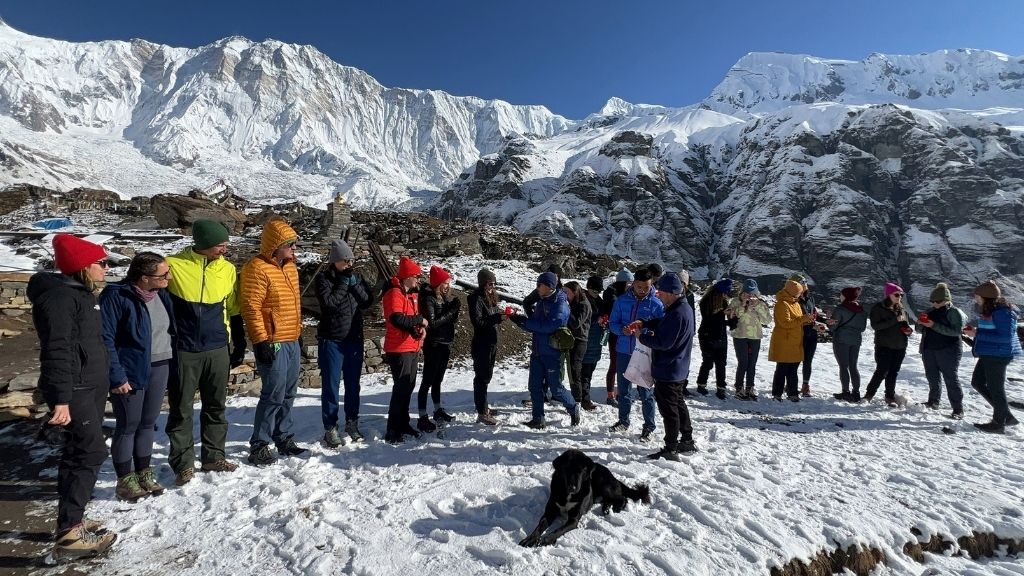
Similarly, the ABC Trek covers roughly 55-60 km of trekking, but the journey starts with a trip from Kathmandu to Pokhara, followed by a jeep ride to Kimche. From there, the trail climbs through Ghandruk, Chhomrong, and the upper Modi Khola valley before reaching ABC, then descends toward Jhinu Danda and returns to Pokhara.
Langtang Valley Trek Route: Kathmandu → Syabrubesi → Lama Hotel → Langtang Village → Kyanjin Gompa → Lama Hotel → Syabrubesi → Kathmandu
Annapurna Base Camp Trek Route: Kathmandu → Pokhara → Kimche → Ghandruk → Chhomrong → Himalaya → MBC → ABC → Bamboo → Jhinu Danda / hot spring → Pokhara → Kathmandu
Langtang Valley vs Annapurna Base Camp: Which Trek Is Harder?
The Annapurna Base Camp Trek is generally more physically demanding than Langtang Valley. ABC has frequent steep climbs and descents, with long stone stair sections around Chhomrong that can be tiring day after day. Langtang also has steep sections, especially early in the trek, but the trail becomes more gradual as you reach the upper valley. Neither trek requires technical climbing or previous mountaineering experience.
Altitude Sickness: Which Trek Needs More Care?
Both require care above 2,500m, but the risk comes from two main factors: how high you sleep and how quickly you gain altitude. On Langtang, you sleep as high as 3,870m at Kyanjin Gompa, after staying at Lama Hotel (2,470m) and Langtang Village (3,430m), giving you a gradual rise. ABC takes you from Deurali (3,230m) to Machhapuchhre Base Camp (3,700m) and then to Annapurna Base Camp at 4,130m, so the final sleeping altitude is higher.
The Langtang Valley trek can take you higher during optional hikes, with Kyanjin Ri at 4,773m and Tserko Ri at 4,984m, but you return to sleep at Kyanjin Gompa. In short, ABC has greater sleeping-altitude exposure, while Langtang’s higher risk comes during its optional climbs. In either case, ascend gradually, allow time to acclimatize, and watch for headache, dizziness, nausea, unusual fatigue, or loss of appetite. Descend if symptoms worsen.
Which Trek Requires More Preparation?
ABC needs more physical preparation, while Langtang needs a little more patience with the journey to the trailhead. ABC has plenty of steep, uneven stone steps and repeated climbs and descents, so building leg and knee endurance before the trek is useful. The final climb to 4,130m also means you need to be comfortable walking at higher altitude.
Langtang region is less demanding in terms of repeated stairs, but the road journey from Kathmandu to Syabrubesi can be long, and conditions can change. The trail follows a fairly clear valley route, so regular hill walking, comfortable boots, and enough time for a gradual ascent matter more than intensive training. For both treks, prepare for changing weather, cold nights, and several consecutive days of walking.

Langtang Valley Trek

Annapurna Base Camp Trek
Langtang Valley vs ABC Trek Cost: Which Is More Budget-Friendly?
With Action Nepal Treks, the Langtang Valley trek package is slightly more budget-friendly. Langtang Trek costs around $630, and ABC Trek costs around $700. The main reason why Langtang costs less is that the route has a more direct Kathmandu-Syabrubesi connection and avoids the additional Pokhara logistics. For ABC, you need to travel through Pokhara before reaching the trailhead, adding hotel stays, more meals, and tourist bus or flight costs.
Additionally, daily expenses on the trail can also affect the overall cost. In Langtang, hot showers, Wi-Fi, and charging may cost a little more at remote or higher lodges. ABC has more developed infrastructure and wider accommodation choices, so basic amenities can be easier to access. Nonetheless, higher-end lodges can still cost more. Your lodge choice and personal spending will ultimately have a bigger impact on daily expenses.
We offer group discounts for both of these packages, with larger groups bringing the per-person cost down to roughly $500 for Langtang and $550 for ABC. This makes both treks affordable compared to popular treks like Everest Base Camp Trek or Upper Mustang Trek. Check out our Langtang Valley and Annapurna Base Camp Trek packages for exact cost details.
Best Time for Langtang Valley vs Annapurna Base Camp
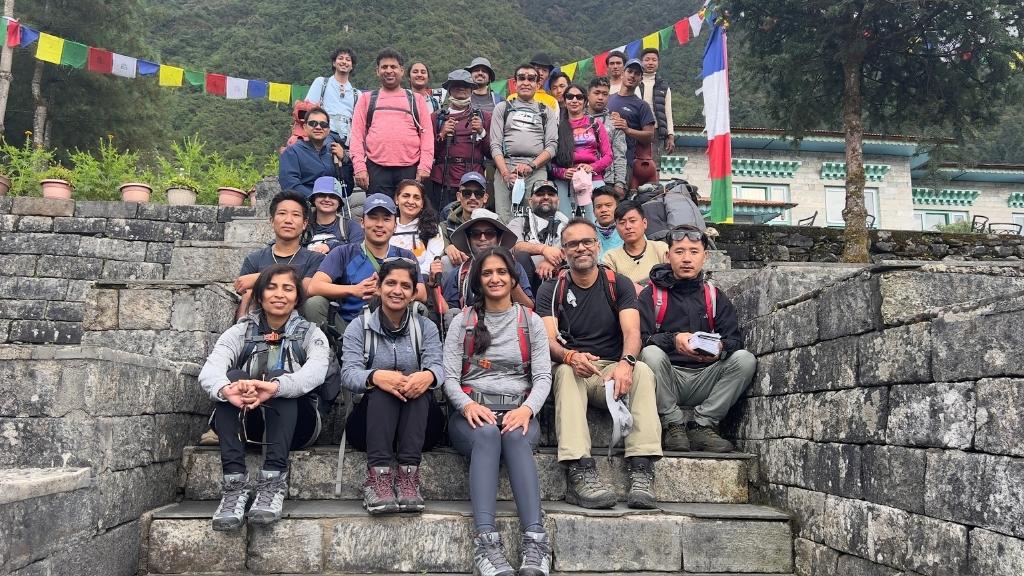
Spring (March-May) and autumn (September-November) are the best seasons for both Langtang Valley and ABC. Nepal Tourism Board lists March-May and October-November as the best periods for Langtang, while Annapurna is generally recommended from March-May and September-November. Spring brings rhododendron blooms and fresh greenery, while autumn usually offers clearer skies and sharper mountain views after the monsoon.
Spring or Autumn: Which Is Better?
Choose autumn if clear mountain views are your priority, and spring if you want more color along the trail. October and November are particularly good for visibility, while March to May brings blooming rhododendrons through the lower and mid-altitude forests. Both routes are busy during these peak periods, but ABC generally feels more crowded than Langtang, especially on the classic sections at the heart of the Annapurna Sanctuary.
There is also a cultural reason to think about your dates. Langtang passes through Tamang communities, so the timing of your trip can add a different cultural experience. Sonam Lhosar, the Tamang New Year, usually falls around February or March and is celebrated by Tamang communities with family gatherings, rituals, and cultural traditions. In autumn, Dashain and Tihar bring a festive atmosphere across Nepal, with family gatherings, decorations, food, and village celebrations.
What About Winter and Monsoon?
Winter is possible, but expect colder conditions at higher elevations. Langtang National Park notes that December to February can bring snow in the higher areas, while March to May and October to November offer better trekking conditions. ABC also becomes colder as you approach 4,130m, so winter requires better cold-weather preparation and more flexibility around trail conditions.
Monsoon is the least convenient season for either route. June to September brings heavier rain, cloud cover, wet and slippery trails, and a greater chance of disrupted road access. Langtang is especially affected by monsoon conditions on the road toward Syabrubesi, while the lower, wetter sections of the ABC route can also become muddy and slippery. If your main goal is clear Himalayan scenery and comfortable trekking conditions, spring or autumn makes much more sense.
So, When Should You Go?
For the best overall conditions, aim for October-November or March-April. Pick autumn for clearer mountain views and festive Nepal, or spring for rhododendron forests and, if your dates align, Tamang cultural celebrations around Sonam Losar. If you want a quieter experience, Langtang is generally the less crowded choice even during the main trekking seasons.
Permits for Langtang Valley vs Annapurna Base Camp
Both treks require a regional entry permit, but guide and TIMS requirements are more complicated in practice than the official rules suggest. Langtang requires a Langtang National Park entry permit, while ABC requires an Annapurna Conservation Area Permit (ACAP). Both cost NPR 3,000 for foreign nationals, while SAARC rates are lower.
| Requirement | Langtang Valley Trek | Annapurna Base Camp Trek |
|---|---|---|
| Area permit | Langtang National Park Entry Permit | Annapurna Conservation Area Permit (ACAP) |
| Foreign entry fee | NPR 3,000 | NPR 3,000 |
| SAARC nationals | NPR 1,500 | NPR 1,000 |
| TIMS | Not required | Not required |
Note: Children under the age of 10 are exempt from fees.
Which Trek Has Better Culture and Local Village Experiences?
Both offer strong cultural experiences with different character. Langtang takes you through predominantly Tamang communities, while the ABC route passes through Gurung and Magar villages. Along either route, you can see traditional houses, Buddhist or Hindu shrines, local customs, and everyday village life, but Langtang generally feels quieter and more closely tied to its mountain communities.
On Langtang, the cultural experience develops from Syabrubesi through Lama Hotel and Langtang Village to Kyanjin Gompa. You can see Buddhist prayer wheels, mani walls, chortens, monasteries, and traditional Tamang homes, while local museums and cultural displays offer more context about the area’s heritage. If your dates coincide with a local celebration, you may also see traditional dress, music, dancing, and community rituals. Around Kyanjin Gompa, the culture shifts toward high-altitude life, including the area’s well-known yak cheese production.
ABC offers a more varied village experience through Ghandruk, Chhomrong, and the upper Modi Khola valley. Ghandruk is a major Gurung settlement with traditional stone houses, local cultural museums, and opportunities to see traditional clothing, dances, and village customs. Chhomrong is a larger trekking hub, so its atmosphere is more mixed, with local life alongside teahouses, lodges, and trekkers from around the world. As you continue toward Deurali, MBC, and ABC, the cultural focus gradually gives way to the high-mountain landscape.
Which Trek Has Better Accommodation and Teahouse Facilities?
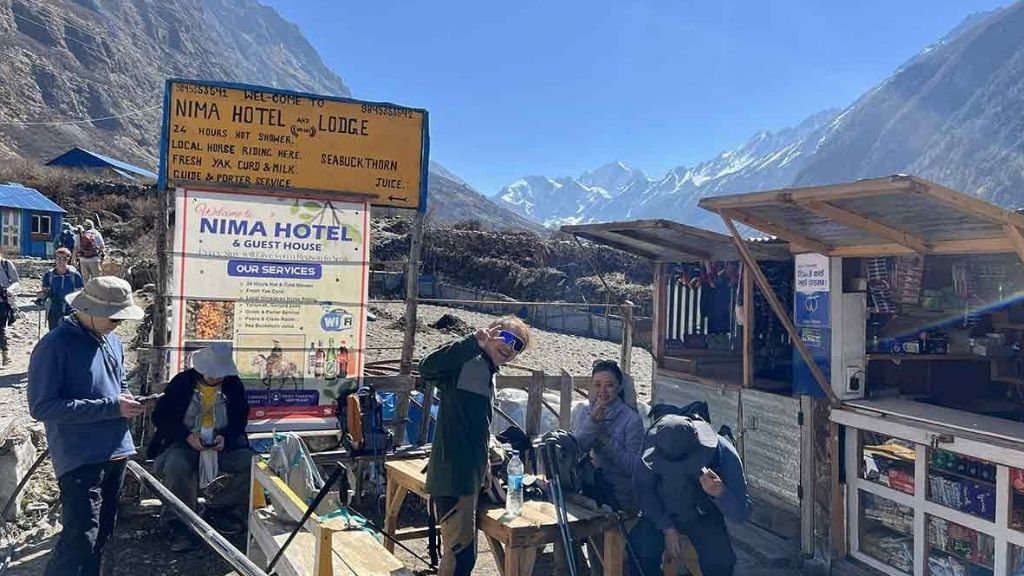
Both Langtang and ABC are teahouse treks, but ABC generally has a wider range of accommodation and more developed facilities. On Langtang, you will find teahouses from Syabrubesi through Lama Hotel, Langtang Village, and Kyanjin Gompa. Some lodges have been rebuilt and upgraded over the years, so you can find comfortable options in some places, although facilities become simpler as you climb. ABC has a more established trekking infrastructure, with plenty of teahouses around Ghandruk and Chhomrong, while accommodation becomes more basic around Dovan, Deurali, MBC, and ABC.
What Should You Expect From a Teahouse on Each Trek?
Expect simple twin-sharing rooms, basic bedding, shared bathrooms, and a dining room that acts as the main social space. Lower villages may offer attached bathrooms or more comfortable rooms, but shared bathrooms become more common at higher elevations. Rooms are usually not heated, while the dining room may have a central stove or heater in colder areas. Blankets are generally provided, but a warm sleeping bag is still useful, particularly around Kyanjin Gompa and the higher ABC stops.
Food is fairly similar on both routes, with dal bhat, noodles, rice dishes, soups, momos, pasta, eggs, porridge, and tea commonly available. Menus become more limited as you gain altitude, and prices generally increase because supplies have to travel farther. Hot showers, Wi-Fi, and device charging are often available for an extra fee at lower elevations, but they become less reliable and more expensive higher up. A power bank is worth carrying.
ABC tends to feel busier during peak season, particularly around Chhomrong, Deurali, MBC, and ABC, so popular lodges can fill up quickly. Langtang is generally quieter, but there are fewer accommodation choices as you approach Kyanjin Gompa. During peak periods, booking ahead through an agency can make things easier, while during quieter months you usually have more flexibility.
Neither route is a luxury lodge circuit unless you choose an upgraded package. If you want more accommodation choice and a livelier teahouse atmosphere, ABC offers more variety. If you prefer quieter lodges and a simpler mountain stay, Langtang may suit you better.
What Kind of Himalayan Experience Are You Actually Looking For?
Your priorities can make the choice much easier. Think about what you want to see, how you want the trail to feel, and what you want the trek to be remembered for. Langtang is more about the valley, villages, culture, and quieter mountain scenery, while ABC builds toward the enclosed mountain views of the Annapurna Sanctuary.
Choose Langtang Valley if you want:
- Quieter trails and fewer crowds
- A stronger Tamang cultural experience
- More time exploring one mountain valley with views of Langtang Lirung
- Exploration of Kyanjin Gompa, Kyanjin Ri, and Tserko Ri
- A trek that starts directly from Kathmandu by road
Choose ABC if you want:
- A dramatic mountain sanctuary as the main highlight
- Close-up views of Annapurna massif: Annapurna I and Machhapuchhre
- Larger villages such as Ghandruk and Chhomrong
- A more varied trail with forests, terraces, and steep stone steps
- The experience of reaching a famous Himalayan base camp
Common Mistakes Trekkers Make When Choosing Between Langtang and ABC
- Choosing the cheapest package without checking what’s included.
- Underestimating ABC’s steep stone steps around Chhomrong.
- Skipping acclimatization to save a day.
- Packing without considering each route’s weather and terrain.
- Forgetting cash for showers, Wi-Fi, charging, and snacks.
- Underestimating travel time through Pokhara on ABC.
- Relying on outdated information about Langtang’s trail conditions.
- Expecting quiet trails on ABC during October.
- Booking tight schedules without weather or transport buffers.
How to Avoid These Mistakes
- Compare inclusions, train for the actual terrain, and allow enough time for acclimatization.
- Check current trail conditions and transport schedules before departure.
- Pack according to the season and route, and carry enough cash for personal expenses.
- Leave at least one buffer day if your international flight follows the trek.
What You Give Up by Choosing One Trek Over the Other
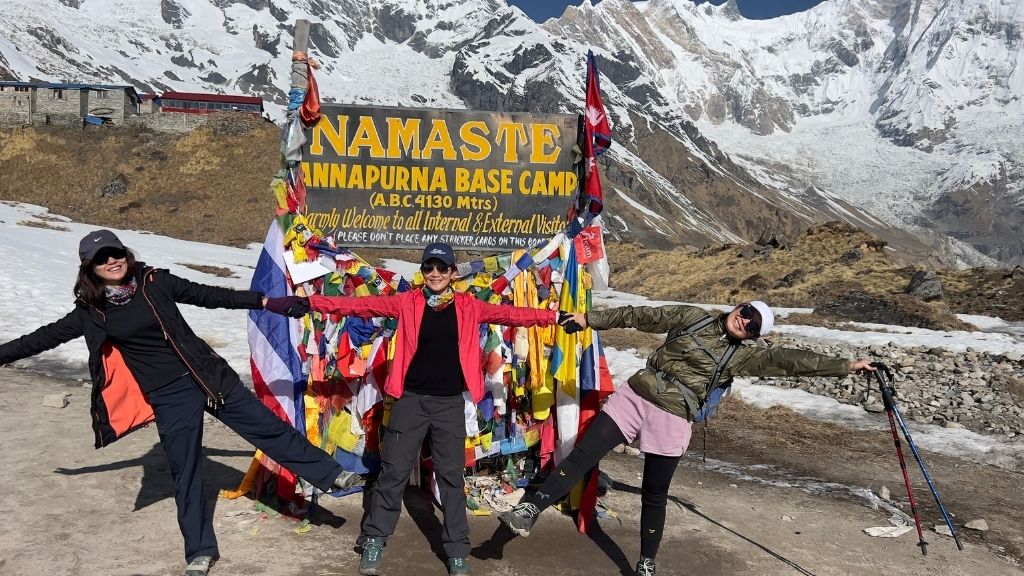
Neither trek gives you everything, so the choice also means deciding what you are willing to miss. Langtang offers a quieter valley and a stronger Tamang cultural experience, while ABC builds toward a more dramatic high-mountain finish.
Here is what you gain with each route and what you leave for another trip.
| If you choose… | You gain | You give up |
|---|---|---|
| Langtang Valley | Quieter trails, Tamang culture, a focused valley experience, and optional climbs to Kyanjin Ri or Tserko Ri | The Annapurna Sanctuary and the close-up ABC experience |
| Annapurna Base Camp | A varied trail, larger mountain villages, and the dramatic 4,130m sanctuary surrounded by Annapurna I and Machhapuchhre | Some of Langtang’s quieter atmosphere and concentrated Tamang cultural experience |
You don’t have to fit both into one trip. Give one route the time it deserves, enjoy the experience fully, and save the other for your next Himalayan adventure!
Conclusion
Langtang Valley vs Annapurna Base Camp ultimately comes down to the kind of Himalayan experience you want. Langtang suits trekkers who value quieter trails, Tamang culture, and a deeper experience of one mountain valley. ABC suits those who want a varied trail leading to a dramatic high-altitude sanctuary surrounded by major Himalayan peaks of the Annapurna region.
Whichever route you choose, allow enough time for a comfortable pace, acclimatization, and possible transport delays. Your dates, fitness, preferred trail atmosphere, and interest in culture or mountain views can all help shape the itinerary.

