


Island Peak, also known as Imja Tse, is a challenging high-altitude trekking peak in Everest region, which combines trekking with real mountaineering. At 6,189 meters (20,305 feet), it requires more than good walking fitness. Climbers must prepare for thin air, a long summit day, glacier travel, steep fixed-rope sections, and cold, exposed terrain.
For a fit beginner, Island Peak Climbing can be a realistic first Himalayan climbing objective with proper acclimatization, technical training, suitable equipment, and a qualified guide for support and guidance. However, being new to mountaineering doesn’t mean you’re unprepared. The climb is considerably more demanding than a standard Everest Base Camp trek.
This guide explains Island Peak climbing difficulty, what skills and fitness you need, how the summit day unfolds, and how it compares with Mera Peak and Everest Base Camp.
What Makes Island Peak Climbing Difficulty?
Island Peak climbing expedition is moderately difficult even though it follows established trails through the Khumbu and Namche Bazaar. Several factors combine to create this difficulty of Island Peak Climbing: altitude, technical terrain, endurance, and exposure make the climb a serious undertaking.
High Altitude Above 6,000 Meters
Altitude is one of the biggest challenges on the climb to Island Peak. The summit reaches 6,189 m, where the air contains substantially less oxygen than at sea level. Even strong trekkers may notice slower movement, heavier breathing, reduced appetite, poor sleep, and longer recovery times.
The approach through the Khumbu provides valuable acclimatization opportunities, but trekking to high elevations does not make anyone immune to altitude sickness. Individual acclimatization varies, and someone who performs well at a lower altitude can still develop symptoms at higher elevations.
A sensible itinerary includes gradual altitude gain, acclimatization days, and time to monitor how your body responds. Rushing to the summit to save a day can make the climb less manageable, not more efficient.
Steep Summit Terrain and Fixed Rope Sections
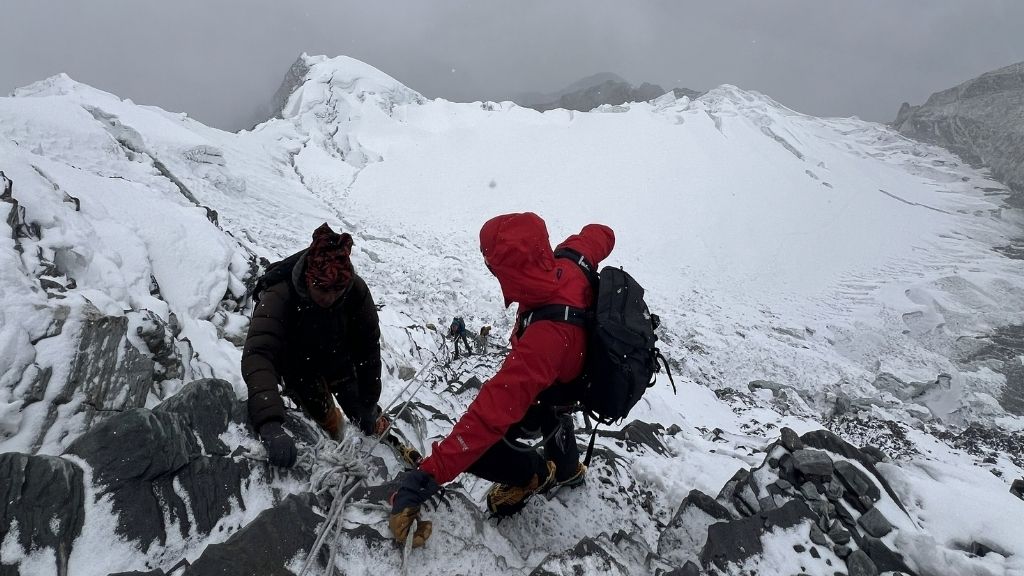
The upper mountain introduces technical climbing that you do not encounter on a normal trekking trail. Depending on the season and current route conditions, climbers may move across steep snow or ice using crampons, an ice axe, harnesses, and fixed ropes.
The headwall is the defining technical feature of the standard climbing route. Climbers generally use a jumar, or ascender, to move up a fixed rope while maintaining good crampon technique and balance. The fixed rope provides protection and support, but it does not remove the need for climbing skills, concentration, or physical effort.
The exact height and angle of the headwall can vary depending on the route and conditions. Snow and ice conditions can also change the character of the climb. Therefore, it is better to follow the guide’s current briefing than rely on a fixed number from an older itinerary.
Glacier and Crevasse Travel
Island Peak involves glacier travel, which adds a technical and environmental challenge to the climb. Climbers may encounter crevasses, snow bridges, uneven ice, and changing route conditions on the approach to the upper climbing sections.
Depending on the season and route, ladder crossings or other glacier features may be present. These sections require appropriate rope systems, careful movement, and up-to-date route knowledge. A glacier crossing is not simply a walk across snow.
This is why technical preparation matters. Climbers need to be comfortable moving in crampons, traveling as part of a rope team, and following guide instructions before entering more exposed terrain.
Cold, Wind, and Changing Mountain Weather
Cold temperatures and weather conditions can make Island Peak significantly harder, particularly during the summit attempt. Climbers usually start before dawn, when temperatures are low and strong winds can make exposed sections harder.
Snowfall, cloud, wind, visibility, and the condition of the upper route can affect both safety and progress. Hard ice may require precise crampon technique, while fresh snow can slow movement and make it more tiring. Good weather can make the climb more manageable, but it does not eliminate altitude or the route’s technical difficulty.
Long Summit Day and Limited Recovery
Summit day combines several difficult demands into one sustained effort. An early start, a long ascent, technical climbing, cold, and the return journey can make the day physically demanding with little time to recover.
The descent is especially important. Reaching the summit does not mean the difficult part is over. Fatigue can affect balance, concentration, and movement, so climbers need to save enough energy for the descent as well.
How Difficult Is Island Peak Summit Day?
Summit day is usually the most demanding part of Island Peak climbing. It combines a pre-dawn start, high-altitude endurance, glacier travel, steep fixed-rope climbing, and a careful descent. The summit push and return can take much of the day, with total time influenced by the itinerary, route conditions, and team pace.
What Happens During Summit Day?
The exact schedule varies, but a typical summit attempt follows this general progression:
- Pre-dawn preparation: You wake early, dress in warm layers, check your harness and climbing equipment, and prepare your headlamp, crampons, and ice axe.
- Approach to the technical terrain: The route moves over snow, ice, and glacier terrain. Progress is deliberately slow to conserve energy and maintain safety.
- Fixed-rope ascent: On the steep upper sections, you use an ascender on the fixed rope while moving carefully in crampons. This is where technical practice becomes particularly important.
- Summit ridge: The final ridge can involve exposure, narrow terrain, and careful movement. Wind, snow conditions, and visibility influence how the team proceeds.
- Summit and descent: After reaching the summit, you descend through the same demanding terrain before returning to camp or the valley.
Our climbing guide estimates that summit day commonly lasts around 10-12 hours round trip from High Camp. Treat this as an itinerary estimate rather than a fixed duration, as route conditions, acclimatization, traffic on fixed ropes, and individual pace can extend the day.
What Happens If You Cannot Reach the Summit?
If you cannot reach the summit, turning back may be the safest decision. Weather, altitude symptoms, exhaustion, or unsafe route conditions can make it unsafe to continue. In such cases, do not ignore warning signs just to reach the summit.
Our seasoned climbing team will assess the conditions and decide when it is safer to turn back. Reaching a lower point than planned does not mean the climb was unsuccessful. You may have already completed a demanding part of the route and gained valuable high-altitude climbing experience.


How Fit Do You Need to Be for Island Peak?
You need good trekking endurance, strong legs, and the ability to sustain effort at high altitude for the Island Peak Climbing adventure. You should be comfortable with consecutive days of uphill walking, steep ascents, and long periods of physical activity.
However, note that fitness helps you manage the approach and summit day, but it does not replace acclimatization or technical ability. Someone who is very fit at sea level can still struggle with altitude or unfamiliar climbing equipment.
Is Island Peak Suitable for Beginners?
Island Peak can be suitable for fit beginners, but not for someone who is new to both trekking and physical preparation. You need endurance, altitude awareness, and a willingness to learn the basic climbing skills like crampon use, rope work, etc required for the climb.
The important question is what type of beginner you are:
- Beginner climber: You may have little or no previous climbing or summit experience, but you already have good trekking fitness and are comfortable with long days in the mountains.
- Beginner trekker: You may be new to multi-day trekking, long uphill walks, high altitude, and the physical demands of spending several days in the mountains.
Which group are you? Island Peak is more realistic for a fit beginner climber than for someone new to both trekking and climbing. Prior experience on a multi-day high-altitude trek, such as Everest Base Camp, can help you understand the physical and environmental demands. However, completing EBC does not automatically prepare you for fixed-rope climbing.
How Much Training Do You Need Before Climbing Island Peak?
If possible, start preparing several months before the climb, focusing on endurance, leg strength, and technical skills. The exact training period depends on your current fitness, trekking experience, and the demands of your itinerary.
Focus on:
- Cardiovascular endurance: Hiking, uphill walking, stair climbing, running, or cycling.
- Leg strength: Squats, lunges, step-ups, and controlled downhill training.
- Long-duration effort: Gradually increase training-session length and practice consecutive active days.
- Loaded-pack walking: Build familiarity with carrying a realistic trekking pack.
- Technical practice: Learn crampon walking, ice axe handling, fixed-rope ascent, and descent before summit day.
- Recovery: Include rest, sleep, and gradual progression rather than relying on last-minute intense workouts.
You do not need to train at maximum intensity every day. Consistent preparation that builds endurance and confidence is more useful than exhausting yourself before departure.
Do You Need Mountaineering Experience for Island Peak?
Prior climbing or mountaineering experience is helpful but not always essential for a guided Island Peak climb. However, you still need to learn and practice the technical skills required for the route before tackling its steeper sections to successful climb Island Peak safely.
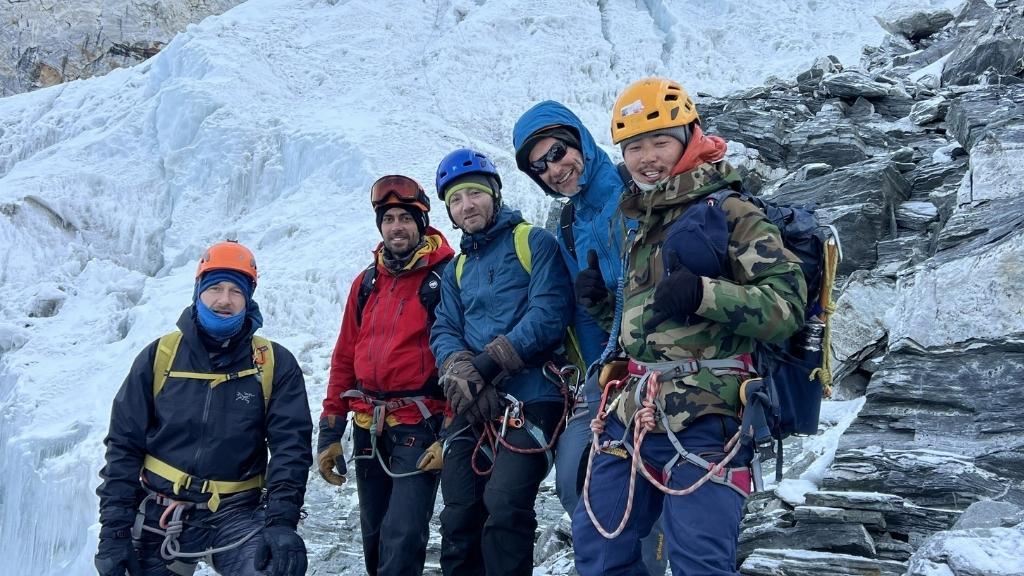
Being new to mountaineering does not mean you can skip training. A qualified guide can teach you the basics, but you still need enough practice to use the equipment correctly in cold, high-altitude conditions.
What Technical Skills Are Needed for Island Peak?
The main skills you should learn and practice include:
- Crampon walking: Moving safely on snow and ice, including flat-footing and front-pointing where appropriate.
- Ice axe handling: Using an ice axe for balance and movement and learning the relevant safety techniques.
- Fixed-rope ascent: Using a jumar or ascender correctly and maintaining a secure attachment while climbing.
- Harness and carabiner use: Understanding how your climbing system works and following the guide’s rope procedures.
- Glacier travel: Moving as part of a rope team and following instructions around crevasses and snow bridges.
- Fixed-rope descent: Managing your equipment and body position while descending steep terrain.
Island Peak is one of Nepal’s designated trekking peaks, a category associated with the Nepal Mountaineering Association (NMA). However, the term trekking peak does not mean the mountain can be climbed like an ordinary hiking trail. Island Peak still involves glacier travel, fixed ropes, crampons, and other mountaineering skills. Its administrative classification should therefore not be confused with its technical difficulty.
You should actually practice rather than just receive a verbal briefing. Before the summit push, you’ll have time to become familiar with the equipment and basic climbing techniques. Crampon use, ice axe handling, jumar ascent, and rope procedures are particularly important for the upper sections of Island Peak.
Island Peak Climbing Safety and Risk Management
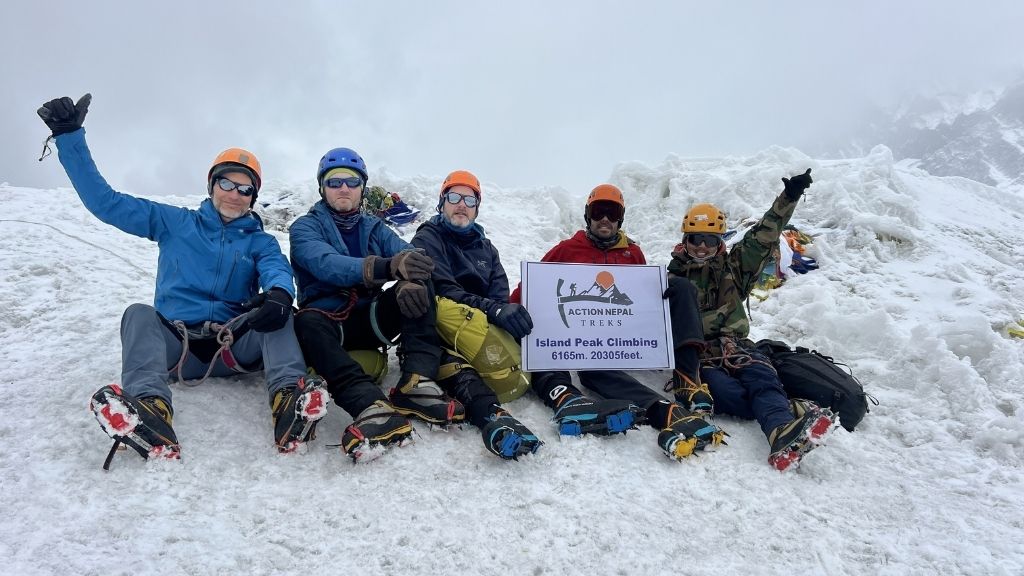
Island Peak involves real altitude and mountaineering risks. These risks can be managed through proper acclimatization, technical preparation, experienced guides, and clear decisions about when to turn back. The conditions can change during the climb, so the plan may need to change as well.
Acclimatization Schedule
A suitable itinerary allows gradual altitude gain, planned rest, and acclimatization hikes. This gives your body time to adjust to the increasing elevation instead of rushing toward the summit.
Guide Supervision
Qualified climbing guides assess the route, weather, pace, and each climber’s condition. They also help manage technical equipment and decide whether it is safe to continue or turn back.
Technical Training
Before the summit push, climbers should know how to use crampons, ice axes, harnesses, and fixed-rope systems. Glacier travel also requires appropriate rope procedures and close attention to guide instructions.
Weather Assessment
Weather forecasts, wind, visibility, snowfall, and route conditions can all affect the summit plan. Guides may delay, shorten, or cancel the climb when conditions make the route unsafe.
Communication and Emergency Planning
The operator should explain communication arrangements, emergency procedures, evacuation limitations, and insurance requirements before departure. Helicopter evacuation is not always available and depends on factors such as weather, altitude, landing conditions, aircraft availability, and insurance coverage.
Turnaround Decisions
If altitude symptoms, exhaustion, weather, or route conditions make it unsafe to continue, you may need to turn back. The goal of reaching the summit should not be prioritized over warning signs that the climb has become unsafe.
What Happens If the Weather Turns Bad?
If the weather turns bad, the summit push may be delayed, shortened, or canceled. Guides assess the actual conditions rather than continuing simply because the itinerary has reached summit day. A reserve day can provide some flexibility for weather delays, but it cannot guarantee a summit.
Who Should and Should Not Attempt Island Peak?
Island Peak is more suitable for people who understand that it is a technical, high-altitude climb and are prepared to train for it. Calling it a “trekking peak” does not mean the route is a simple hike, so it is important to assess whether your current fitness, experience, and preparation match the demands of the climb.
Island Peak may suit you if you:
- Have good trekking fitness and can handle consecutive days of walking.
- Are comfortable with sustained uphill effort.
- Understand the demands of climbing above 6,000 m.
- Are willing to learn and practice technical climbing skills.
- Can follow guide instructions and accept a decision to turn back.
- Have enough time for a properly acclimatized itinerary.
You may need more preparation if you:
- Have not trained for multi-day, high-altitude activity.
- Expect a simple hike because Island Peak is called a trekking peak.
- Are unfamiliar with or unwilling to use crampons, harnesses, or fixed ropes.
- Plan to rush the itinerary or skip acclimatization.
- Have medical or altitude-related concerns that should be discussed with a qualified professional before the climb.
The main question is whether your current fitness, experience, and preparation match what Island Peak actually requires.
How to Make Island Peak Climbing Less Difficult?
You cannot remove the altitude or technical sections from Island Peak, but good preparation can make the climb more manageable. Focus on building the fitness, skills, and experience needed before you arrive.
- Build endurance early: Train progressively for long uphill days and consecutive days of physical effort.
- Strengthen your legs and core: Prepare for steep ascents, descents, and carrying a backpack.
- Practice technical skills: Learn and practice crampon, ice axe, jumar, and fixed-rope techniques before summit day.
- Choose a sensible itinerary: Allow enough time for acclimatization and recovery.
- Use suitable equipment: Wear appropriate boots and clothing, and become familiar with the climbing equipment you will use.
- Pace yourself: Maintain a steady pace rather than rushing to keep up with faster climbers.
- Eat and hydrate consistently: Maintain regular food and fluid intake throughout the trek and climb.
- Follow guide decisions: Follow route changes, rest periods, and turnaround decisions when necessary.
Good preparation can make the climb more manageable. Arriving with good endurance and practiced technical skills means you can focus on the climb instead of trying to learn everything for the first time under pressure at altitude.
Island Peak Difficulty Compared With Other Nepal Peaks
Island Peak is often compared with Everest Base Camp and Mera Peak because all three are popular objectives in Nepal’s Khumbu region. However, they test different abilities.
How Hard Is Island Peak Compared With Everest Base Camp?
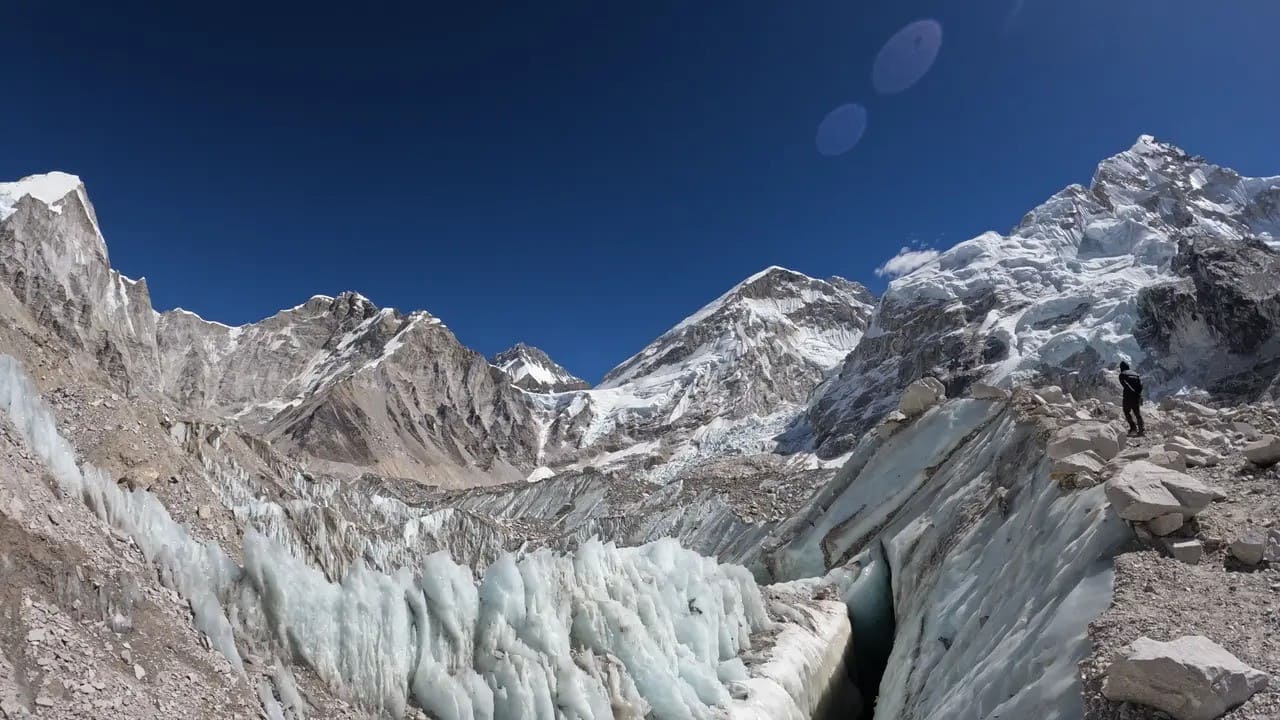
Island Peak is considerably more demanding than the Everest Base Camp Trek because it adds technical climbing, glacier travel, and a summit above 6,000 m. EBC is a strenuous high-altitude trek, while Island Peak requires mountaineering equipment and technical preparation.
| Factor | Everest Base Camp Trek | Island Peak Climbing |
|---|---|---|
| Main activity | High-altitude trekking | Trekking plus mountaineering |
| Technical equipment | Trekking equipment | Crampons, harness, helmet, fixed-rope equipment, and more |
| Main objective | Everest Base Camp and/or Kala Patthar | Island Peak summit at 6,189 m |
| Main challenge | Endurance, altitude, and long walking days | Endurance, altitude, technical terrain, and exposure |
| Training | Trekking fitness | Trekking fitness plus technical preparation |
EBC should not be considered easy. It can involve long walking days, significant altitude gain, and its own acclimatization challenges. Island Peak adds another layer of difficulty through the climbing sections.
Island Peak vs Mera Peak Climbing: Which Is Harder?
Island Peak Climbing is generally considered more technically demanding than Mera Peak Climbing, while Mera Peak is higher and places greater emphasis on altitude endurance. Which climb feels harder depends on the individual’s experience, acclimatization, fitness, and comfort with technical terrain.
| Factor | Island Peak | Mera Peak |
|---|---|---|
| Summit elevation | 6,189 m | 6,476 m |
| Main challenge | Technical climbing and exposure | Altitude and endurance |
| Terrain | Glacier travel, steep sections, and fixed ropes | Glacier and snow climbing on the standard route |
| Technical preparation | Crampon, ice axe, and fixed-rope skills | Glacier and snow-climbing skills |
| Best comparison | More technical challenge | Higher-altitude challenge |
This distinction is more useful than simply labeling one mountain “easy”, and the other “hard.” Island Peak’s steep fixed-rope sections can be particularly demanding for first-time climbers, while Mera Peak’s greater elevation creates its own serious physical and acclimatization demands. Published climbing guides commonly make this same broad distinction, although exact grades and route descriptions vary.
Is Island Peak Climbing Right for You?
Island Peak is a realistic objective for some fit beginners, but it is not a casual trekking destination. Its 6,189 m summit, glacier travel, fixed-rope climbing, cold, and long summit day require honest preparation.
If you have good trekking endurance, are willing to learn technical skills, allow enough time for acclimatization, and understand that turning around may be necessary, Island Peak can be a valuable introduction to Himalayan mountaineering.
The most useful question is not only, “Can I reach the summit?” It is also, “Am I prepared to climb responsibly?”

