


If you are planning an autumn trek in Nepal, September to November is one of the most rewarding times to walk through the Himalayas. The monsoon season has ended, the skies become clearer, trails are generally drier, and mountain views improve across many trekking regions. From the famous Everest Base Camp Trek and Annapurna Base Camp Trek to quieter routes such as Manaslu, Nar Phu, and Pikey Peak, there is an autumn trek for almost every type of traveler.
Autumn is also a lively time to visit Nepal. The trekking routes pass through villages preparing for harvest and major festivals such as Dashain and Tihar. Whether you want dramatic mountain views, cultural experiences, a challenging high-pass trek, or a shorter Himalayan adventure, autumn gives you many good options.
Why Is Autumn Considered the Best Season for Trekking in Nepal?

Autumn (September to November) is one of the best trekking seasons in Nepal because it offers clearer mountain views, generally stable weather, and opportunities to experience major local festivals. October and early November are particularly popular, although conditions vary by altitude and region.
Clear Mountain Views
The summer monsoon washes dust and haze from the atmosphere, often leaving the Himalayan skies clearer by autumn. This makes it an excellent time to enjoy views of peaks such as Everest, Ama Dablam, and the Annapurna massif.
- Better visibility: Clearer skies offer excellent views of the mountains, especially on mornings with stable weather.
- Favorable photography conditions: Good visibility and post-monsoon landscapes create opportunities for mountain photography.
Stable Weather and Favorable Trail Conditions
Autumn generally brings more predictable weather than the monsoon season, along with drier trails in many trekking regions. These conditions make long walking days and high-altitude journeys more manageable.
- Comfortable daytime temperatures: Lower-altitude trails are often pleasantly warm, while higher elevations can become very cold at night.
- Drier trails: Many routes become firmer after the monsoon, although muddy sections and landslide risks can persist, particularly in September.
- Access to high mountain passes: Routes crossing Thorong La (5,416 m) and Cho La (5,420 m) are often accessible, but fresh snowfall can affect conditions.
- Mountain flights: Clearer weather can improve flight reliability to destinations such as Lukla, although delays and cancellations remain possible.
Chance to Experience Nepal’s Major and Local Festivals
The autumn season coincides with two of Nepal’s biggest Hindu festivals, Dashain and Tihar, as well as Mani Rimdu, a traditional Sherpa Buddhist festival celebrated in the Khumbu region. Depending on your trekking dates, you may experience village celebrations, festive decorations, or Buddhist ceremonies at local monasteries.
- Dashain (September-October): Families gather to celebrate, and you may see traditional bamboo swings and festive village decorations.
- Tihar (October-November): Homes and streets light up with oil lamps, candles, and colorful decorations, while marigold garlands brighten doorways.
- Mani Rimdu (October-November): This Buddhist festival is celebrated at monasteries in the Khumbu region, including Tengboche Monastery. It features masked dances, prayers, and religious ceremonies.
Note: Festival dates change each year, so check the Nepali calendar or contact us if you want your trek to coincide with either celebration.
Top 10 Best Autumn Treks in Nepal
Nepal offers trekking routes ranging from short, beginner-friendly walks to demanding journeys above 5,000 meters. Here are some of the best autumn treks to consider.
Everest Base Camp Trek
The Everest Base Camp Trek is the classic choice for anyone who wants to experience the Khumbu region and stand at the foot of Mount Everest. At Action Nepal Treks, we currently offer a 14-day Everest Base Camp Trek reaching 5,545 meters at Kala Patthar. The route starts with a flight to Lukla and continues through Sherpa villages, Namche Bazaar, Tengboche, Dingboche, Lobuche, and Gorak Shep before reaching Everest Base Camp.
Autumn is particularly attractive here because clear weather can provide excellent views of Everest, Lhotse, Nuptse, Ama Dablam, and other peaks. You also experience the distinctive Sherpa culture of the Khumbu. The trail passes through Sagarmatha National Park, pine and rhododendron forests at lower elevations, Buddhist monasteries, suspension bridges, and traditional mountain villages.
Best for: First-time Himalayan trekkers, Everest views, Sherpa culture, and a classic Nepal trekking experience.


Annapurna Base Camp Trek
The Annapurna Base Camp Trek is one of the best autumn treks in Nepal if you want mountain scenery without committing to an extremely long high-altitude journey. Our current package is 9 days and reaches a maximum altitude of 4,130 meters at Annapurna Base Camp. The route passes through forests, terraced landscapes, and Gurung and Magar villages before entering the Annapurna Sanctuary.
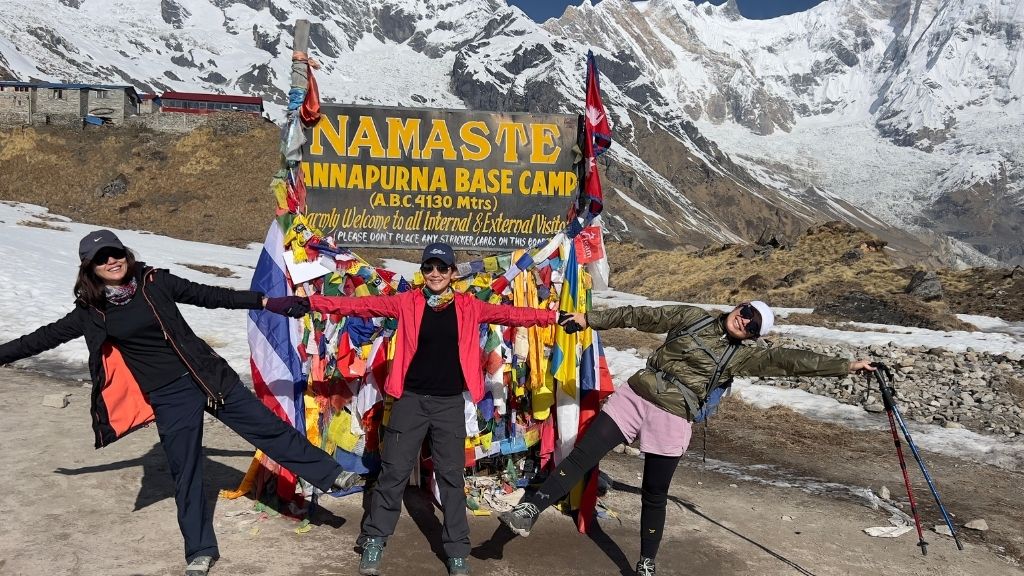
Autumn is an excellent time for the ABC trek because the post-monsoon air can produce clear views of Annapurna I, Annapurna South, Hiunchuli, Machhapuchhre, and surrounding peaks. You also get considerable landscape variety. The lower sections are green and forested, while the trail gradually becomes more alpine as you approach base camp.
Best for: Mountain views, cultural villages, moderate trekking, and the Annapurna region.
Annapurna Circuit Trek
The Annapurna Circuit Trek is one of Nepal’s longest and most varied trekking routes. The landscape shifts from green valleys and forests at lower elevations to the dry, high-altitude terrain of Manang. After crossing Thorong La Pass, the trail descends into Mustang, known for its arid landscapes and Tibetan cultural influences. You can also extend the trek with side trips to Tilicho Lake or the Nar Phu Valley, or add Poon Hill for sunrise views of the Annapurna and Dhaulagiri ranges.
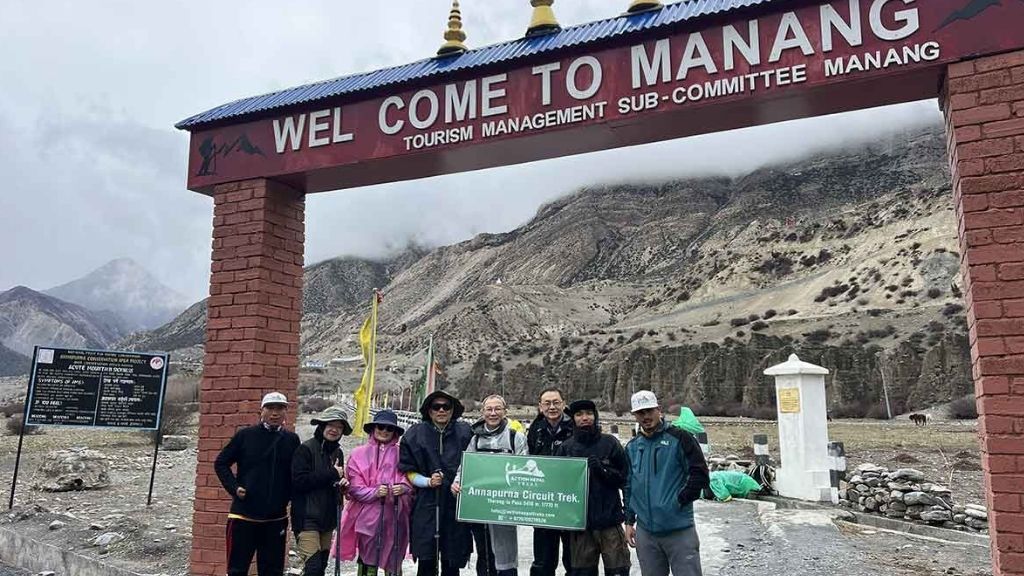
Autumn is a popular time for the trek because drier conditions and clearer skies generally make the high-altitude crossing more manageable, though snowfall can still affect access. Along the route, you’ll also pass traditional Gurung, Manangi, and Thakali settlements, as well as Buddhist monasteries. The main challenge is crossing Thorong La Pass at 5,416 meters, which is higher than Everest Base Camp (5,364 m). However, it is also the core of the classic Annapurna Circuit trek.
Best for: Landscape variety, high passes, cultural diversity, and a longer trekking adventure.


Manaslu Tsum Valley Trek
If you want a quieter and more culturally immersive autumn trek, the Manaslu Tsum Valley Trek is worth considering. We offer this as a 17-day trek that reaches 5,106 meters at Larkya Pass. The route combines the remote Tsum Valley with the Manaslu Circuit, taking you through traditional villages, Buddhist monasteries, and high Himalayan landscapes.
The Tsum Valley adds strong Tibetan cultural influence, while the Manaslu Circuit delivers high-altitude challenge and dramatic mountain scenery. The route becomes particularly attractive after the monsoon, when mountain visibility improves, and the trail is generally in good condition.
Best for: Remote trails, Tibetan Buddhist culture, traditional villages, and experienced trekkers seeking a longer route.
Nar Phu Valley Trek
The Nar Phu Valley Trek takes you into one of the more remote corners of the Annapurna region. Our 9-day Nar Phu Valley Trek takes you to 5,320 meters, along a demanding route through steep gorges, traditional villages, ancient monasteries, and dry Himalayan landscapes.

The valley lies in the rain shadow of the Annapurna and Manaslu ranges, giving it a landscape that feels very different from the greener southern side of the Annapurna region. Autumn is an excellent time for this trek, especially October, when the weather is stable, and the Kang La pass crossing offers clearer views of Annapurna II, Gangapurna, and Himlung Himal.
Best for: Remote trekking, Tibetan-influenced culture, high passes, and experienced trekkers.


Upper Mustang Round Trek
For a completely different Himalayan landscape, consider the Upper Mustang Trek. Our 14-day Upper Mustang Round Trek starts at USD 1,400 and takes you past Kagbeni, Chele, Ghami, Tsarang, Lo-Manthang, and other traditional settlements before returning through Mustang. Upper Mustang itself sits in the rain shadow of the Himalayas, so its landscape is much drier than the forested trails found in much of the Annapurna region.
Here, you will see barren cliffs, deep canyons, traditional mud-brick houses, monasteries, and strong Tibetan cultural influences. The route reaches 4,280 meters at Chogo La Pass. The autumn season offers perfect trekking conditions to explore Mustang because the monsoon has ended while the region’s dry character remains intact.
Best for: Tibetan culture, desert-like Himalayan landscapes, ancient villages, and travelers wanting something different from classic green trekking routes.
Gokyo Renjo La Pass Trek
The Gokyo Renjo La Pass Trek is a strong alternative to the standard EBC trek route. We offer this as an 11-day trek that reaches 5,360 meters at Renjo La Pass and 5,357 meters at Gokyo Ri. The route combines the Gokyo Valley, glacial lakes, Sherpa villages, and a high Himalayan pass.
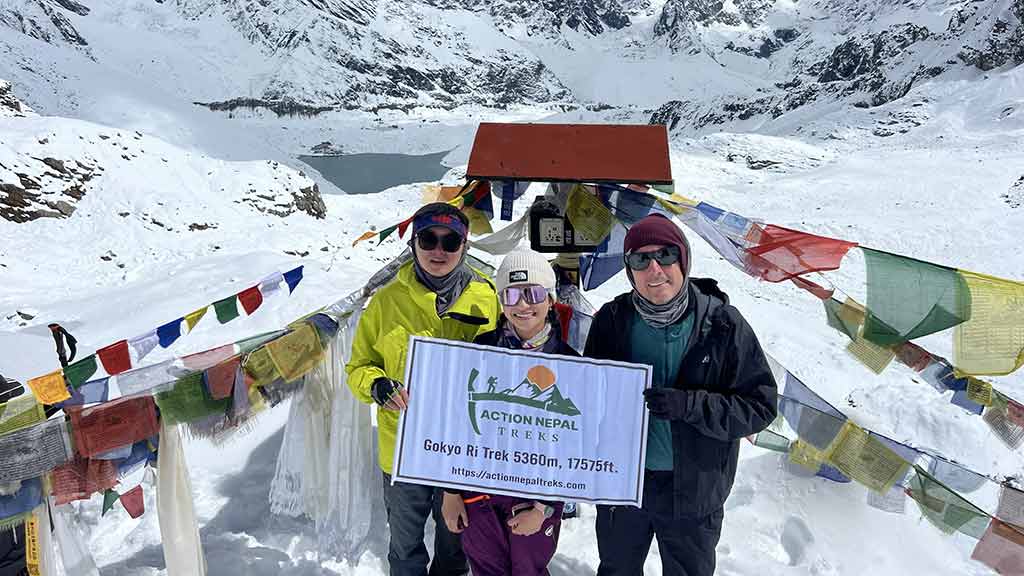
From Gokyo Ri, trekkers can enjoy wide views of Everest, Lhotse, Makalu, Cho Oyu, and Ama Dablam. The route also passes through Sagarmatha National Park and the Ngozumpa Glacier area. It is especially appealing if you want a high-altitude Everest-region adventure but don’t want to follow the standard Everest Base Camp route.
Best for: High-altitude scenery, Gokyo Lakes, Sherpa culture, and a quieter alternative to EBC.

Langtang Valley Trek
The Langtang Valley Trek is one of the closest Himalayan trekking routes to Kathmandu, with Syabrubesi serving as the traditional trailhead. The trail enters Langtang National Park, passing through forests and wildlife habitats where red pandas live. As you climb higher, the landscape changes from green hillsides and Tamang villages to open alpine terrain beneath Langtang Lirung (7,227 m).
The trek continues through Buddhist villages, past prayer wheels, mani walls, and monasteries, before reaching Kyanjin Gompa (3,870 m). From here, you can explore the glacial valley and take in views of the surrounding peaks. The route offers a mix of mountain scenery, local culture, and high-altitude landscapes without requiring the long travel time needed to reach Nepal’s more distant trekking regions.
Best for: Shorter Himalayan adventures, mountain scenery, Tamang culture, and glacial valley landscapes.
Important access notice: Flood damage in 2026 disrupted road access to Syabrubesi. Contact us for the latest updates on road conditions, alternative routes, and trail access.
Mardi Himal Trek
The Mardi Himal Trek is a good choice for trekkers who want close-up Himalayan views without committing to a long trekking expedition. The trail starts near Pokhara and climbs through oak and rhododendron forests before reaching an exposed ridge beneath Machhapuchhre (Fishtail Mountain). As you gain altitude, the forest gives way to alpine terrain, with views of Annapurna South, Hiunchuli, and Machhapuchhre along the way.
Autumn is a popular season for this trek, with generally clearer skies and drier trails. Our standard itinerary usually takes 7 days, reaching High Camp (around 3,580 m) before continuing to the Upper Viewpoint (around 4,200 m) or Mardi Himal Base Camp (around 4,500 m), depending on conditions and the route. It offers a quieter trekking experience than Nepal’s busier classic routes.
Best for: Short Himalayan trekking, ridge walking, forests, and close-up Annapurna views.


Ghorepani Poon Hill Trek
If you have only a few days, the Ghorepani Poon Hill Trek is one of the easiest ways to trek to the Annapurna region. Starting at just USD 399, our 4-day package takes you to Poon Hill at around 3,210 meters. The route passes through rhododendron forests and villages before reaching the viewpoint before sunrise.
From Poon Hill, you can see a wide panorama that includes Dhaulagiri, Annapurna South, Annapurna I and II, Machhapuchhre, and other Himalayan peaks. It is particularly suitable for first-time trekkers who want mountain views without the altitude and duration of longer Himalayan routes.
Best for: Beginners, short holidays, sunrise views, and families or casual hikers.
Best Short Autumn Treks in Nepal (Under 8-10 days)
Not everyone has a full month to spare for a massive Himalayan expedition. Fortunately, if you want to use your October half-term or Halloween holiday break, several shorter routes can give you a genuine, high-altitude experience in under a week.
| Trek package | Duration | Best for |
|---|---|---|
| Ghorepani Poon Hill Trek | 4 days | Beginners and sunrise views of Annapurna and Dhaulagiri |
| Everest View Trek | 5 days | Everest-region views and Sherpa culture |
| Short Annapurna Base Camp Trek | 5 days | Fit trekkers wanting to reach ABC quickly |
| Mardi Himal Trek | 7 days | Ridge walking and close-up Machhapuchhre views |
| Short Annapurna Circuit Trek | 8 days | Thorong La Pass and changing landscapes |
| Short Everest Base Camp Trek | 9 days | Reaching Everest Base Camp on a compressed itinerary |
| Annapurna Base Camp Trek | 9 days | A fuller Annapurna Sanctuary experience |
| Annapurna Base Camp Trek via Poon Hill | 9 days | Combining Poon Hill sunrise with ABC |
| Annapurna Circuit with Tilicho Lake Trek | 10 days | Tilicho Lake, Thorong La, and varied landscapes |
Are Short Treks More Affordable?
Short treks can help you keep your overall trekking budget down. During Nepal’s peak autumn season, choosing a 4-10-day itinerary instead of a two-week trek means fewer nights in teahouses, fewer days of meals, and lower total guide and porter fees.
- Fewer days of expenses: A shorter itinerary means you spend less overall on accommodation, meals, and daily trekking services.
- Lower guide and porter costs: Since these services are usually charged by the day, a shorter trek generally means lower total staff fees.
- Potentially lower transport costs: Treks in the Annapurna and Langtang regions can often be reached by road, avoiding the flight to Lukla required for many Everest-region itineraries. However, transport costs depend on the route and transfers included.
One thing to watch: Some compressed itineraries, such as the 5-day Short Annapurna Base Camp Trek or 8-day Short Annapurna Circuit Trek, use private jeep transfers to skip lower sections of the trail. These transfers can add to the price, especially for solo travelers who cannot split the fare with a group. If keeping costs down is your priority, compare the total package price and inclusions rather than choosing a trek based on duration alone. Poon Hill and Mardi Himal are worth considering, depending on the itinerary and transport arrangements.
September, October or November: Which Month Is Best?
Among the three autumn months, October is widely considered the best, with stable weather, clear mountain views, and comfortable daytime temperatures. September is also ideal if you want greener landscapes and fewer crowds, especially toward the end of the month. Finally, November suits trekkers who prefer quieter trails and clear views but can handle colder nights and possible snowfall at higher elevations.
September: The End of the Monsoon
September is a transition month, and conditions can differ significantly between early and late September. The monsoon often continues into the first half of the month, bringing rain, cloudy skies, muddy trails, and occasional flight disruptions. The weather often starts to improve by late September. However, rain and landslides remain possible in some areas.
The landscape is particularly lush, with flowing waterfalls, green hillsides, and rivers swollen by monsoon runoff. Trails are also quieter than in October, making September a good option for trekkers who enjoy green scenery, fewer crowds, and the flexibility to keep their plans open.
October: Peak Trekking Season
October is the most popular month for trekking in Nepal because many routes benefit from stable weather, clear mountain views, and comfortable daytime temperatures. These conditions make it a good choice for first-time trekkers and those planning high-altitude journeys, including routes that cross mountain passes. Dashain and Tihar also often fall in October, adding a cultural element to your trip.
The main drawback is the crowds. Popular routes such as Everest Base Camp and Annapurna Base Camp can get very busy, and teahouse rooms and flights to mountain destinations book up quickly. You have to book ahead if you’re planning to trek during this peak period. And although daytime conditions are often pleasant, nights can still be cold at higher elevations, and snowfall may affect access to high mountain passes.
November: Clear Skies and Colder Nights
November is a good month for trekking in Nepal if you prefer quieter trails and clear mountain views. The first half of the month often offers favorable conditions, while temperatures drop as winter approaches. Higher-altitude routes can become colder, with frost, snowfall, and icy sections affecting trails and mountain passes later in the month.
Compared with October, November generally sees fewer trekkers, especially toward the end of the month. This makes it a good option for photographers and hikers who want more space on the trails and don’t mind colder nights. In the Khumbu region, you may also be able to experience Mani Rimdu, a Sherpa Buddhist festival featuring masked dances and religious ceremonies at monasteries such as Tengboche.
September vs. October vs. November Summary
| Factor | September | October | November |
|---|---|---|---|
| Weather | Monsoon may linger | Generally stable | Clear, increasingly cold |
| Landscape | Lush and green | Green valleys and clear peaks | Autumn colors and crisp views |
| Crowds | Usually quieter | Busiest month | Often quieter later in the month |
| Main concern | Rain and muddy trails | Crowds and limited accommodation | Cold nights and possible snowfall |
| Best for | Green scenery and quieter trails | Reliable all-round trekking conditions | Clear views and fewer crowds |
Overall, October is the best all-round choice for most trekkers. Late September and early November can also be excellent alternatives, depending on the route and weather. Still check local forecasts and trail conditions before you set off, especially if your itinerary includes high mountain passes.
Which Autumn Trek Is Right for You?
The best autumn trek in Nepal depends on the kind of experience you want, how much time you have, and how comfortable you are with long walking days and high elevations. October is generally the most popular month for clear mountain views, while September can be a good choice for an earlier autumn trekking experience, and November brings cooler temperatures and a quieter atmosphere on many routes.

You don’t need to choose the highest or longest trek to enjoy the autumn season. Shorter routes such as Poon Hill, Mardi Himal, and Everest View Trek offer Himalayan scenery with fewer days on the trail, while routes such as Everest Base Camp, Annapurna Circuit, and Manaslu Tsum Valley offer longer and more demanding trekking experiences.
| If you want… | Consider… |
|---|---|
| Iconic Everest views and Sherpa culture | Everest Base Camp Trek |
| A shorter Everest-region experience | Everest View Trek |
| Annapurna mountain scenery and a classic base camp | Annapurna Base Camp Trek |
| A short trek to Annapurna Base Camp | Short Annapurna Base Camp Trek |
| A diverse long-distance route with a high pass | Annapurna Circuit Trek |
| Remote villages and Tibetan-influenced culture | Manaslu Tsum Valley or Nar Phu |
| Dry Himalayan landscapes and a distinct Tibetan character | Upper Mustang Trek |
| High passes and glacial lakes | Gokyo Renjo La Pass Trek |
| Ridge walking and close-up views of Machhapuchhre | Mardi Himal Trek |
| A shorter trek with panoramic sunrise views | Ghorepani Poon Hill Trek |
| A quieter Everest-region trekking experience | Pikey Peak Trek |
| Mountain scenery and Tamang culture | Langtang Gosaikunda Trek |
If you have limited time, Ghorepani Poon Hill, Everest View, Mardi Himal, and Short Annapurna Base Camp are among the more practical choices. If reaching a major high-altitude destination is your priority, Everest Base Camp, Annapurna Base Camp, Annapurna Circuit, Manaslu Tsum Valley, and Gokyo Renjo La offer more demanding itineraries.
For a different landscape and cultural experience, Upper Mustang and Nar Phu stand out for their dry terrain, remote settlements, and strong Tibetan influence. Your choice ultimately comes down to the balance you want between trekking duration, altitude, difficulty, scenery, culture, and the type of autumn experience you are looking for.
How Crowded Are Autumn Trekking Routes?
Autumn is Nepal’s peak trekking season, so popular routes are busy. Everest Base Camp, Annapurna Base Camp, and Poon Hill tend to see more trekkers than remote routes such as Nar Phu or Manaslu. Teahouses can become busy during October, especially at popular stops.
If you prefer quieter trails, consider:
- Manaslu Tsum Valley
- Nar Phu Valley
- Pikey Peak
- Gokyo Renjo La
- Upper Mustang
Choosing a less busy route does not mean sacrificing mountain scenery. In some cases, it gives you more time to enjoy the villages and landscape without the same level of trail traffic.
How Difficult Is Trekking in Nepal in Autumn?
Autumn itself does not make a trek difficult. The difficulty depends mainly on the route, altitude, daily walking hours, terrain, and acclimatization schedule. A short trek such as Poon Hill is suitable for beginners, while the Short ABC Trek requires stronger fitness because it reaches 4,130 meters within only five days.
High-altitude routes such as Manaslu, Nar Phu, and Gokyo Renjo La require considerably more preparation. The Manaslu Tsum Valley Trek, for example, reaches 5,106 meters at Larkya Pass, while the Gokyo Renjo La route includes a pass at about 5,360 meters.
Regardless of the route, you have to maintain a steady pace, stay hydrated, eat properly, and inform your guide if you develop any symptoms of altitude sickness. Please don’t ignore it or try to push through.
How Much Does an Autumn Trek in Nepal Cost?
Autumn is the peak trekking season in Nepal, but does peak season mean peak prices? Not necessarily. Your total cost depends more on the route, trek duration, group size, transportation, and what your package includes. Shorter routes such as Poon Hill can be relatively affordable, while longer or restricted-area treks require a larger budget.
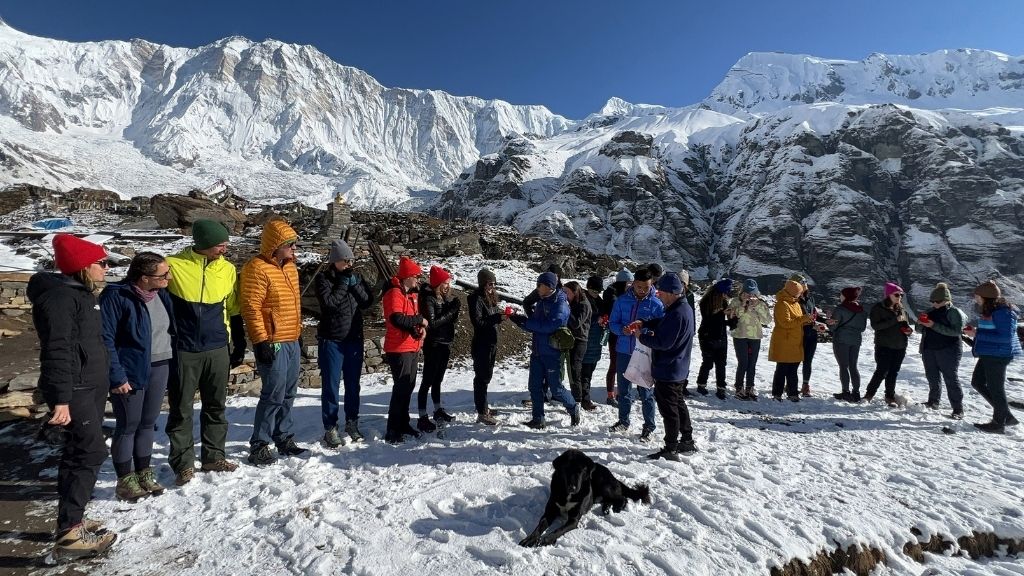
If you are comparing Action Nepal Treks packages, the current starting prices give you a useful idea of the cost of different autumn trekking experiences:
| Trek package | Duration | Starting price | Major inclusions |
|---|---|---|---|
| Everest Base Camp Trek | 14 days | From USD 1,449 | Guide, porter, teahouse accommodation, meals, permits, Lukla flights, ground transport |
| Annapurna Base Camp Trek | 9 days | From USD 700 | Guide, porter, teahouse accommodation, meals, permits, ground transport |
| Annapurna Circuit Trek | Varies | From USD 800* | Guide, porter, accommodation, meals, permits, ground transport |
| Manaslu Tsum Valley Trek | 17 days | From USD 1,299 | Guide, porter, accommodation, meals, restricted-area permits, conservation permits, transport |
| Nar Phu Valley Trek | 9 days | From USD 799 | Guide, porter, accommodation, meals, permits, ground transport |
| Upper Mustang Round Trek | 14 days | From USD 1,400 | Guide, porter, accommodation, meals, restricted-area permit, conservation permit, transport |
| Gokyo Renjo La Pass Trek | 11 days | From USD 1,240 | Guide, porter, accommodation, meals, permits, ground transport |
| Langtang Gosaikunda Trek | 13 days | From USD 799 | Guide, porter, accommodation, meals, permits, ground transport |
| Mardi Himal Trek | 7 days | From USD 620 | Guide, porter, accommodation, meals, permits, ground transport |
| Ghorepani Poon Hill Trek | 4 days | From USD 399 | Guide, porter, accommodation, meals, permits, ground transport |
*Annapurna Circuit pricing varies according to the itinerary and package selected.
These are the current starting prices for Action Nepal Treks. The final per-person cost can vary with group size, departure arrangements, and customized services. Larger groups may receive lower per-person rates.
What to Budget Beyond the Package Price
Even when your guided trek package covers the main logistics, set aside extra money for personal expenses along the trail. You may need to pay separately for hot showers, device charging, Wi-Fi, bottled or boiled drinking water, snacks, and tips for your guide and porter. Carry enough Nepali rupees in cash, as card payments and ATMs may be unavailable along remote trekking routes.
Also budget for any gear you need to rent or buy. In Kathmandu’s Thamel area, you can rent down jackets and sleeping bags, though prices vary by item and shop. Travel insurance is another separate expense. Choose a policy that covers high-altitude trekking at your planned maximum elevation and emergency helicopter evacuation. Check the package inclusions carefully so you know what’s covered and what you will need to pay for yourself.
What to Pack for an Autumn Trek in Nepal
Autumn usually brings clear skies and comfortable daytime temperatures to Nepal’s trekking trails, but nights can get very cold, especially above 3,500 meters. Temperatures vary with altitude, weather, and exposure, so don’t base your clothing choices on daytime conditions. Many teahouses have unheated bedrooms, and higher-altitude stops can drop below freezing overnight. Dressing in layers helps you adjust as conditions change throughout the day.
Use this checklist as a starting point, then adjust it to your route, highest overnight stop, and package inclusions.
- Layered clothing: 3-4 moisture-wicking base shirts, a fleece or warm mid-layer, an insulated down or synthetic jacket, and a waterproof, windproof outer shell.
- Trousers and thermals: 1-2 pairs of quick-drying trekking trousers and warm thermal leggings for cold evenings and sleeping.
- Footwear and socks: Broken-in hiking boots suited to your route, 3-4 pairs of trekking socks, and comfortable footwear for the teahouse.
- Hands and head: Warm gloves, a beanie, and a sun hat or cap.
- Sun and personal care: UV-protected sunglasses, SPF 50+ sunscreen, lip balm, blister care, personal medication, and basic first-aid supplies.
- Sleeping gear: A sleeping bag suitable for the expected nighttime temperatures if your package doesn’t provide one. For high-altitude autumn treks, check the cold rating recommended for your specific itinerary.
- Daypack and trekking equipment: A daypack for your daily essentials, adjustable trekking poles (if you prefer them), and a headlamp with spare batteries.
- Water and electronics: Reusable water bottles or a hydration system, a suitable water purification method, and a power bank. Charging facilities may be limited or cost extra at remote teahouses.
If you don’t have your own sleeping bag, down jacket, duffel bag, or other equipment, we provide them as part of the package, and they must be returned.
Practical Tips for Trekking in Autumn
- Book Popular Routes Early: October is one of Nepal’s busiest trekking months. Book your trek, domestic flights, and accommodation in advance, especially for popular routes and destinations with limited lodging.
- Start Walking Early: Set off around 6:00-7:00 AM when your itinerary allows. Mornings often offer clearer mountain views, and an early start gives you more time to reach your next stop before afternoon weather changes.
- Allow Extra Time for Flights: Flights to mountain destinations such as Lukla and Jomsom can be delayed or canceled by poor visibility and changing weather, even in autumn. Leave a few spare days before your international departure, particularly if your trek depends on a domestic flight.
- Dress for Cold Evenings: Temperatures can drop quickly after sunset, especially at higher elevations. Change out of damp trekking clothes, put on warm layers, and keep your evening essentials within easy reach.
- Acclimatize Properly: Clear weather does not reduce the risk of altitude sickness. Follow your itinerary’s acclimatization plan, maintain a comfortable pace, and tell your guide if you develop symptoms such as a persistent headache, nausea, dizziness, or unusual fatigue. Do not continue ascending if you feel unwell.
- Follow Local Safety Advice: Trail and weather conditions can change during autumn, particularly on high passes and exposed sections. Check conditions with your guide each day and follow their advice on route changes, crossing times, and accommodation.

