Most people come to Nepal for the mountains. Fewer realize the jungle is just a few hours away.
This Chitwan Jungle Safari takes you into Nepal’s first national park, a UNESCO World Heritage Site established in 1973. Sitting in the subtropical lowlands over 1,200 meters below Kathmandu, the flat grasslands and dense forests support 68 mammal species and 543 bird species, including rhinos, Bengal tigers, and gharial crocodiles. It’s a completely different world from the peaks, and one of Asia’s most successful conservation stories.
The main highlight of the trip is the full-day jungle exploration. It includes a Jeep Safari through the core zones, dugout canoeing on the Rapti River, and guided jungle walks led by local naturalists who track animal movements in real time. This ensures the best chances to see one-horned rhinos, crocodiles, and diverse bird species as they appear on their own terms.
Beyond safaris, you spend time with the Tharu community, who have lived alongside this forest for centuries. So this Chitwan tour is a simple, grounded way to understand both the park’s history with nature and its people without rushing either.
Stay in jungle-facing lodges and resorts in Sauraha, with the Rapti River nearby, and forest sounds as your backdrop.
Spot 43+ mammal species, 543+ bird species, and 50+ reptiles and amphibians in one of Asia’s richest subtropical ecosystems.
See endangered wildlife like the one-horned rhino, Bengal tiger, gharial crocodile, wild elephant, gaur, and pangolin in their natural habitat.
Explore sal and kapok forests with certified wildlife guides who track animal movement in real time.
Experience elephant bathing under the supervision of mahouts, one of the most memorable hands-on activities in Nepal.
Visit a Tharu village in the evening and watch traditional stick dances passed down through generations.
End the day by the Rapti River as the sun sets behind the Churia hills, often with rhinos grazing nearby.
Stop by the Elephant Breeding Center on your final morning to see calves and mothers in a protected environment.
Chitwan Jungle Safari Complete Itinerary
Day 1: Drive from Kathmandu or Pokhara to Chitwan
The tour starts with a drive from either Kathmandu or Pokhara. When you reach Chitwan, our personnel will pick you up and take you to the assigned hotel. Here, you can enjoy a welcome beverage. After that, you’ll be assigned your rooms and regroup once more for a brief overview of your 2 Nights and 3 Days Chitwan National Park Tour.
Later, the tour guide will take you to a Tharu village to explore their culture. You will see their traditional mud-and-thatch houses decorated with indigenous clay murals and learn about their lives as “nature worshippers”. Next, you visit the Chitwan National Park tourist center by the Rapti River for insights into the park’s history and enjoy the sunset. In the evening, the Tharu people showcase traditional performances featuring their traditional stick dances that tell the story of their deep connection to the forest. Do not shy away, join them for a dance.
Itinerary Details
Itinerary Fact
Details
Meals
Welcome beverage, Dinner
Accommodation
Chitwan Jungle resort
Highest Altitude
815 m
Day 2: Full day Jungle activities in Chitwan National Park
After staying overnight in the Chitwan Jungle resort, it’s time to explore the Chitwan jungle. The second day of the tour begins with a warm canoe journey through the rafting river. During this canoe ride, you will see two endangered species of crocodiles: the Gharial and the Marsh Mugger. After departing from the canoe, the wildlife specialist will give you a walking tour of the jungle. You will learn to track animal footprints and identify rare plants and medicinal herbs used by locals for centuries.
In the afternoon, you will head into the park’s core zone for a Deep Jungle Jeep Safari. This is the most effective way to cover distance and provides the best chance to spot the One-horned Rhino, Sloth Bear, and the majestic Royal Bengal Tiger. Afterward, you visit the riverside to observe Elephant Bathing to watch these giants splash and play in the water under the supervision of their mahouts (Elephant’s controller).
Note: Ethical Elephant Back Safari is available on request. Please speak with your guide about current availability and our responsible wildlife policies.
Itinerary Details
Itinerary Fact
Details
Meals
Breakfast, Lunch, Dinner
Accommodation
Chitwan Jungle resort
Highest Altitude
815 m
Day 3: Drive Back to Kathmandu or Pokhara
Today is the last day of the Chitwan Jungle Safari. So, you can wake up and have breakfast earlier so that you will have the chance to enjoy the remaining activities in the morning when the wildlife is most active. You can enjoy a Sunrise Bird Watching to see some of the park’s 543 species. Alternatively, you can visit the Elephant Breeding Center, where you can witness the bond between mother elephants and their young calves in a protected environment.
After a quick breakfast at the resort, our team will drive you to the station for your return journey to Kathmandu or Pokhara. This marks the end of your Chitwan Jungle Safari adventure, leaving you with a complete perspective of Nepal’s incredible vertical contrast.
Itinerary Details
Itinerary Fact
Details
Meals
Breakfast
Highest Altitude
815 m
Services Covered and Not Covered
What's Included
What's Excluded
Pick-up and drop-off from Chitwan Bus Park.
Tourist bus tickets to/from Kathmandu or Pokhara.
3-day full-board jungle safari in Chitwan National Park.
English-speaking tour guide throughout the trip.
Jeep safari, bird watching, jungle walk, canoeing, and Tharu cultural dance.
2-night accommodation with all meals included.
National park entry fees and park charges.
Service charges and taxes are covered.
Access to swimming pool and Wi-Fi.
Accommodation and meals in Kathmandu or Pokhara.
International airfare and Nepal entry visa fee (visa easily issued on arrival).
Alcoholic drinks, mineral water, laundry, and personal phone or internet usage.
Tips, gifts, and souvenirs.
Why Chitwan Jungle Safari is a Must‑Do Experience
The Jungle Safari tour lies within one of Asia’s largest wildlife corridors that directly links with Parsa National Park and protected areas across the Indian border. Unlike fenced reserves, this is an open system where animals, even Bengal tigers and wild elephants, move freely on their own. They follow natural routes that extend beyond the park itself. Since its establishment in 1973, Chitwan has become a leading example of successful conservation, with the one-horned rhino population now exceeding 750. So, everything you see here is a part of a functioning ecosystem that has been protected over time.
The safari experience takes you into a dense subtropical environment that supports 68 mammal and over 540 bird species. You move from Sauraha, through sal and kapok forests with trained local naturalist guides who track animal movement as it happens. Canoe rides along the Rapti River bring you close to gharial crocodiles, while other activities like Jeep Safari, elephant bathing, and bird watching offer different ways to move through the landscape. Although wildlife encounters vary, the density and diversity remain consistent throughout the park.
However, the journey is not just about the wildlife and the jungle. It’s also equally about the Tharu community, who have lived in this region long before it became a national park. They are traditionally nature worshippers, so their daily lives reflect a long-standing connection to the forest. Visiting their village and observing traditional practices gives context to the environment you explore, linking wildlife, land, and people into one continuous system.
Additionally, most wildlife destinations require you to travel deep into remote terrain, spend days adjusting to altitude, and accept that sightings are never guaranteed. Chitwan removes most of those variables. The park’s location in the Terai lowlands makes it accessible from Kathmandu in 5 hours, meaning you can realistically see a wild rhinoceros on a Tuesday afternoon and be back in the capital by Thursday evening.
Safari Activities and Wildlife You Will See
Here are the core activities in the Chitwan Jungle Safari tour, moving from active wildlife tracking to quieter, close-range experiences in the jungle:
Canoe Ride
There is nothing quite like the silence of drifting down the Rapti River in a hand-carved dugout. Without the roar of an engine, you become part of the river’s morning rhythm. You’ll likely see Gharial and Marsh Mugger crocodiles pulled up on the sandbanks just meters away, looking like prehistoric statues. This is also when the park’s birdlife is most active so keep an eye out for the flash of a Kingfisher or the heavy wings of a Giant Hornbill crossing the water.
Duration: 60-90 minutes
Best for: A meditative start to the day and seeing the river’s predators up close.
Best Time: Right at sunrise when the mist is still hanging over the water.
Cost: NPR 1,500-2,000 per person.
Jeep Safari
If you want to cover serious ground and reach the core zones where tigers move, the jeep safari is your best option. Open-top 4WDs travel through dense sal forests and across open grasslands where wildlife activity shifts throughout the day. Guides watch for fresh signs like broken branches or alarm calls from chital deer, which often signal movement from predators like the Bengal tiger or sloth bear nearby.
Duration: 3-4 hours (Half-day) or 7-8 hours (Full-day)
Best for: Photography enthusiasts and anyone determined to find a Tiger or the One-horned Rhino.
Best Time: Mid-morning or late afternoon when predators head toward the water.
Cost: Shared from USD 55/person; private from USD 280/vehicle.
Guided Jungle Walks
This is the most direct way to experience the Terai, on foot and fully alert. You follow fresh pugmarks in the mud, spot scratch marks on tree bark, and learn about medicinal fauna found in the park and used by the Tharu community for generations. It’s a ground-level experience where you notice what a jeep cannot, like small forest details or sudden movement like a wild boar pushing through the undergrowth.
Duration: 2-4 hours
Best for: True nature lovers who want to feel the forest floor beneath their feet.
Best Time: Early morning or late afternoon before the heat settles in.
Cost: NPR 4,000-5,000 per person (includes mandatory guide fee).
Elephant Breeding Center Visit
Located at Khorsor, this center is the heart of Nepal’s elephant conservation efforts. It’s a quiet, unscripted place where you can watch mother elephants and their calves just hanging out and bonding. It provides a bit of behind-the-scenes context on the work being done to protect these endangered animals and makes sure you understand the bigger conservation picture in Chitwan.
Duration: 1 hour
Best for: Seeing the calves and learning about the park’s conservation backstory.
Best Time: Early morning or late afternoon during feeding times.
Cost: Approx. NPR 500 per person.
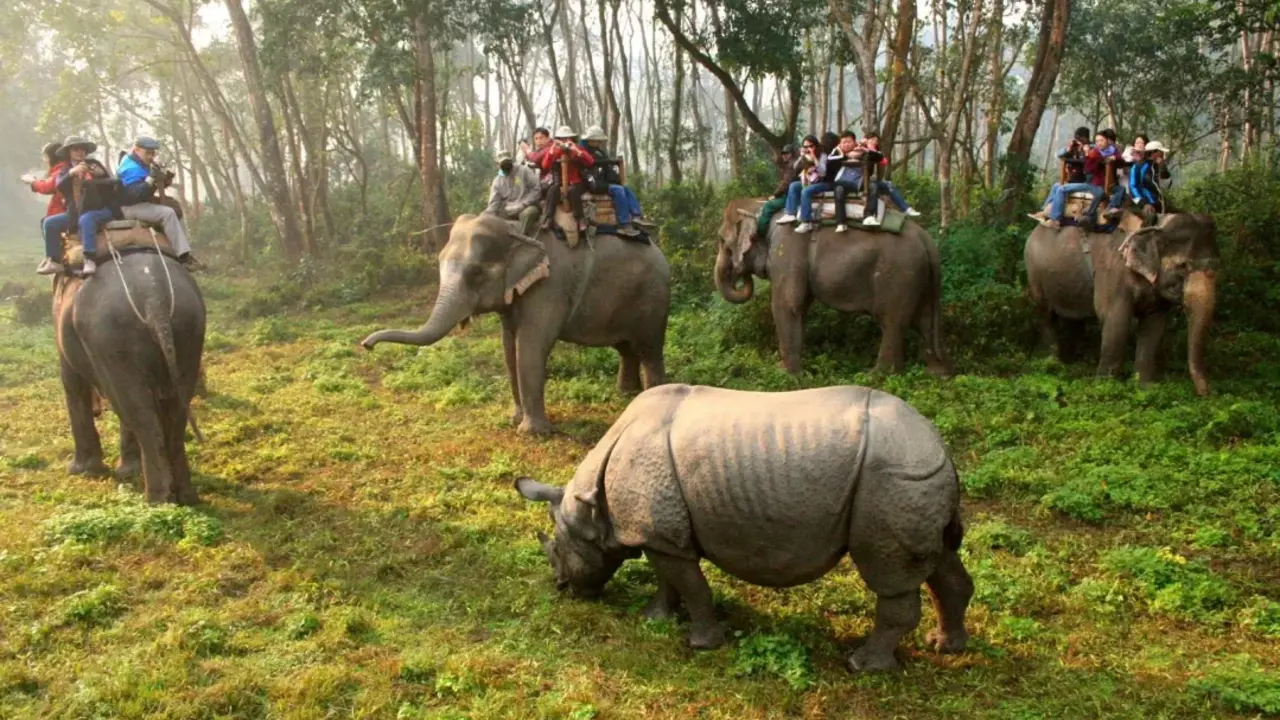
Elephant Safari
While we mostly recommend jeeps for deep-jungle access, traditional elephant-back rides are still an option in the community forests. The height gives you a massive advantage in the tall grass, often allowing you to look straight down at a Rhino without the animal feeling threatened. It’s a legacy experience that we still offer for those who specifically ask for that classic safari vantage point.
Duration: 1-2 hours
Best for: Getting a “bird’s eye view” of rhinos in the high grass.
Best Time: Early morning or late afternoon for the best light and animal activity.
Cost: NPR 3,000-5,000 per person.
Tharu Cultural Immersion
You can’t really understand the jungle without meeting the people who’ve guarded it for centuries. We’ll take you into a Tharu village to see their unique, hand-painted mud houses and learn about their lives as worshippers of the nature. In the evening, you can enjoy the Tharu Stick Dance. It’s a rhythmic, high-energy performance that’s been part of their heritage long before the park was even established.
Duration: 2-3 hours
Best for: Getting a human perspective on how people and predators coexist.
Best Time: Late afternoon for the walk; 7:00 PM for the dance performance.
Cost: Included in most package itineraries.
Best Time for Chitwan Jungle Safari Tour
October to November is the most popular time for Chitwan. Post-monsoon conditions clear the jungle, vegetation stays green without blocking visibility, and the weather turns stable with cool days. Plus, migratory birds start arriving in October, which makes this period strong for both wildlife and birdwatching.
If you want to see Bengal tigers, February to April gives you the best chance to see them. As the dry season advances, water sources shrink and pull both prey and predators into the same areas. Vegetation thins, which improves visibility. Many experienced guides consider March and April the strongest months for tiger sightings.
You can also visit it during December and January despite the colder conditions. The park remains fully accessible, and the nighttime temperatures drop to 7-10°C only. During this time, visitors are fewer, so accommodation rates are affordable. The morning mist along the Rapti River creates better photography conditions. Rhinos stay active and appear regularly near the river.
The only time you should really avoid is June to mid-September. Monsoon rains exceed 2,000 mm, flood roads, and make trails unsafe. Park authorities close parts of the core zone, and most safaris run on limited access with reduced wildlife visibility throughout this period.
Season
Months
Best For
Conditions
Autumn
Oct-Nov
All-round: birds, rhino sightings
Clear, mild, busy
Spring
Mar-May
Tiger sightings, photography
Dry, warm, excellent visibility
Winter
Dec-Feb
Quiet visit, river mist photography
Cold mornings, low crowds
Monsoon
Jun-mid Sep
Avoid
Flooding, trail closures
How to get to Chitwan National Park
Chitwan National Park is one of the easily accessible wildlife destinations in Nepal. You can travel from both Kathmandu and Pokhara. The journey takes you from the hills of the mid-country down into the subtropical plains of the Terai, either by air or by road, depending on your schedule and preference.
Reaching By Air
Flying is the fastest and most comfortable way to reach Chitwan. It cuts a full day of travel into a short flight. Hence, you can allocate more time for jungle activities. This option works best if you want to avoid long road journeys or if you have limited time in Nepal.
Nearest Airport: Bharatpur Airport (BHR), about 20-25 minutes from Sauraha, the main safari hub.
Flight Options: Buddha Air and Yeti Airlines operate multiple daily flights from Kathmandu and Pokhara.
Duration: Flights take around 20 minutes from both cities.
Transfers: Most lodges offer pre-arranged airport pickups if you book in advance. You can also take the taxis available at the terminal.
Reaching By Road
Road travel offers a more grounded and affordable way to reach Chitwan. The route follows the Trisuli River and passes through terraced hills and small towns. This one shows the gradual shift from Nepal’s hills to the plains.
Distance & Time: About 170 km from Kathmandu and 150 km from Pokhara. Travel time ranges from 5 to 7 hours, depending on traffic and road conditions.
Transport Options:
Tourist Bus: Most common option, comfortable and air-conditioned, departing daily around 7:00 AM
Private Car/Jeep: Flexible option with stops and full control over timing
Local Bus: Cheapest option, but crowded and slower
Road Conditions: The road is paved but winding, with ongoing widening work in sections. Morning departures work best for smoother travel and lighter traffic.
Food and Accommodation options at Sauraha, Chitwan
Food and accommodation are important aspects of the Chitwan Sauraha tour. There are many places for accommodation that suit every type of customer. From highly expensive luxurious resorts and hotels to budget-friendly lodges, tourists can choose which accommodation facilities they are looking for and comfortable with. Some of the highly popular and reputed accommodation places for the Chitwan Jungle Safari tour in Chitwan are Hotel Tiger Tops Sauraha, Eden Jungle Resort, Tiger Residency Resort, etc.
Tourists can have food from local Nepali foods to different types of Western cuisines. We recommend tourists first taste authentic local cuisines like Nepali Dal Bhat, Tarkari, Gundruk, and Dhindo, with tasty pickles from beautifully made local produce. However, there are also options for Western dishes like Pizzas, Burgers, Momos, Steaks, Soups, etc. So whenever you visit Chitwan, Sauraha, stay in a lovely place and eat some delicious food.
Chitwan Jungle Safari Cost
The Chitwan Jungle Safari tour cost varies based on how you choose to experience the park. Most travelers choose the standard option that balances cost, comfort, and structured wildlife access without dealing with logistics.
Our 3-day package exactly does that. It is priced at USD 290 per person, with group discounts. It includes accommodation, guided activities, meals, and transportation. We also offer flexible budgets and luxury upgrades, so you can tailor the experience to your travel style.
The breakdown below shows typical costs on the trek.
Description
Estimated Value
Round-trip tourist bus (KTM/PKR) + station transfers
USD 30-40
Government park entry permit (mandatory) + service taxes
USD 35-45
2 nights accommodation in Sauraha (pool, Wi-Fi, AC)
USD 80-100
Full-board meals for 3 days (breakfast, lunch, dinner)
USD 60-75
Shared core-zone jeep safari + park charges
USD 40-55
Canoe ride, jungle walk, and Tharu cultural program
Total package value (standard all-inclusive experience)
USD 290
This USD 290 package is our most popular option, designed as a complete mid-range experience with no hidden logistics. You can upgrade it to luxury boutique lodges for a more premium stay, or switch to budget eco-lodges to reduce overall cost.
How safe is the Chitwan Jungle Safari Tour?
Yes, the Chitwan Jungle Safari Tour is exceptionally safe when you follow your guide and respect park rules. As one of Nepal’s most visited wildlife destinations, the park runs on clear safety systems designed to protect both visitors and animals. So, safety here depends on coordination between park authorities, certified naturalists, and travelers.
chitwan
Every safari operates under a licensed guide system. You can’t enter the park alone, and every activity is led by trained naturalists who understand animal behavior, tracking, and first response. They read movement and warning signs in real time and guide you away from risky situations. During jeep safaris, wildlife usually treats the vehicle as a single non-threatening presence, as long as you stay inside and follow instructions.
Safety also comes from clear encounter rules. Guides maintain safe distances at all times and avoid situations where animals feel cornered. If you encounter a rhino on foot, you stay quiet and move behind solid cover like a tree. Similarly, river safaris follow controlled routes with experienced boatmen who know how to avoid crocodile zones and shifting currents.
Likewise, the park also maintains strong monitoring through rangers and security teams who patrol core areas regularly. This system keeps conditions stable and allows guides to respond quickly if wildlife activity changes. With these layers in place, visitors can focus on the experience while staying well protected.
Safety Tips and Guidelines
While Chitwan National Park is safe under guided supervision, it is still a wild ecosystem with unpredictable conditions. You move through open grasslands, dense sal forest, and river corridors that are home to large wildlife, so safety depends on awareness, discipline, and following your guide at all times. Here are some guidelines to help you stay secure while respecting the environment:
Dress in “jungle camouflage”: Avoid bright colors like red, yellow, or white. Wear khaki, olive, or brown to blend into the forest and avoid unnecessary attention from wildlife.
Respect the silence: Keep noise low at all times. Loud talking can mask alarm calls from birds and monkeys and reduce your guide’s ability to detect nearby wildlife.
Manage your gear: Secure cameras and bags properly. Turn off flash before entering the park, as sudden light can disturb animals and trigger unpredictable reactions.
Zero food policy: Do not carry open food or strong-smelling snacks. These can attract monkeys and other wildlife. Feeding animals is strictly prohibited.
Stay in formation: Stay close to your guide and group at all times during walking safaris. Don’t wander off. Isolation increases risk in the forest.
Leech and tick prevention: In tall grass areas and monsoon season, tuck your trousers into your socks to prevent leeches and ticks from reaching your skin.
Why Choose Action Nepal Treks for Chitwan Safari
At Action Nepal Treks, we handle every part of your Chitwan safari with the same precision we apply to our Himalayan expeditions. This tour package includes park permits, meals, transport, and taxes, so you don’t have to handle their arrangements and logistics. Also, you can book it on its own, plus as an add-on to your trek. We seamlessly align with your trekking plans, making the transition from the mountains to the lowland jungle simple and efficient.
During the tour, we arrange well-located jungle lodges in Sauraha that offer comfort and quick access to the park. Every safari is with certified naturalists who track animal movement in real time and adjust routes based on conditions to increase your chances of spotting rhinos and other wildlife. We work directly with the Tharu community and organize visits to respect while promoting local traditions and daily life. Overall, we deliver a structured, reliable experience that combines wildlife, culture, and strong on-ground execution from your arrival to departure.
What to pack for the Chitwan Jungle Safari Tour?
Although the Chitwan National Park Safari is a short 2 night 3 days experience and far less demanding than high-altitude trekking in the Himalayas, proper preparation still matters. The jungle environment comes with heat, humidity, insects, and close wildlife encounters, so packing the right essentials improves both safety and comfort without requiring heavy trekking gear.
In the Terai lowlands, Chitwan’s jungle requires a “stealth and protection” approach to handle these conditions. Animals rely on movement and contrast to detect threats, so your clothing and gear choices directly affect both safety and sighting quality.
Here’s how to prepare for the Chitwan Jungle Safari:
Earth-tone clothing in khaki, olive, or brown
Long-sleeve shirts and long pants
Insect repellent 30% DEET concentration
Sunscreen 50+ SPF
Wide-brimmed hat
Sunglasses
Closed-toe walking shoes or trail runners
Light scarf or buff
Binoculars 8×42 or 10×42 magnification
Camera zoom lens 200mm to 600mm
Water bottle 2-liter capacity
Lightweight rain jacket
Power bank 10,000mAh to 20,000mAh capacity
First-aid kit, rehydration salts, and antihistamines
Flashlight or headlamp 200+ lumens
Dry bag 5-liter to 10-liter capacity
Dates & Prices
Our fixed departure dates and per-person pricing make it simple for both solo travelers and small groups to join the adventure. It’s a great chance to meet new people and share the experience with other trekkers. Just choose your preferred date, and we’ll take care of the rest.
Chitwan Jungle Safari FAQs
How much is the entry fee for Chitwan National Park?
The entry fee for Chitwan National Park is NRs. 150 per person per entry for Nepalese citizens, NRs. 1,000 per person per entry for SAARC citizens, NRs. 2,000 per person per entry is free for international country citizens and for children below 10 years old.
What are the alternatives to the Chitwan Jungle Safari Tour?
The major alternatives to Chitwan Jungle Safari are Bardiya National Park safari, Koshi Tappu Wildlife Tour, Shivapuri Reserve Tour, etc. Remember that not every jungle or national park allows tours, especially in specific trekking conditions.
What is the worst time to visit Chitwan National Park?
The worst time to visit Chitwan National Park depends on whether tourists love to tour in winter or the monsoon season. During the winter season, the temperature is freezing cold, and the wild animals often go into hibernation, whereas in the monsoon season, the trekking route is slippery, and due to relentless rainfall, the chance of natural disasters is high.
Is the canoe ride safe on the Chitwan jungle safari?
Canoe rides in Chitwan National Park are safe for everyone, including families, kids, and elders. You can enjoy the experience without any worries. Experienced guides and boatmen will be there to help you.
What are the rare species of birds found in Chitwan National Park?
Some of the rare species of birds that can be found in Chitwan National Park are Pintails, Brahminy ducks, Bareheaded geese, and waterfowl. Due to these rare bird species, bird watching is a very popular activity in Chitwan National Park.
Chitwan Jungle Safari Ratings and Feedback
Action Nepal Treks is a reliable trekking company run by a professional guide who has been active in Nepal’s tourism industry for 15 years.
A Wildlife Chitwan Jungle Adventure I’ll Never Forget
From the moment we entered Chitwan, I felt like I had stepped into another world. Dense jungle, quiet rivers, and wildlife at every turn. The safari guides were professional and respectful of the animals, which I really appreciated. Action Nepal Treks took care of everything, allowing me to fully enjoy every moment. This was more than a tour—it was a...
Verified
A Wildlife Chitwan Jungle Adventure I’ll Never Forget
From the moment we entered Chitwan, I felt like I had stepped into another world. Dense jungle, quiet rivers, and wildlife at every turn. The safari guides were professional and respectful of the animals, which I really appreciated. Action Nepal Treks took care of everything, allowing me to fully enjoy every moment. This was more than a tour—it was a deep breath of fresh air.
Verified
Chitwan Up Close with Nature’s Best
This was my first time in a jungle environment, and Chitwan blew me away. The jeep safari was thrilling, and we even spotted a sloth bear. I loved how Action Nepal Treks integrated both nature and culture—the Tharu village visit gave us a real connection to the local way of life. The whole trip felt smooth, safe, and incredibly enriching.
Verified
Chitwan Up Close with Nature’s Best
This was my first time in a jungle environment, and Chitwan blew me away. The jeep safari was thrilling, and we even spotted a sloth bear. I loved how Action Nepal Treks integrated both nature and culture—the Tharu village visit gave us a real connection to the local way of life. The whole trip felt smooth, safe, and incredibly enriching.
Verified
An Unforgettable Jungle Escape in Chitwan
The Chitwan Jungle Safari was the perfect balance of adventure and tranquility. I wasn’t expecting to see so much wildlife—rhinos, crocodiles, deer, and an unbelievable variety of birds. The canoe ride at sunrise was especially magical. Action Nepal Treks planned every detail beautifully, and our guide’s passion for conservation and nature made the whole experience even more meaningful.
Verified
An Unforgettable Jungle Escape in Chitwan
The Chitwan Jungle Safari was the perfect balance of adventure and tranquility. I wasn’t expecting to see so much wildlife—rhinos, crocodiles, deer, and an unbelievable variety of birds. The canoe ride at sunrise was especially magical. Action Nepal Treks planned every detail beautifully, and our guide’s passion for conservation and nature made the whole experience even more meaningful.
This site uses cookies to optimize your user experience. By using this site, you are consenting to our use of these cookies. Check out our Privacy Policy.