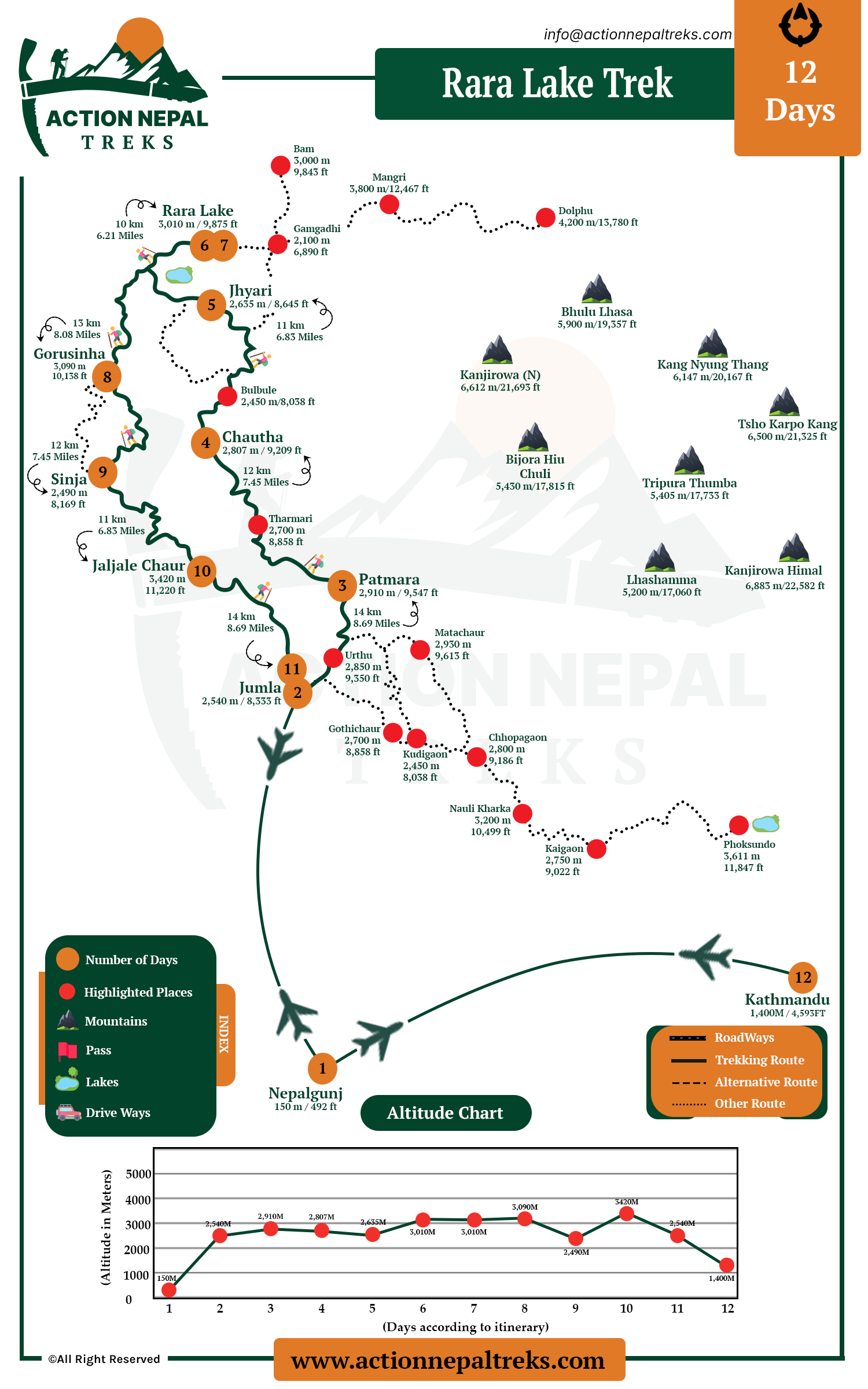


Rara Lake Trek Overview
Want to go on a trek in the Far Western region of Nepal that offers tranquility, wilderness, and a remote life experience? Then, the Rara Lake Trek is the perfect choice. This off-the-beaten-trek journey takes you to Rara Lake, the biggest freshwater lake in Nepal, also called Mahendra Daha. People call it the “Queen of Lakes” due to its natural beauty, sparkling waters, and stunning mountain backdrop.
The lake is surrounded by juniper and coniferous forested hills of Chuchemara Danda on all sides and is framed by the snow-capped Saipal Mountain range behind the hills. This scene creates a picture-perfect Himalayan backdrop, enough to lure trekkers to visit. Regarding the trekking route, the Rara Lake route is quiet and untouched. You will only find some trekking groups along the route. Most days, it will just be you, your guide, your trekking group, and the trail.
Now, let’s talk about how the trek starts. The journey begins with a flight from Kathmandu to Nepalgunj, followed by another short flight to Jumla. Then from Jumla, the trek starts. You will walk for days through alpine meadows, dense forests, and remote villages like Patmara, Chautha, and Jhyari before you reach Rara Lake. As you pass through each village, you’ll find glimpses of the traditional lifestyles of the Thakuri and Chhetri communities. You get your first view of Rara Lake from the ridge after Jhyari.
The walk takes place inside the Rara National Park. It is Nepal’s smallest protected area and is home to wildlife like Himalayan black bears, red pandas, musk deer, goral, and over 200 species of birds and butterflies. In spring and autumn, you’ll see colorful flowers covering the meadows, while winter turns the ridges into snowy landscapes.
On the way back from Rara Lake, you’ll take a different route via Gorusinha, Sinja, Jaljala Chaur, and back to Jumla. This alternate path offers new scenery and a fresh perspective on the region’s landscapes, villages, remote areas, and forests. This way, every step on the Rara Lake trail brings you closer to nature, culture, and the rare serenity that comes from being far off the beaten path.