


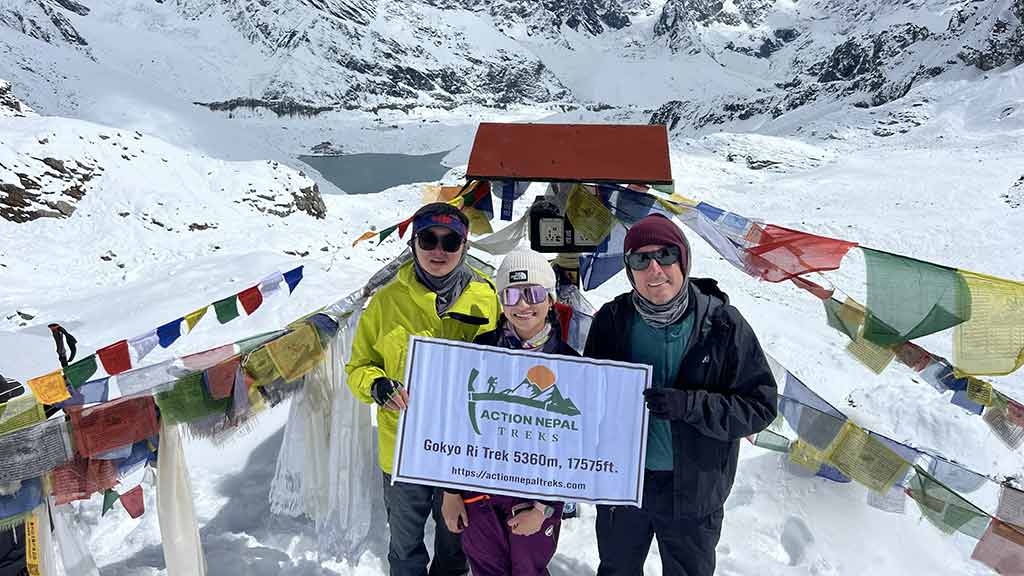
Tired of hearing about the same old Everest Base Camp trek and its crowds? Then you ought to trek to the Gokyo Valley. The Gokyo Trek permits are the same as the classic EBC ones: the Sagarmatha National Park Permit and the Khumbu Pasang Lhamu Rural Municipality Permit. With these permits, you can freely trek deeper into the Everest region’s remote valley and enjoy a quieter experience towards the beautiful turquoise Gokyo Lakes and the breathtaking Gokyo Ri (5,357m).
This blog will provide all the important information, such as permit costs, required documents, the importance of obtaining proper permits, and tips to help you plan your trek to Gokyo Valley.
The Must-Have Permits for Gokyo Valley
Currently, there are two permits required for the Gokyo trek and more generally in the Everest or Khumbu region. Below is an overview of each, with key details such as costs, purpose, and other information. You’ll find a full comparative table in the next section.
Khumbu Pasang Lhamu Rural Municipality Permit
The Khumbu Pasang Lhamu Rural Municipality Permit is required for anyone entering the Khumbu region, which includes Gokyo Valley, Namche Bazaar, and the routes toward Everest Base Camp. It was introduced by the local government to replace the older Trekkers’ Information Management System (TIMS) card to ensure that a significant portion of tourism revenue stays within the local community.
The permit fees are used to improve local infrastructure like schools, health posts, and accommodations. Besides that, they are also used for managing waste and maintaining trekking trails across the Solukhumbu district. Thus, it not only helps manage trekking activities but also supports the lives of the Sherpa communities who protect and make the region accessible for trekking.
- Cost: Foreign nationals – NPR 2,000 per person; SAARC nationals – NPR 2,000 per person.
- Where to get: Currently, you can only obtain this permit locally at Lukla for trekkers flying in from Kathmandu, and at Monjo for those entering overland via Jiri or Salleri.
Sagarmatha National Park Entry Permits
The Sagarmatha National Park Entry Permit is required for all trekkers entering the Sagarmatha National Park area, which includes the Gokyo Valley and other valleys in the region. The park is recognized as a UNESCO World Heritage Site. Covering about 1,148 sq. kilometers, it is home to Mount Everest, the Gokyo Lakes, and a diverse range of Himalayan flora and fauna.
Thus, the NP entry fee supports the park’s conservation efforts, like wildlife protection, erosion control, waste management, and trail maintenance. It also funds environmental monitoring and helps preserve the fragile high-altitude ecosystems that make Sagarmatha National Park globally significant.
- Cost: Foreign nationals – NPR 3,000 + 13% VAT; SAARC nationals – NPR 1,500 + 13% VAT [Department of National Parks and Wildlife Conservation (DNPWC)]
- Where to get: The permit can be obtained either at the Nepal Tourism Board office in Kathmandu before departure or at the park entry gate in Monjo along the trekking route.
Note: You can apply for Sagarmatha NP online through the NTB system or authorized trekking agencies. Still, you need to go in person to collect them before entering the park.
Tabular Summary of Permit Details
| Details | Khumbu Pasang Lhamu Rural Municipality Entrance Permit | Sagarmatha National Park Entry Permit |
|---|---|---|
| Purpose | Local development, tourism management, and community welfare | Conservation of Sagarmatha National Park (UNESCO World Heritage Site) |
| Issued By | Khumbu Pasang Lhamu Rural Municipality Office (Solukhumbu) | Department of National Parks and Wildlife Conservation (DNPWC) |
| Cost for Foreign Nationals | NPR 2,000 | NPR 3,000 + 13% VAT |
| Cost for SAARC Nationals | NPR 2,000 | NPR 1,500 + 13% VAT |
| Where to Get It | Lukla (for those flying in) or Monjo (for overland trekkers via Jiri/Salleri) | Nepal Tourism Board, Kathmandu (before trek) or Park entry gate at Monjo (during trek) |
| Documents Needed | Passport, Nepal visa, two passport-sized photos | Passport, Nepal visa, two passport-sized photos |
Why Have Action Nepal Treks Handle the Tedious Bits of the Trek?
While trekkers can obtain both permits independently at checkpoints or offices, the process often involves long queues, cash payments, and multiple document verifications at different locations. So, it’s better to let authorized trekking agencies like Action Nepal Treks manage this paperwork on your behalf.
With over 15 years of experience in tourism, Action Nepal Treks also helps in booking the necessary permits in advance so that you can rest easy and enjoy your time before the trek. This also saves valuable time, prevents mistakes in applications, and ensures all documentation is ready before you begin your trek with us.
Letting professionals handle the process also guarantees compliance with current regulations and provides peace of mind in case of any last-minute changes in rules or fees. That way, you can fully focus on the trek and preparation, not the paperwork.
Documents Required
We’ll need these documents before applying for or collecting your trekking permits:
- Valid passport (original and photocopies)
- Valid Nepal entry visa
- 2–4 passport-sized photos
- Travel insurance policy (recommended, especially for emergency evacuation coverage)
- Trek itinerary with planned dates and route
- Emergency contact information
Purpose Behind Permit Requirements for Gokyo Valley Trek

While the trekking permits for the Gokyo Valley may seem like simple administrative documents, they serve a much greater purpose. They help protect trekkers, preserve the delicate Himalayan environment, and support the local communities who make the region accessible and welcoming.
Tourist Management
With permit systems, authorities can easily record the entry and exit of every trekker. This creates a reliable tracking mechanism for safety and accountability. Through permit applications, information can be extracted in case of emergencies, such as altitude-related illnesses or accidents. So, in case you get lost or suffer from altitude sickness (AMS), the search and rescue operations will be quicker.
National Park Conservation
The revenue collected through Sagarmatha NP entry permits directly contributes to the park’s conservation efforts. These funds are used to protect wildlife and control natural disasters like erosion and landslides. They are also used to maintain trekking trails and monitor glaciers and fragile ecosystems affected by climate change. Thus, by purchasing permits, you contribute to protecting one of the world’s most fragile high mountain ecosystems.
Community Development
The sole purpose of the Khumbu Pasang Lhamu Rural Municipality Permit is to ensure that the local Sherpa communities benefit directly from tourism. The collected funds support community-led projects such as building and maintaining schools, health posts, bridges, and waste management systems. Thus, this permit promotes sustainable development in the Khumbu region.
Permit System Evolution
In previous years, all trekkers in Nepal were required to obtain a TIMS card. However, this system was replaced in the Khumbu region by the local municipality permit to ensure that more of the tourism revenue remains within the local economy. This shift has strengthened community autonomy and improved resource management, ensuring that tourism directly benefits those who live in and protect the region.
Risks of Not Getting a Permit
- Checkpoint Restrictions: You may be stopped at entry points like Monjo or Namche Bazaar and denied access or asked to return to the nearest permit office, wasting valuable trekking days.
- Fines and Legal Consequences: Trekking without the required permits violates Nepal’s tourism regulations and can result in heavy fines or, in serious cases, deportation.
- No Insurance or Rescue Coverage: Travel and evacuation insurance claims often require proof of valid permits. Without them, you risk losing insurance protection in case of emergencies.
- Delayed Search and Rescue: Permit data helps authorities track trekkers. Without official registration, search and rescue operations become slower and more difficult.
- Reputation and Future Travel Issues: Trekking illegally or with unregistered guides can lead to blacklisting or future restrictions from local authorities.
Thus, by obtaining the proper permits, you protect yourself legally, financially, and physically while ensuring your trek supports conservation and local development.
Tips for Gokyo Valley Trek Application
- Carry multiple passport-sized photos (4–6 copies) for permit applications and other trekking documents.
- Keep photocopies of your passport and visa handy for submission at checkpoints and offices.
- Prepare a rough trek itinerary (dates and route) before applying, as it helps fill out forms accurately and avoids confusion.
- Process your permits in Kathmandu at the Nepal Tourism Board (NTB) for a faster, hassle-free start. That’ll help you skip long queues at entry gates in Lukla or Monjo.
- Carry enough cash in Nepalese Rupees for permit payments, as card facilities are often unavailable or unreliable in remote areas.
- Start the process early in the day if applying in person, since government counters and local offices close by late afternoon.
- Double-check permit details, names, dates, and passport numbers before leaving the counter to avoid costly corrections later.
- Store both original and photocopies of all permits safely, as they’ll be checked multiple times during your trek.
Conclusion
Getting the essential permits for the Gokyo Valley Trek isn’t just about following rules. By doing so, you show respect for the region and the community residing there. Both the Sagarmatha National Park Entry Permit and the Khumbu Pasang Lhamu Rural Municipality Permit ensure that tourism contributes directly to conservation, community development, and safety management in the Everest region of Nepal.
That said, trekking without proper permits can lead to unnecessary complications. So, you should not skip it. For a smoother trekking experience, you can let Action Nepal Treks handle your paperwork and arrange all permits in advance so that you focus on what truly matters: your quiet adventure in the mountains.

